




Vintage Japanese Ceramic Vessel
These vintage japanese ceramic vessel pieces bring hand-painted porcelain, earthenware and stoneware into daily display through centuries of kiln tradition.
Vintage Japanese Ceramic Vessel
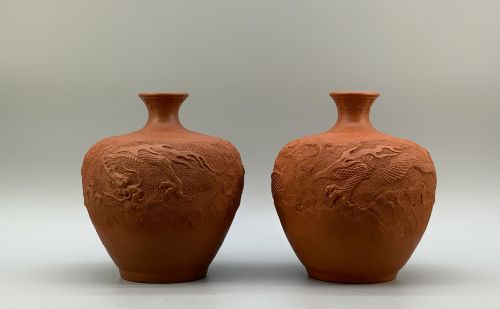
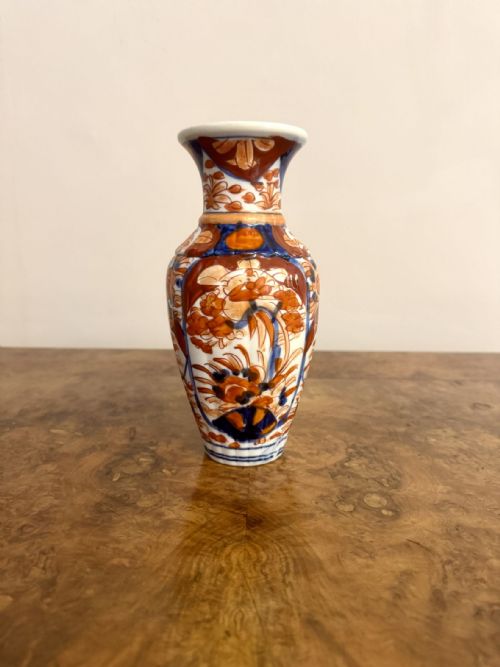
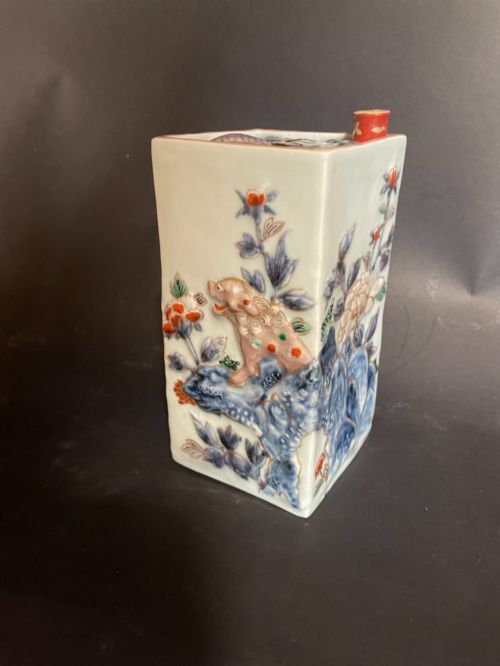
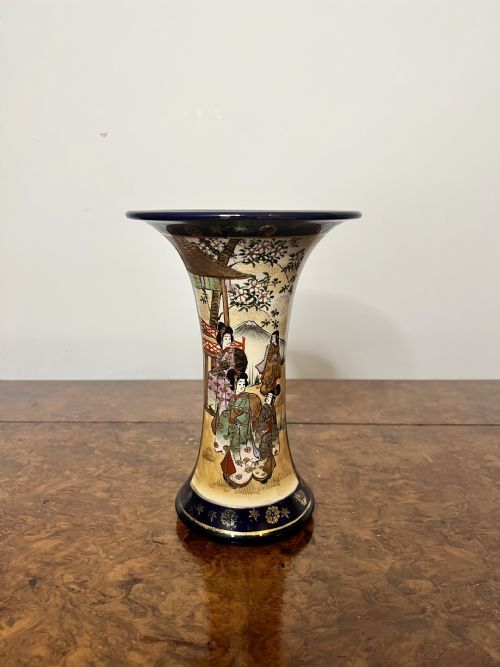
A vintage japanese ceramic vessel encompasses a broad spectrum of functional and decorative forms, from Imari porcelain bowls and ginger jars to Tokoname red clay dragon vases. The selection spans tea caddies, sake flasks, mugs and large display vases produced across the Meiji, Taisho and Showa periods. Buyers frequently encounter nineteenth century Imari wares alongside Satsuma miniature and monumental vases.
Makers from Kyoto, Tokyo and regional kilns shaped these objects using earthenware, stoneware and porcelain. Styles range from Kutani hand-painted surfaces to Sumida Gawa applied figural work and lacquer over-paint. The forms reflect both traditional domestic use and export production for Western markets during the late nineteenth and early twentieth centuries.
How they were made
Potters shaped local clays, red earth and porcelain bodies on the wheel or by hand before applying mineral glazes and enamel pigments. Kiln firing fixed the base bodies, after which artists added intricate surface details in gold leaf and overglaze enamels.
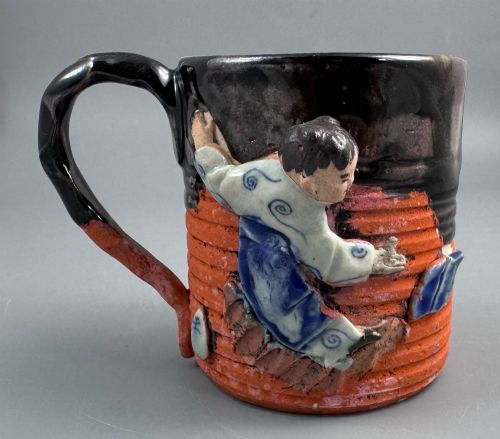
Specialised techniques included relief moulding, as seen on red clay dragon and phoenix motifs, and applied figures like the karako on Sumida Gawa mugs. Workshops in Kyoto and Tokyo employed multi-stage firings to fuse complex figural scenes, gilt processions and lacquer treatments onto the ceramic surface.
A tiny applied figure peers out from a Sumida Gawa mug, keeping watch over centuries of kiln craft.
What varies in quality
The distinction between standard commercial wares and exceptional pieces rests upon the precision of the hand-painting and the depth of the glaze work. Fine miniatures and monumental Satsuma bowls display micro-detailed figural processions and controlled gilding that demand advanced brushwork.
Material choice and firing success dictate the structural integrity and finish of each vessel. High-grade porcelain and well-refined stoneware retain crisp forms and vibrant enamel adhesion, whereas lesser pieces show uneven glaze pooling or simpler decorative execution.
Chosei, Kyoto·Tokyo Taizan·Kinkozan Kyoto·Kōko
The Vintage Japanese Ceramic Vessel Glossary
- Imari
- A style of Japanese porcelain featuring underglaze blue and overglaze red, gold and green colours. These wares were produced in Arita and shipped through the port of Imari for domestic and international markets.
- Satsuma
- An earthenware type with a pale, ivory-crackled glaze decorated in polychrome enamels and gold leaf. It originated in Satsuma Province and later saw major production in Kyoto workshops.
- Kutani
- A style of Japanese porcelain and pottery known for bold, colourful painted designs and pictorial scenes. Palette variations often feature dominant greens, reds and golds.
- Tokuri
- A traditional Japanese flask used primarily for serving sake. These vessels typically feature a narrow neck to retain the liquid temperature.
- Karako
- Depictions of Chinese children at play, frequently utilised as decorative motifs in Japanese ceramic art. They appear in relief or painted compositions on various vessel types.
Vintage Japanese Ceramic Vessel: Frequently Asked Questions
How do I date a Japanese ceramic vessel?
Dating relies on stylistic markers, reign periods such as Meiji or Taisho, and specific kiln signatures. Nineteenth-century pieces often exhibit dense hand-painted polychrome enamel work and specific export markings.
Later pieces from the twentieth century shift toward Showa period aesthetics or streamlined forms. Comparing the base clay, glaze crazing and decorative motifs against known historical examples helps establish the decade of production.
Where were these ceramic vessels made?
Production centres varied across Japan depending on the clay type and regional kiln traditions. Kyoto and Tokyo housed prominent workshops producing elaborate Satsuma and earthenware items.
Other regions specialised in porcelain, such as Arita for Imari wares, or utilised local earth like the red clay found in Tokoname potteries.
How should I display these vessels at home?
These pieces function well on open shelving, sideboards or dedicated display cabinets where their painted surfaces remain visible. Miniature vases benefit from placement at eye level to reveal fine gilt details and figural processions.
Larger Imari and Satsuma vases anchor room corners or table centres, functioning as standalone decorative focal points without requiring additional floral arrangements.
What is the difference between Imari and Satsuma?
Imari wares are porcelain vessels decorated with underglaze cobalt blue and vibrant overglaze red and gold enamels. They present a resonant ceramic ring and a harder, non-porous body.
Satsuma pieces consist of earthenware with a characteristic ivory-coloured glaze covered in fine crackles, providing a matte ground for dense figural and gold leaf painting.