

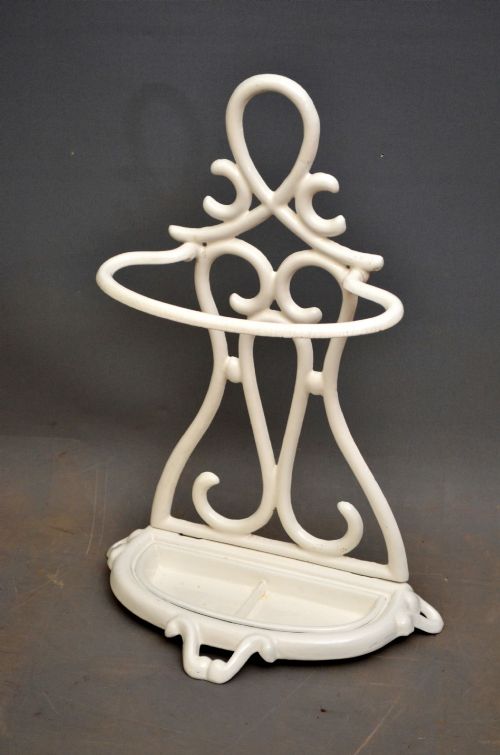
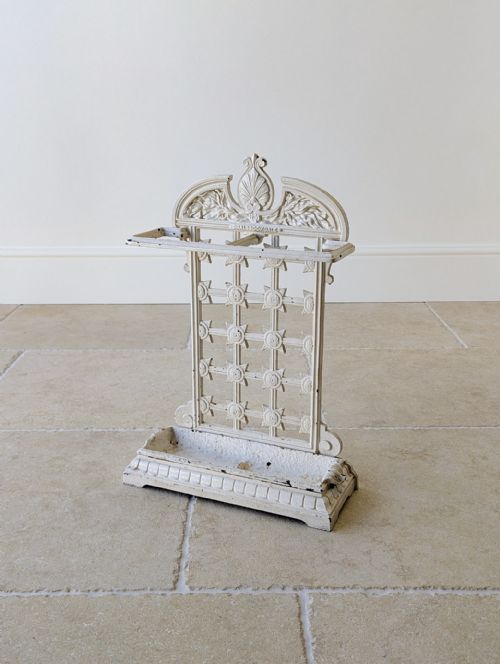
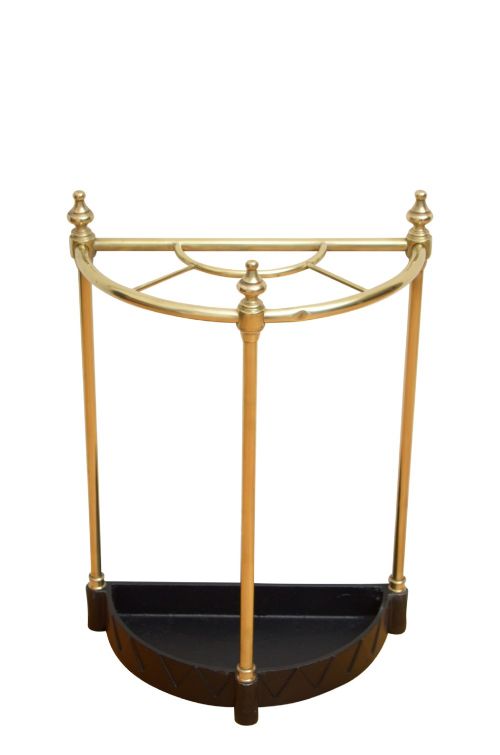
Vintage Iron Stick Rack
A vintage iron stick rack keeps hallways tidy while bringing industrial strength and architectural form to the entrance.
Vintage Iron Stick Rack
A vintage iron stick rack serves as a practical retainer for walking canes, umbrellas and hall essentials in domestic spaces. These items take the form of umbrella stands, hall stands and combined umbrella and stick holders designed for the entrance hall.
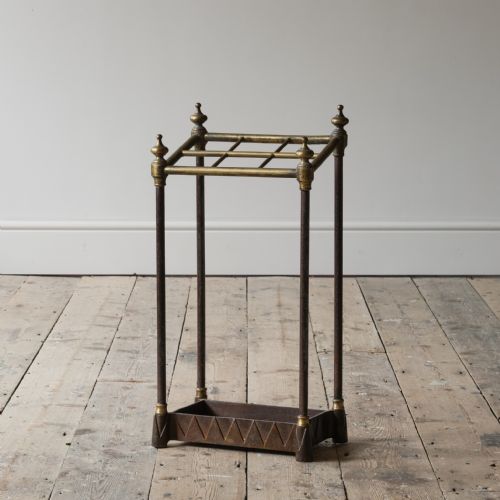
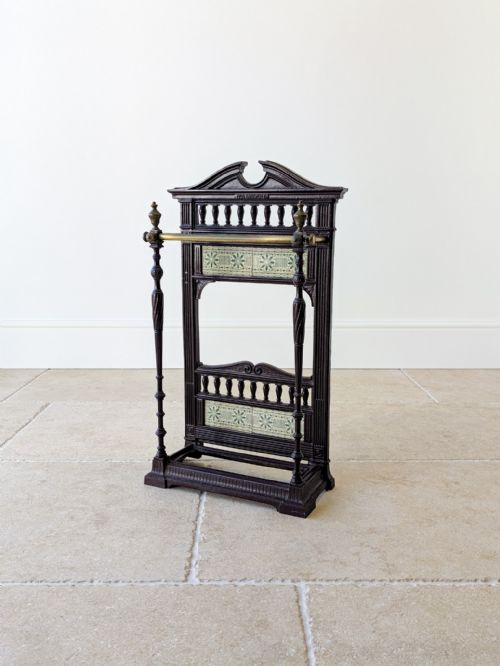
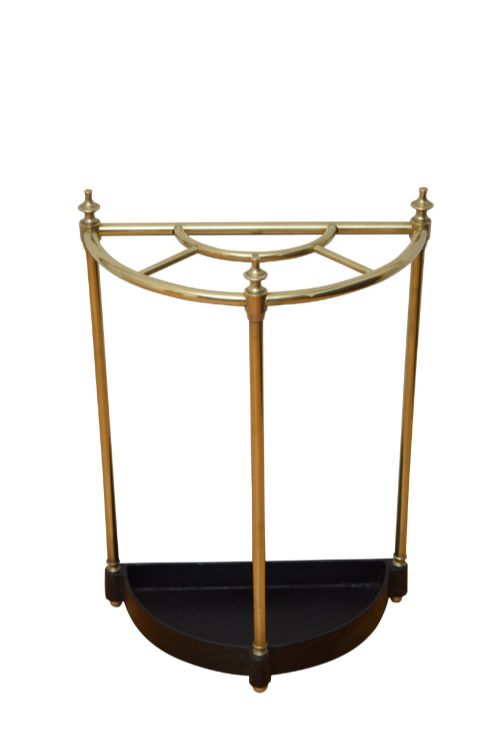
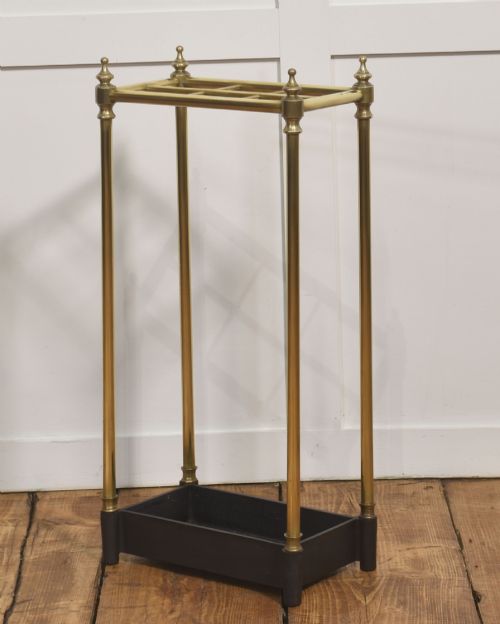
The pieces appearing on this page span the Victorian, Edwardian and Art Deco periods, alongside French Art Nouveau and Aesthetic Movement designs. Cast iron and brass predominate, often paired with drip trays made of glass, ceramic, enamel or marble.
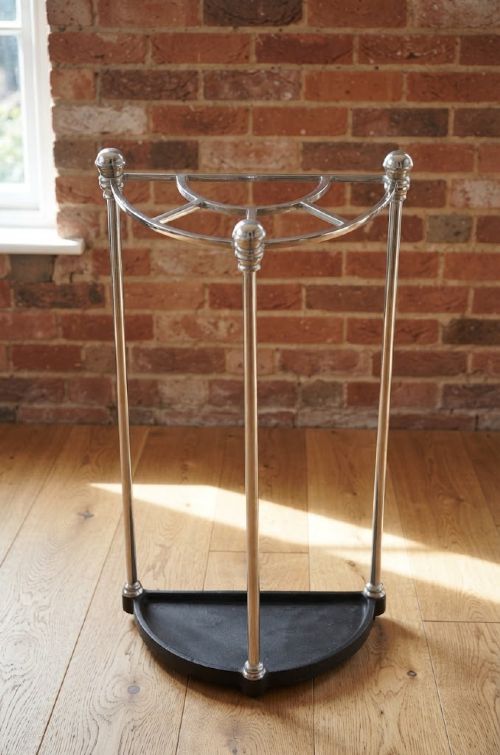
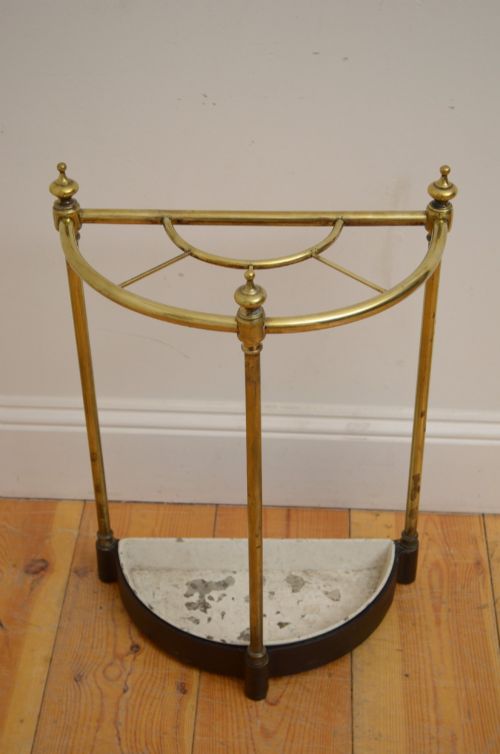
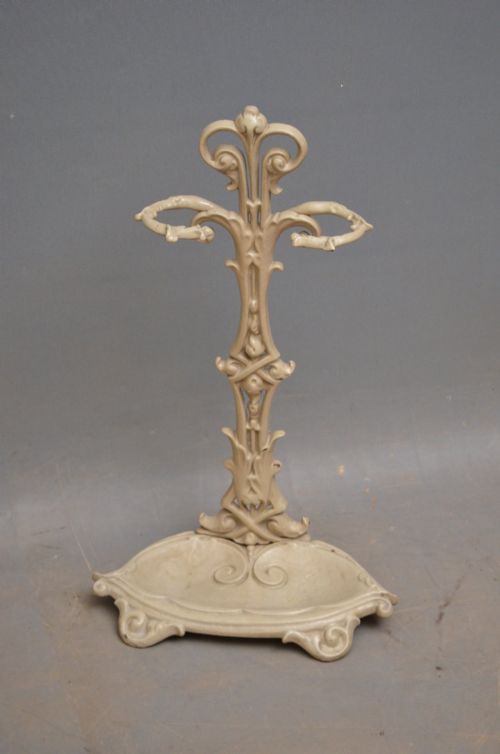
Buyers encounter heavy cast iron frames alongside lighter brass demi-lune shapes and occasional wooden combinations incorporating pitch pine or oak. Makers utilise robust metals to create openwork scrolls, faux bamboo and figurative motifs.
How they were made
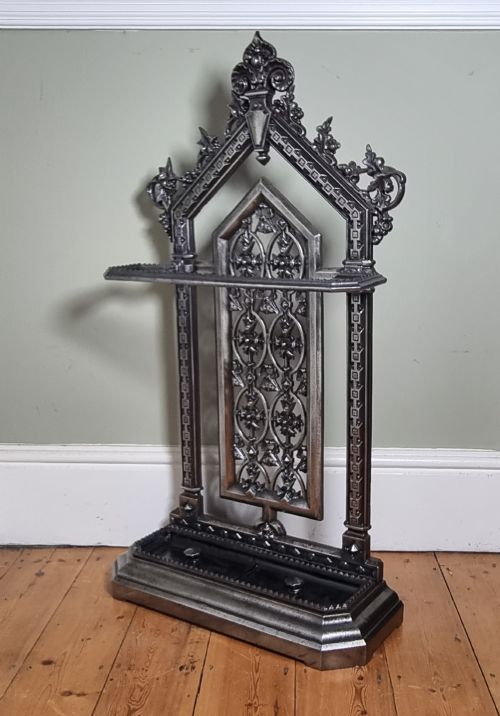
Foundries produced the main structural elements in cast iron, utilising moulds to achieve intricate pierced scrollwork, foliage and figurative details. Makers frequently incorporated maker names or registration dates directly into the metal body during casting.
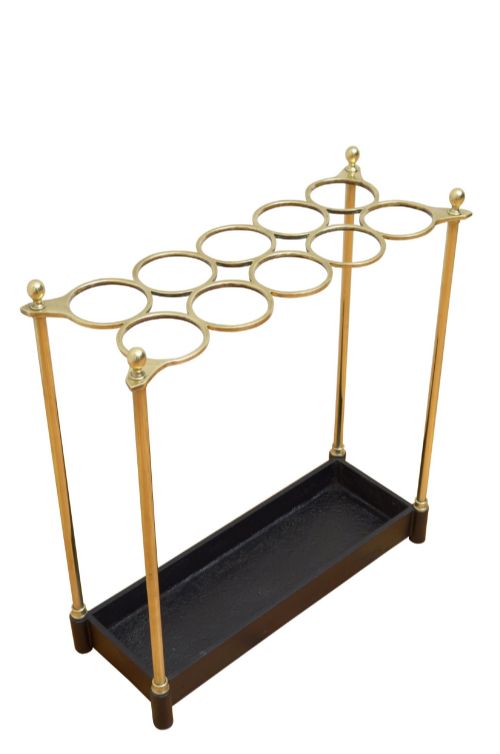
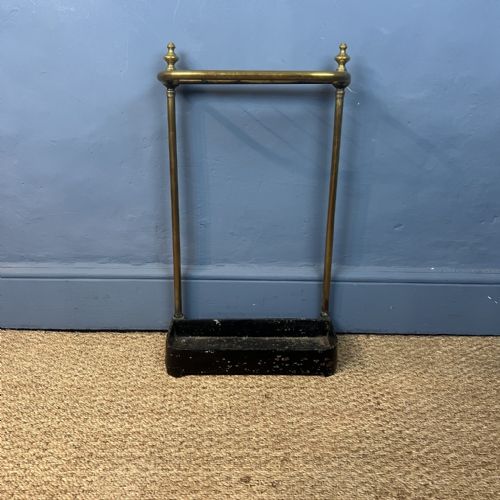
Brass components, including tubes, finials and dog tooth trays, were shaped and joined to metal frames to provide contrasting metallic tones. Nickel plating and painted finishes were subsequently applied to protect the iron and alter its appearance.
Drip trays in ceramic, glass or enamel were integrated at the base to catch water from wet umbrellas, resting within structured iron or brass frameworks.
Some Victorian ironmongers cast gun dogs and footballers directly into the frames to guard your umbrellas.
What varies in quality
The crispness of the casting defines the upper tier of production, where fine details in foliage, animal figures or geometric mouldings remain sharp and well-defined. Lesser examples exhibit blurred textures and softer lines resulting from worn foundry moulds.
The integrity of construction separates standard items from superior works, particularly in the joining of heavy cast iron bodies to delicate brass rails and sturdy base trays. Original removable drip trays and intact finials elevate the desirability of a piece.
Surface finish also plays a role, as original painted schemes or patinated brass outlast crude modern repainting efforts that obscure historical wear.
Coalbrookdale·Kenrick
The Vintage Iron Stick Rack Glossary
- Demi-lune
- A half-moon shape designed to sit flush against a hallway wall. This configuration saves valuable floor space in narrow corridors.
- Faux bamboo
- Moulded or carved ornamentation that mimics the segmented stalks of bamboo. Found frequently on French and Victorian ironwork.
- Finial
- A decorative terminal ornament placed on top of posts or uprights. These brass balls or scrolls cap the structural vertical elements.
- Aesthetic Movement
- A late nineteenth-century design style emphasising visual beauty over narrative content. It produced stylized floral and geometric patterns in metalwork.
Vintage Iron Stick Rack: Frequently Asked Questions
How do I use a vintage iron stick rack today?
These racks function well in entrance halls and porches to hold umbrellas, walking sticks and long handled shoehorns. Their weighted iron frames provide stability for daily use.
Place a suitable mat underneath if the original base tray is missing its liner to protect wooden flooring from residual moisture.
Were these stands made for umbrellas or walking sticks?
Manufacturers built them to accommodate both umbrellas and walking sticks simultaneously, reflecting the everyday attire of the nineteenth and early twentieth centuries. The vertical divisions kept wet canopies separated from dry canes.
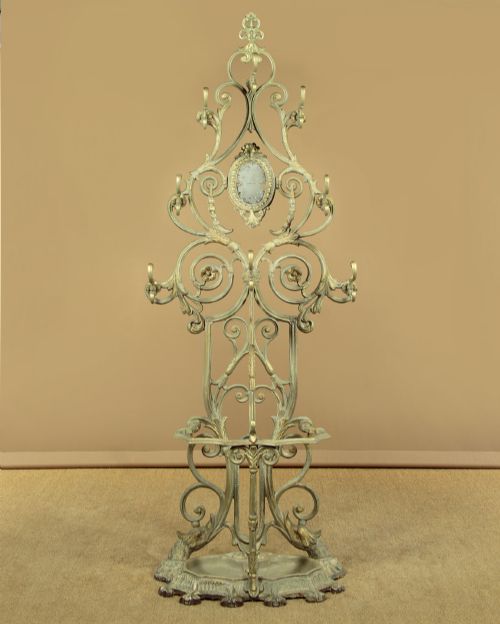
Some multi-purpose hall stands also incorporated hooks for coats and hats alongside the lower umbrella wells.
How do I distinguish Victorian from Art Deco pieces?
Victorian and Edwardian models rely on heavy cast iron scrolls, Gothic motifs, naturalistic foliage and figurative elements like dogs or bamboo. They often feature robust brass rails and ornate surface casting.
Art Deco examples from the nineteen thirties favor streamlined geometry, nickel plating and simplified demi-lune silhouettes without excessive ornamentation.
Are French stands different from English ones?
French pieces from the nineteen hundreds frequently showcase Art Nouveau plant tendrils, asymmetrical lines and faux bamboo styling in cast iron. English designs often lean towards structured brass frameworks and heavier utilitarian cast iron.
Both origins utilised similar base tray materials like enamel or ceramic to manage water runoff.