


Art Nouveau Umbrella Rack
An art nouveau umbrella rack brings flowing floral lines and organic curves straight into the hallway, offering a practical place to store wet sticks and canes.
Art Nouveau Umbrella Rack
When searching for an art nouveau umbrella rack, buyers encounter a specific group of hallway furnishings designed to hold walking sticks, canes, and wet umbrellas. These pieces bridge the turn of the twentieth century, emerging from European workshops during the height of the international style.
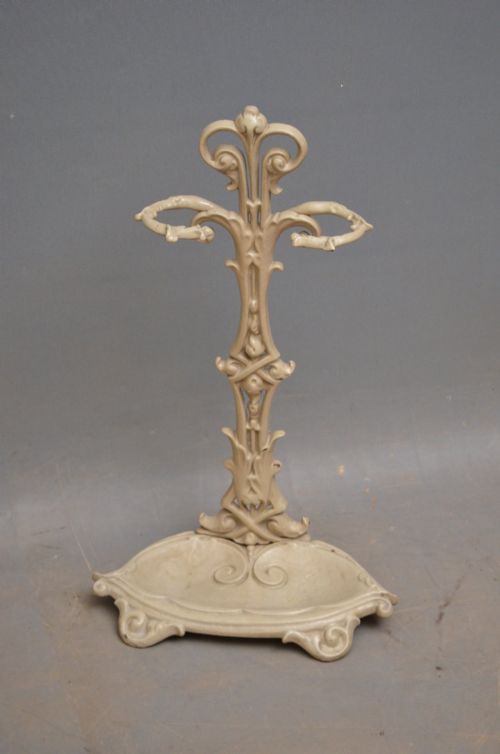
The selections on this page appear primarily as dedicated umbrella and stick stands alongside larger hall stands incorporating umbrella racks. French and Belgian examples dominate the cast iron category, while British pieces frequently employ oak and brass.
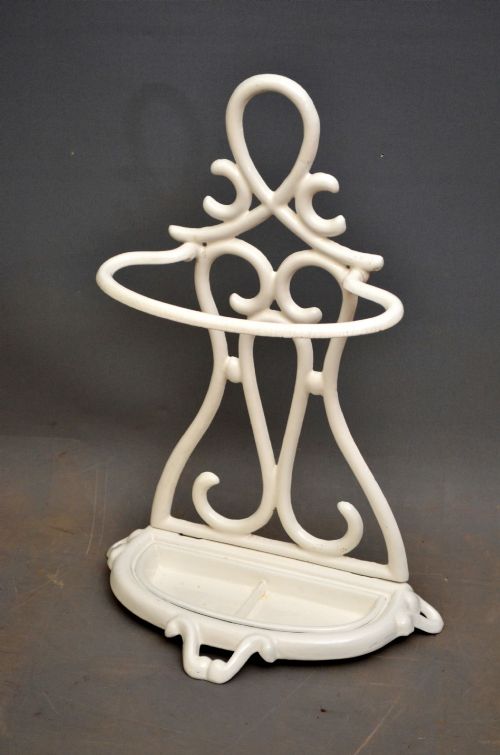
Forms span from freestanding demi-lune loops to robust cast iron frames and bentwood hall furniture. Dating typically centres around nineteen hundred, though related items stretch from the nineteenth century into the nineteen thirties.
Distinctions in quality
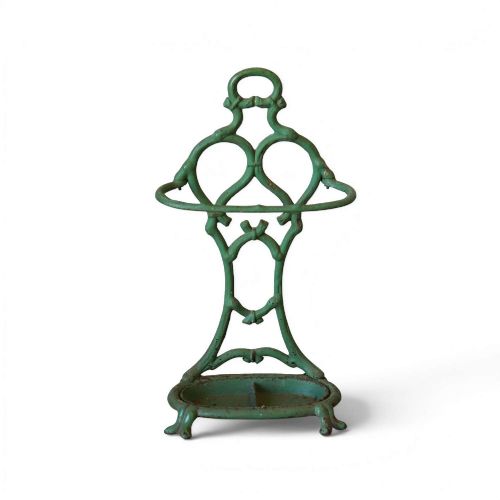
Quality in these hall furnishings rests upon the crispness of the casting and the integrity of the structural materials. Finer cast iron examples display deeply undercut plant motifs and convincing faux bois texture without surface pitting.
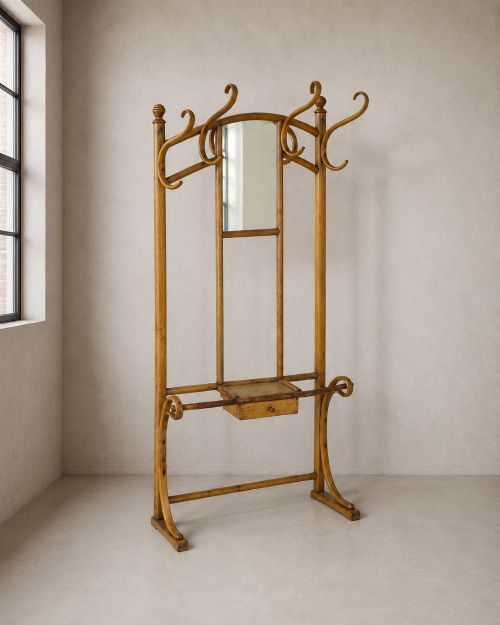
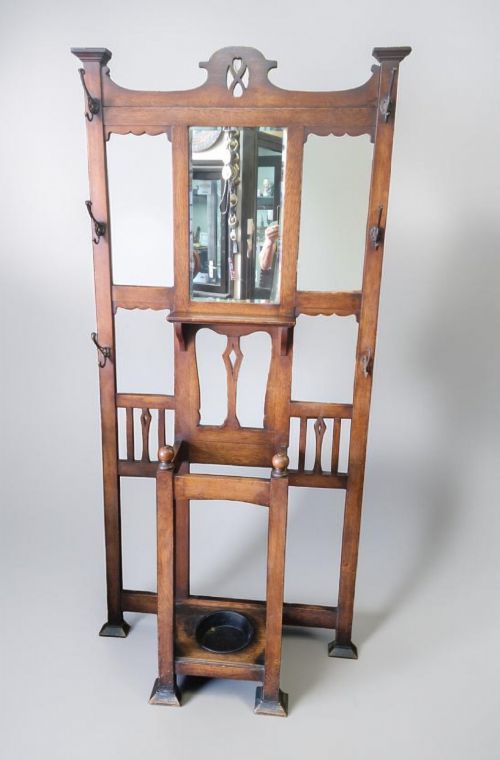
In wooden pieces, the selection of timber grain and the complexity of the bentwood curves dictate the grade of the piece. Oak hall stands with integrated mirrors, carved panels, and original brass drip trays represent the more ambitious end of domestic production.
The presence of original components, such as removable metal drip pans and matching brass loops, separates complete examples from those lacking vital functional parts.
Some cast iron stands mimic bamboo so convincingly that guests might reach out to test whether the frame is wood or metal.
Thonet·Fischel
The Art Nouveau Umbrella Rack Glossary
- Art Nouveau
- A decorative style characterised by undulating asymmetrical lines inspired by natural forms such as plants and flowers. It flourished across Europe between the late nineteenth century and the First World War.
- Bentwood
- Wood that has been heated using steam and then bent into curved shapes. This technique defines the construction of chairs and hall stands produced by makers such as Thonet and Fischel.
- Demi-Lune
- A half-moon shape used to describe wall-mounted stick loops and console stands. This profile allows the furniture to sit flat against a hallway wall while projecting minimally into the space.
- Faux Bois
- An artistic imitation of wood grain applied to other materials, particularly cast iron. In umbrella stands, this technique mimics natural bamboo or timber stalks.
- Hall Stand
- A large piece of hallway furniture combining mirror panels, coat hooks, a glove drawer, and an umbrella rack with a drip tray. These multi-functional items anchored the entrance spaces of period homes.
Art Nouveau Umbrella Rack: Frequently Asked Questions
How do I clean a cast iron umbrella stand?
Cast iron stands require gentle dusting and occasional application of neutral wax to protect the surface finish.
Avoid using harsh chemical cleaners that might strip enamel coatings or original patination on metal surfaces.
Where were these umbrella racks manufactured?
Many surviving examples originate from France and Belgium, featuring distinctive cast iron plant and bamboo designs.
British workshops contributed heavily to the oak and brass hall stand variations found during the same period.
Are original drip pans usually included?
Original metal drip pans frequently accompany cast iron and wooden stick stands to catch moisture from wet items.
Some pieces have replacement trays fitted later in their lifespan to maintain their practical utility.
How do I distinguish bentwood from carved oak?
Bentwood construction utilises steam-heated timber forced into smooth, continuous curves without joints.
Carved oak furniture relies on solid timber boards joined with traditional carpentry methods and hand-chiselled ornamentation.