



Cast Iron Hallway Storage
Cast iron hallway storage offers robust utility for wet weather gear, pairing heavy metal frames with practical umbrella and stick stands.
Cast Iron Hallway Storage
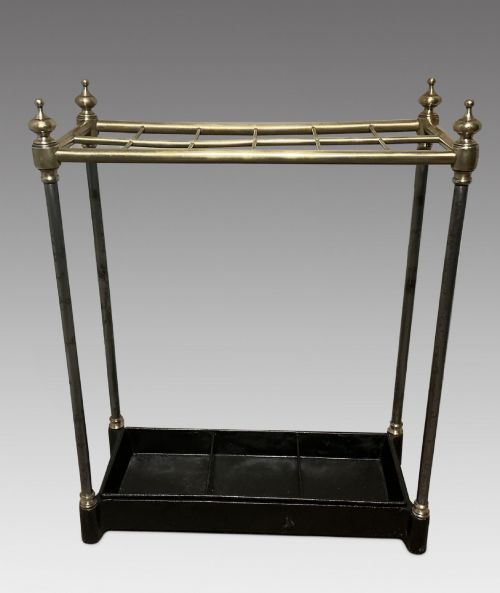
When you search for cast iron hallway storage, you encounter functional furniture designed to organise umbrellas and walking sticks in entrance spaces. These pieces primarily take the form of umbrella stands, stick stands, and combined umbrella and stick stands.
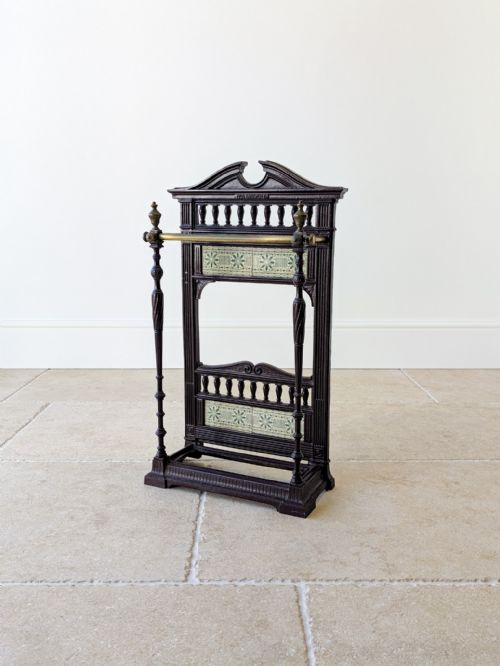
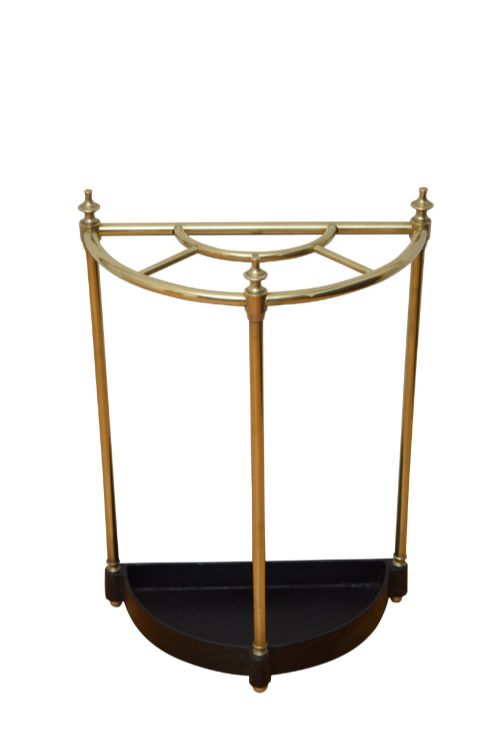
The selections span the Victorian, Edwardian, and Art Deco periods, encompassing styles such as Gothic Revival, Aesthetic Movement, and French Art Nouveau. You are most likely to meet heavy black painted Victorian examples or demi-lune brass and iron combinations from the late nineteenth century.
Makers and foundries including Coalbrookdale, Thomas Jeckyll, A. Kenrick & Sons, and Falkirk produced these hallway accessories alongside retail houses like Shoolbred. Formats range from large upright racks and corner units to semi-circular demi-lune designs suited for narrower corridors.
How they were made
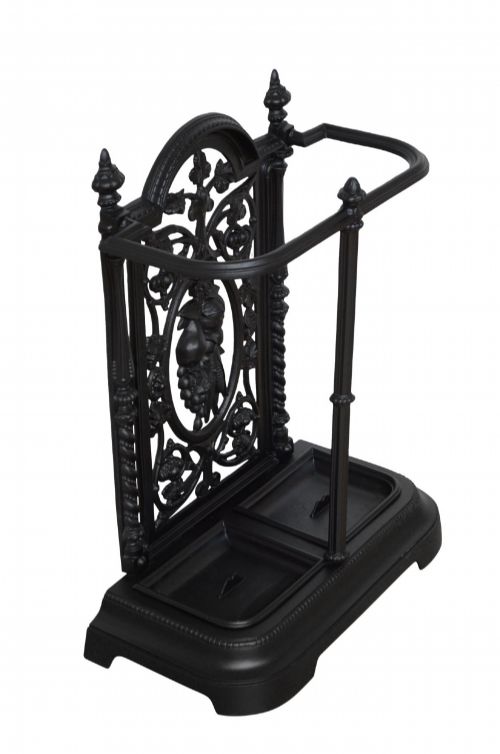
Foundries cast molten iron into intricate moulds, creating rigid openwork frames, pierced panels, and decorative motifs like faux bamboo or scrolling foliage. These iron structures frequently incorporate brass rails, drip pans, and nickel plating.
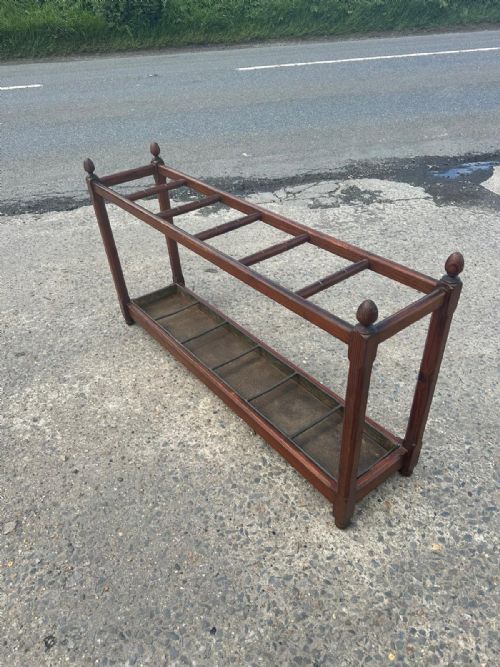
Makers combined cast iron with secondary materials including brass, ceramic inserts, steel, tubular metal, and pitch pine country house framing. Protective painted finishes in black or other colours sealed the metal against damp umbrellas.
What varies in quality
Quality shows in the crispness of the casting detail and the complexity of the design, distinguishing mass-produced utilitarian items from foundry pieces bearing named designer or maker attributions. Heavier framework and sophisticated stylistic expressions, such as Aesthetic Movement or Art Nouveau ornamentation, elevate the status of a piece.
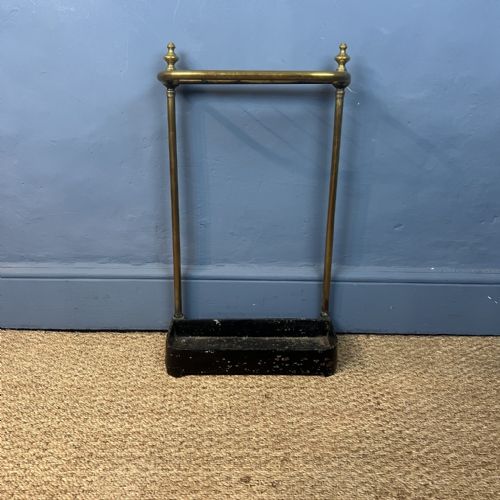
The integrity of secondary elements like removable metal drip pans, brass rails, and structural joints defines the standard of survival. Finer examples retain their original surface finishes and plating without structural compromise from corrosion.
Coalbrookdale·Thomas Jeckyll·A. Kenrick & Sons·Falkirk·Shoolbred
The Cast Iron Hallway Storage Glossary
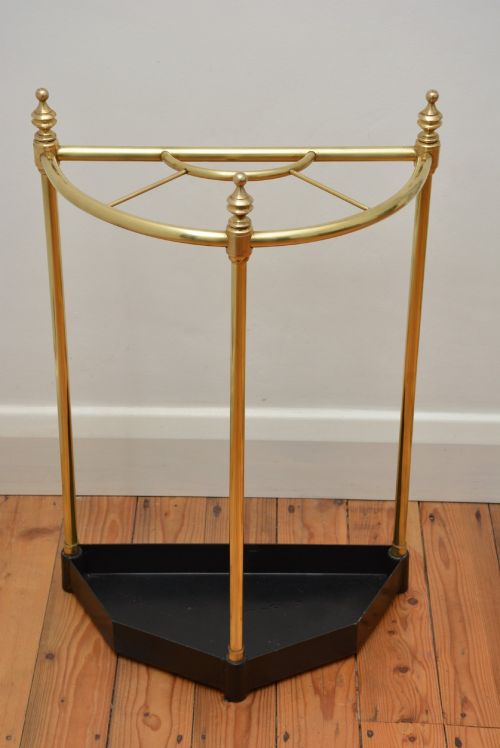
- Demi-lune
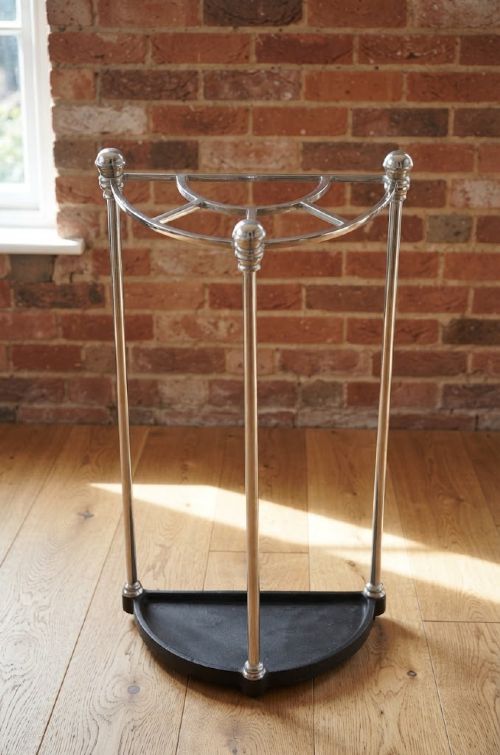
- A half-moon shape designed to sit flush against a hallway wall and save floor space. These semi-circular stands often combine brass frames with iron bases.
- Stick stand
- A piece of hallway furniture built to hold walking sticks and riding crops upright. They share similar forms with umbrella racks but often feature smaller individual divisions.
- Drip pan
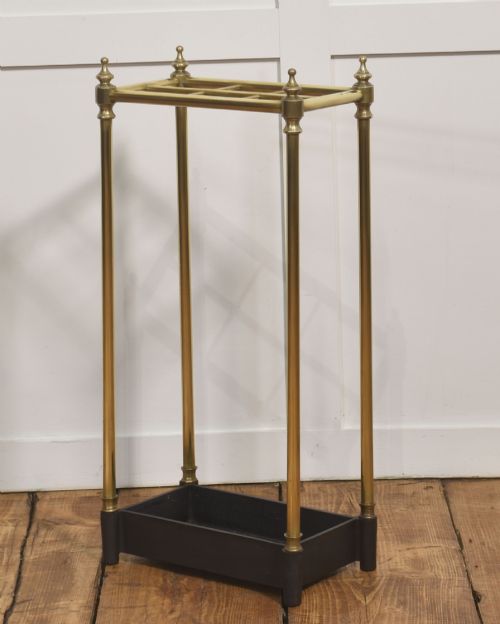
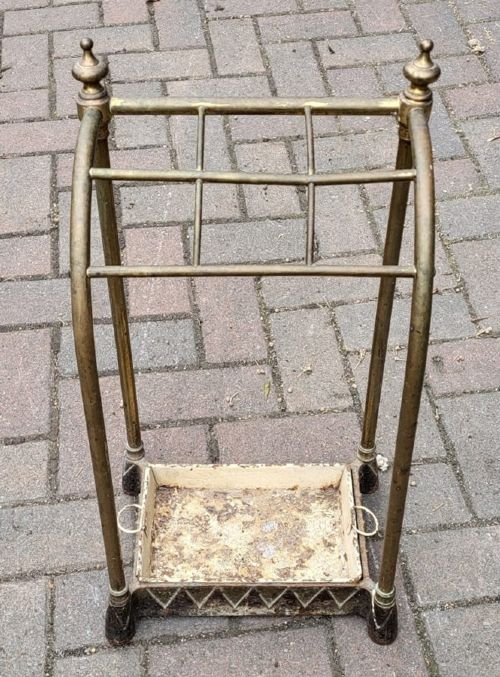
- The shallow tray positioned at the base of a stand to catch water from wet umbrellas. These are frequently removable metal or ceramic liners.
- Aesthetic Movement
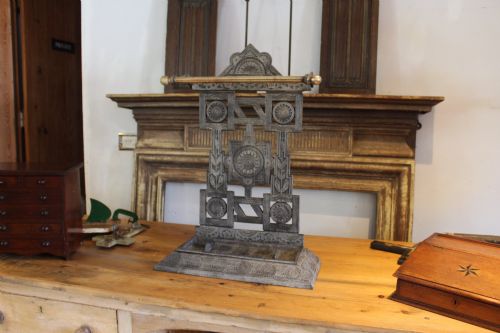
- A late nineteenth-century design style emphasising visual beauty over narrative content. Pieces from this movement often display stylised floral or geometric cast ironwork.
Cast Iron Hallway Storage: Frequently Asked Questions
How do I protect my floor from wet umbrellas?
Most cast iron umbrella stands include an integrated or removable metal drip pan at the bottom to catch rainwater.
Ensure your stand retains its original tray or place a suitable modern liner inside the base to protect wooden hallway flooring.
Where should I place a hallway stick stand?
These pieces suit entrance halls, porches, and narrow corridors where wet weather gear needs immediate containment upon entry.
Demi-lune shapes work particularly well against flat walls or in corners to maximise walking space.
How do I tell Victorian stands apart from later pieces?
Victorian examples often feature heavier cast iron construction with Gothic Revival, Aesthetic Movement, or ornate scrolling botanical motifs.
Later pieces from the 1930s frequently adopt streamlined Art Deco forms incorporating nickel plating and tubular metal.
Can these stands hold heavy walking canes?
Cast iron and brass stands are exceptionally heavy and robust, easily supporting substantial wooden walking sticks and heavy umbrellas.
The rigid metal divisions and sturdy bases prevent tipping even when fully loaded.