
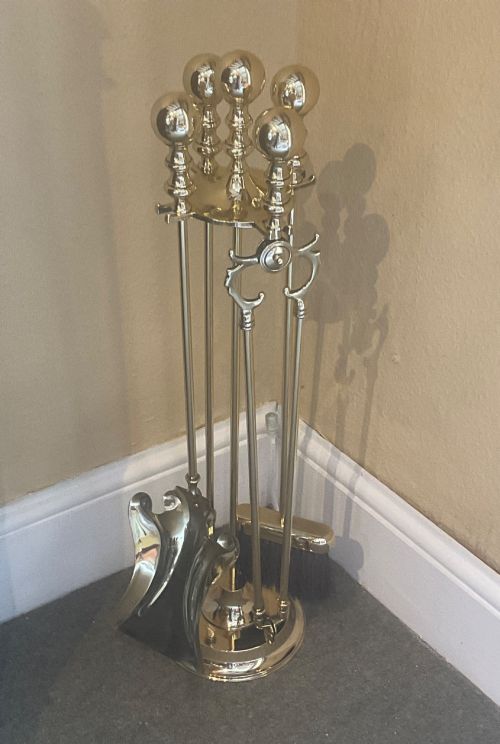


Iron Fire Tool Stand
These iron fire tool stand pieces keep hearth accessories organised while bringing period metalwork directly to the fireside.
Iron Fire Tool Stand
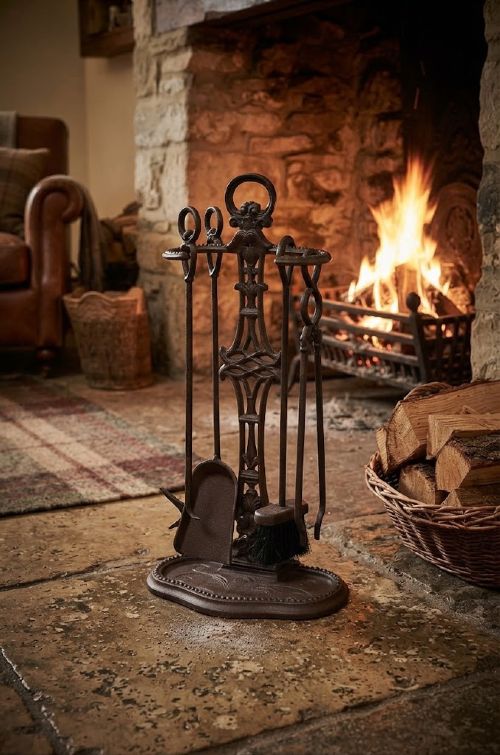
An iron fire tool stand anchors the hearth by holding pokers, tongs, and shovels upright within reach of the grate. The selection spans robust nineteenth century designs through to lighter twentieth century variations.
Most examples hail from the Victorian and Edwardian eras, executed in cast iron, wrought iron, or gleaming brass. Makers fashioned these stands to suit grand manor houses as well as smaller domestic hearths.
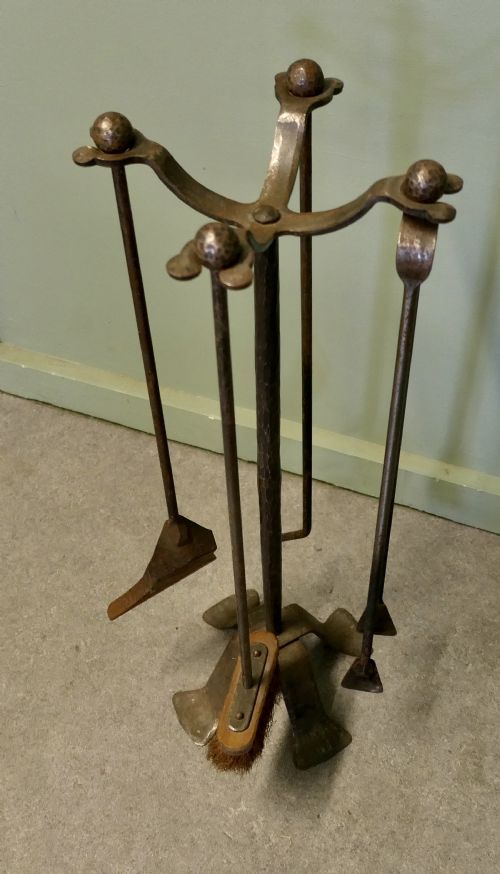
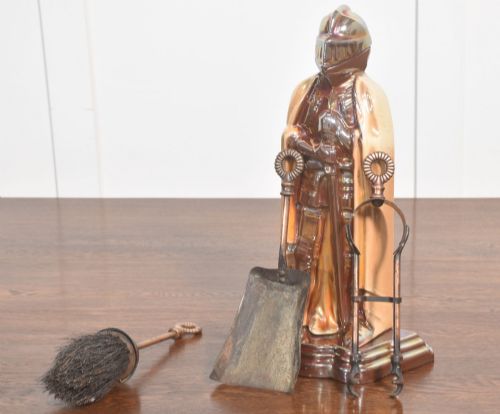
Forms range from dedicated upright frames and companion sets to paired tool rests and combined umbrella holders. Each piece reflects the functional requirements of coal and wood burning fireplaces.
How they were made
Blacksmiths and foundries utilised cast iron and wrought iron for structural rigidity, shaping heavy metal to bear the weight of soot-stained pokers. Workshops employed brass highlights, copper finishes, and painted details to elevate the visual appeal.
Construction techniques combined robust casting for bases with forged steel for slender stems and upright hooks. Makers often paired iron frames with matching companion sets featuring integrated handles and sturdy bristles.
Listings feature periods spanning from the Victorian era through the 1930s, utilising iron, brass, steel, and wood.
What varies in quality
Weight and gauge set the finest examples apart from standard utility items, as heavier metal provides greater stability beside an open fire. Superior pieces display crisp casting detail and harmonious proportions rather than purely utilitarian assembly.
Design ambition distinguishes ordinary stands from artistic pieces, particularly those influenced by the Aesthetic Movement or French Art Nouveau. The integration of durable materials like steel and brass determines the longevity of each stand.
The Iron Fire Tool Stand Glossary
- Companion set
- A matched collection of fireplace tools, including pokers, tongs, and shovels, usually arranged on a dedicated stand or rest.
- Cast iron
- An iron-carbon alloy poured into moulds to create rigid forms with decorative relief work, common in Victorian hearth furniture.
- Wrought iron
- Iron heated and hammered into shape by hand, resulting in a fibrous grain and durable structure.
- Fire dogs
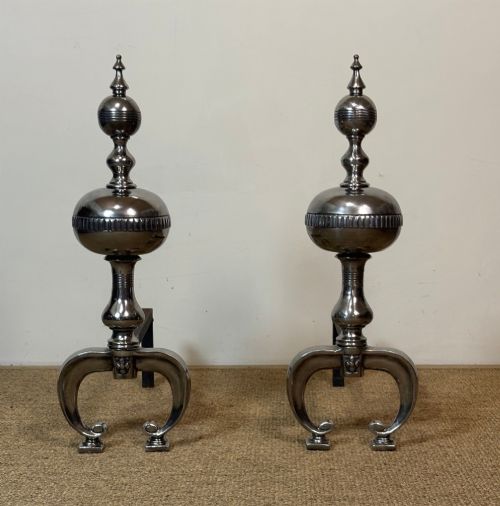
- Supporting irons placed on the hearth to hold logs, often accompanying companion stands and tool sets.
Iron Fire Tool Stand: Frequently Asked Questions
How do I date an iron stand?
Dating relies on stylistic clues, manufacturing techniques, and materials such as brass, steel, or cast iron. Victorian and Edwardian examples often feature period motifs like Gothic Revival or Art Nouveau lines.
Heavier cast pieces typically point to the nineteenth century, while lighter brass and painted metal versions often date to the early twentieth century.
Where should I place a tool stand?
A tool stand belongs directly on the hearth or floor immediately beside the fireplace opening. Positioning it close to the grate ensures that fire irons remain within easy reach for tending the fire.
Ensure the stand rests on a stable, heat-resistant surface to protect surrounding flooring from stray embers or ash.
Can I mix different fire tools?
Many stands accommodate various implements, though matching companion sets offer a cohesive visual appearance. Combining pieces from different periods requires attention to metal finishes, such as matching cast iron with similar ironwork.
Ensure that the hanging hooks or rings on the stand appropriately fit the handles of your chosen tools.