



Vintage Interior Scene Art
Vintage interior scene art captures domestic rooms, taverns, and workshops across centuries, offering buyers a glimpse into daily life preserved on canvas, paper, or panel.
Vintage Interior Scene Art
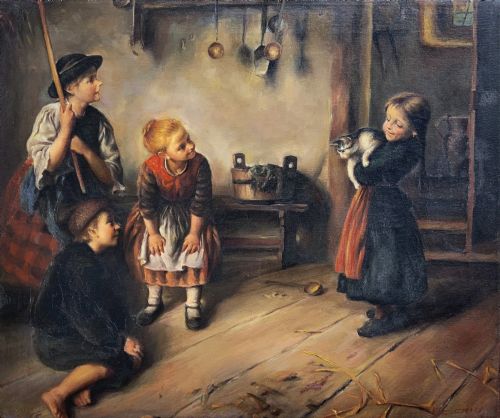
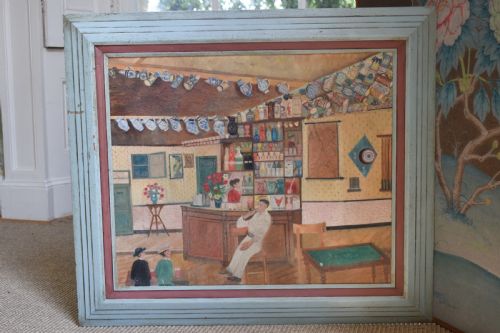
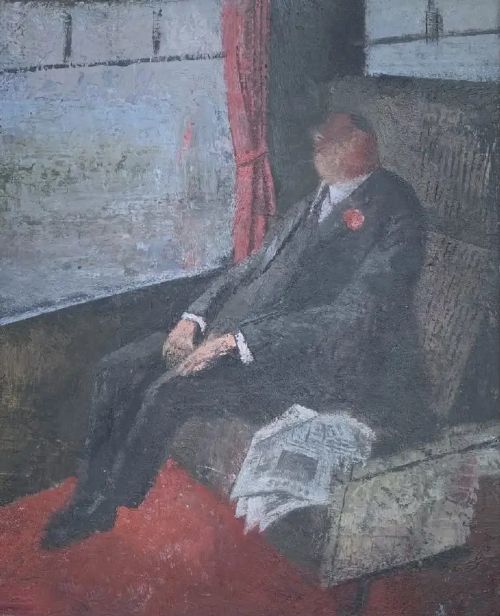
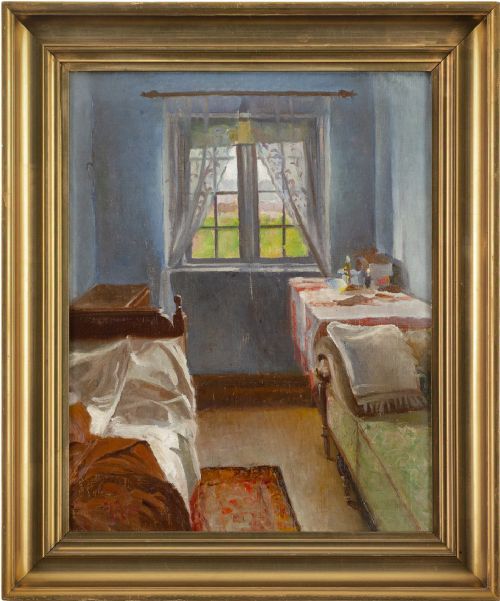
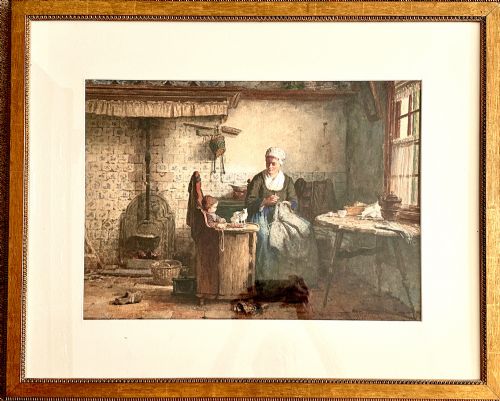
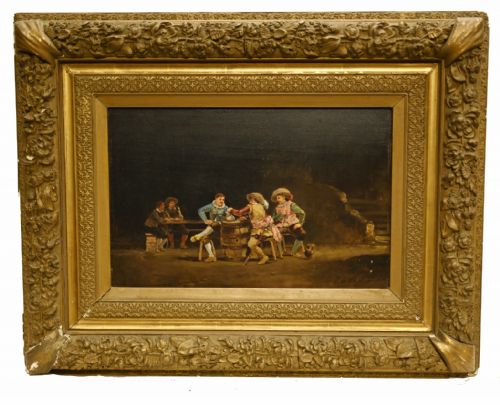
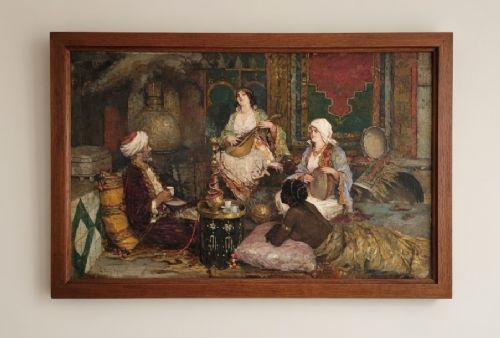
Vintage interior scene art encompasses framed works depicting domestic rooms, studies, bar interiors, and cottage hearths. These pieces record the everyday habits, furnishings, and social interactions of past eras through the eyes of contemporary painters and watercolourists.
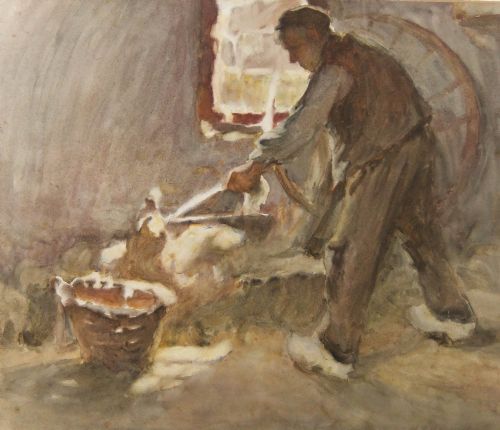
Buyers on this page will most frequently encounter nineteenth-century and mid-twentieth-century examples, ranging from realist oils on canvas to delicate watercolours and gouache works. Subject matter spans quiet domestic moments like tea hours and fireside sittings to bustling tavern and workshop gatherings.
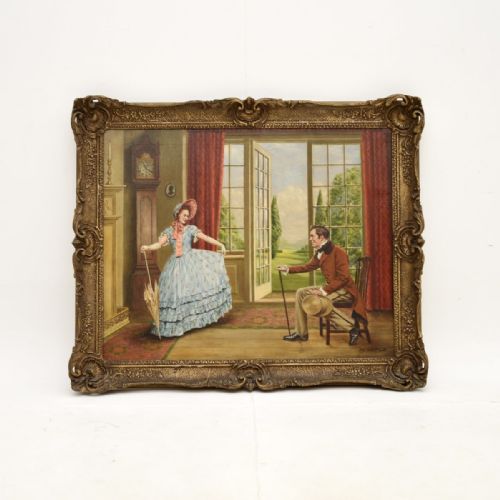
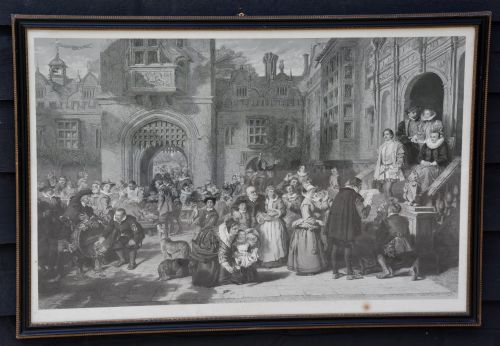
The works take several physical forms, including oil paintings on canvas and board, watercolours on paper, engravings, and chrystoleums housed in period frames such as Hogarth or burr wood mouldings. Continental and British schools both feature prominently across the available selection.
Materials and methods of creation
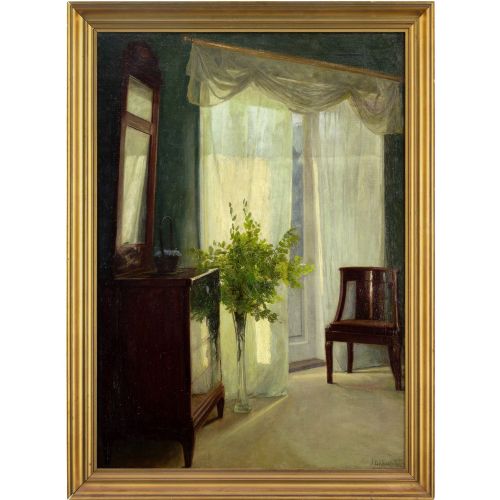
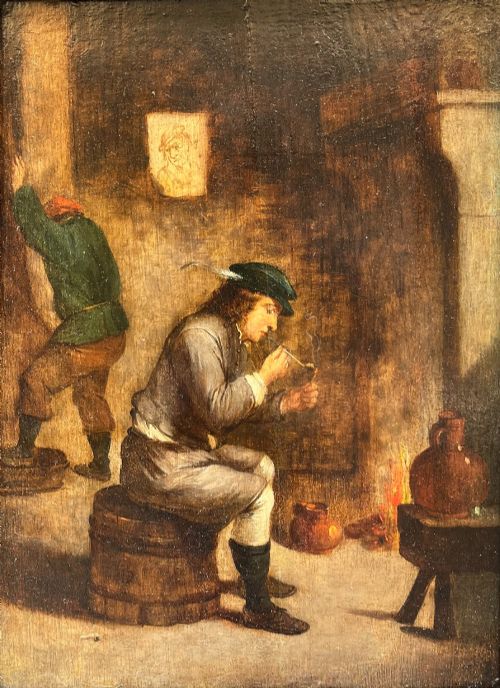
Painters utilised oil paint and watercolour as primary mediums, applying pigment to stretched canvas, wooden panel, card, paper, tin, or oil on paper. These materials were chosen for their handling of light, allowing artists to render interior illumination, such as sunlight through garden doors or firelight near hearths.
Execution techniques vary from fine realist brushwork and chiaroscuro contrasts to looser post-impressionist or abstract applications. Works were commonly housed in protective frames made of wood, often retaining original glazing, paper labels, or maker inscriptions on the reverse.
Listings span periods from the 17th century through the 1960s, employing oil, watercolour, and engraving on wood, canvas, and paper.
Factors determining quality
Quality in these works rests upon the artist's handling of light, space, and human anatomy within a confined room. Superior pieces capture atmosphere and narrative depth successfully, whereas lesser examples rely on stiff figures or flat perspective.
The integrity of the original support and pigment condition further separate tiers of work. Retaining original period frames and legible artist signatures or inscriptions adds documentation value to the piece.
Henry Silkstone Hopwood·Alfred Lyndon Grace·John Lübschitz·Harry Kluge·Hendrik Valkenberg·Gabriel Puig Roda·James Kyd·Robert Eadie·George Smith·Thomas Couture·Quirijn Van Brekelenkamp·Hans Temple·Roland Batchelor·Ludolf de Jongh·Théophile Emmanuel Duverger·Rolinda Sharples·Gustav Goemans·Joaquín Luque y Roselló·John Percy Cooke·Pauline Delacroix Garnier·F. Petitjean
The Vintage Interior Scene Art Glossary
- Chiaroscuro
- The use of strong contrasts between light and dark, usually bold contrasts affecting a whole composition. Painters utilised this technique to create dramatic atmosphere in tavern and cottage scenes.
- Chrystoleum
- A method of applying hand-colouring to a photograph or print mounted to convex glass. These pieces were popular in the nineteenth century for producing luminous, dimensional interior views.
- Genre painting
- The pictorial representation in art of scenes or events from everyday life. These works depict ordinary people engaged in common activities rather than historical or mythological subjects.
- Mezzotint
- A printmaking process of the drypoint family, in which the image is scraped and burnished onto a roughened copper plate. This technique allows for rich tonal gradations and subtle light effects.
- Intimist
- An artist who paints intimate interior scenes of domestic life. The style focuses on quiet, private moments within familiar rooms.
Vintage Interior Scene Art: Frequently Asked Questions
What defines an interior scene painting?
An interior scene painting focuses primarily on indoor settings such as domestic rooms, studios, or taverns. These works highlight human activity, furnishings, and the play of light within enclosed spaces.
They offer a documentary record of how people lived, worked, and gathered during the period in which the artist painted.
How do I care for antique watercolours?
Antique watercolours require protection from direct sunlight to prevent the fading of pigments and paper discolouration. Hanging them in stable indoor environments away from excessive moisture preserves both the paper and the frame.
Using conservation-grade mounting materials during any future reframing helps maintain the structural integrity of the paper.
Are these paintings in original frames?
Many pieces retain period frames, including Hogarth mouldings or burr wood surrounds, which match the era of the artwork. Original framing adds context and historical completeness to the piece.
Listings specify frame types and conditions where known, allowing buyers to identify period-appropriate enclosures.
How can I tell the period of an artwork?
Dating relies on a combination of stylistic evidence, artist signatures, framing materials, and inscriptions on the reverse of the canvas or panel. Clothing styles, room furnishings, and painting techniques also provide reliable clues to the decade of creation.
Consulting documented artist life dates and exhibition records helps narrow the timeframe further.