


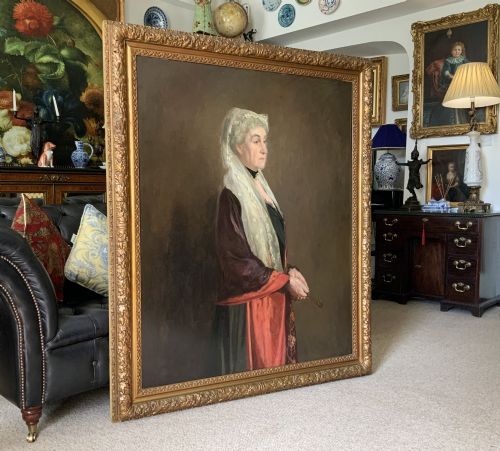
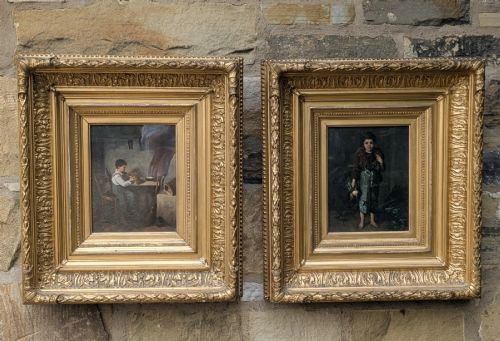
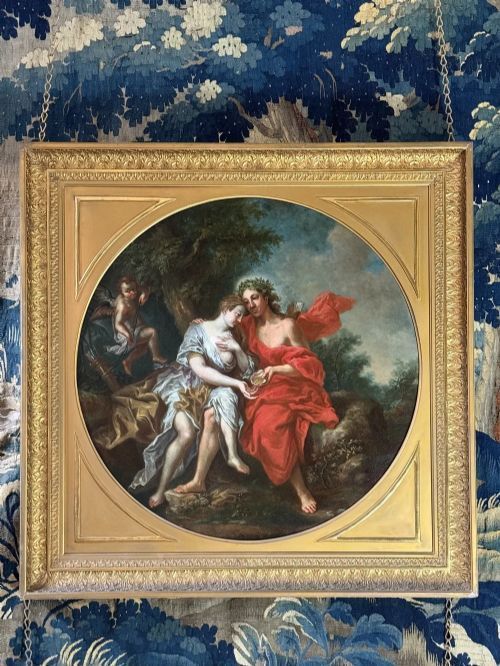
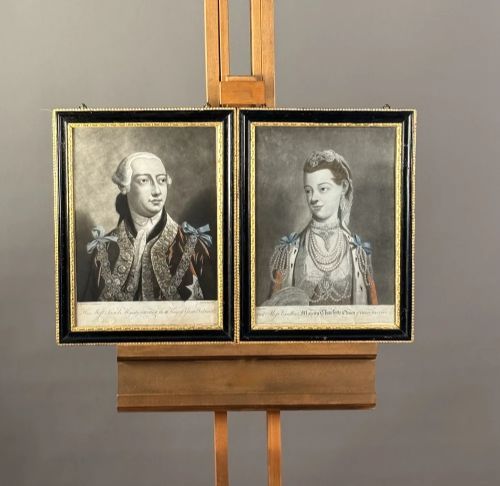
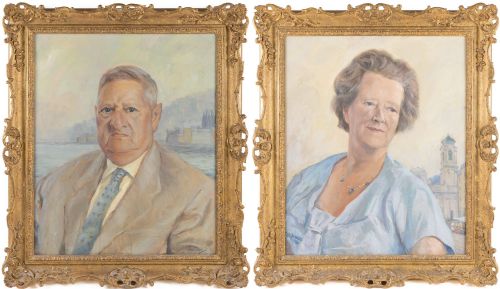
Pair of Framed Portraits
A pair of framed portraits offers a balanced symmetry to a wall, matching faces or companions hung together since their creation.
Pair of Framed Portraits
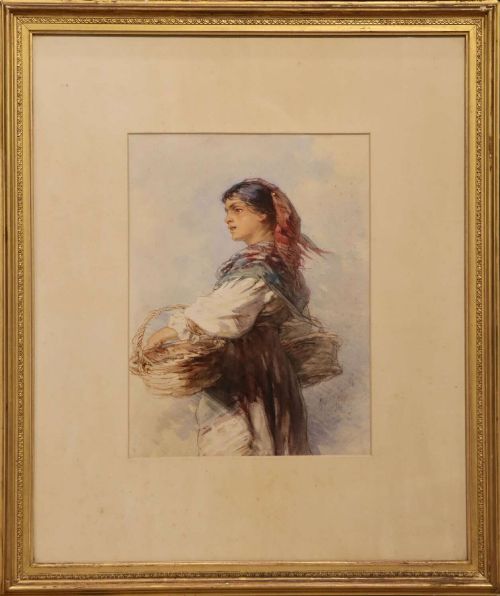
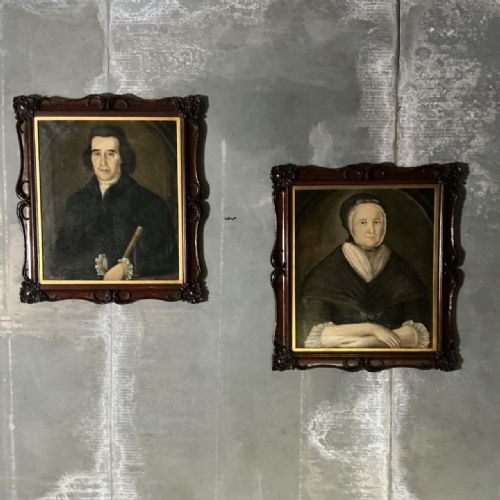
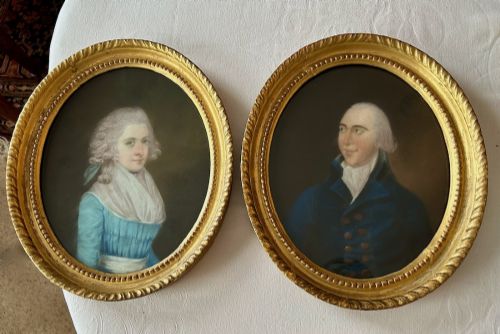
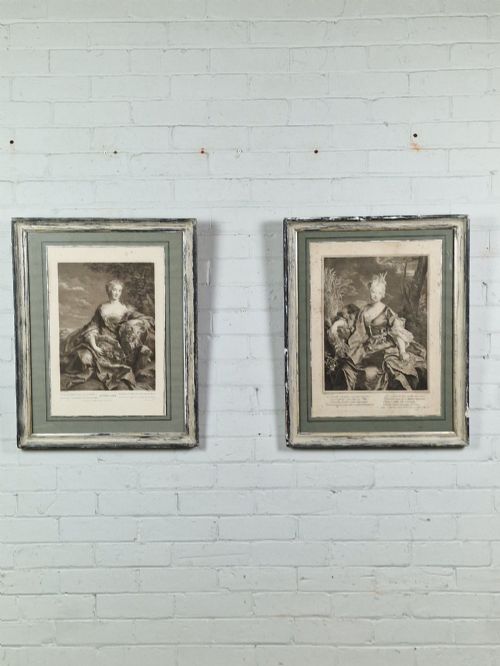
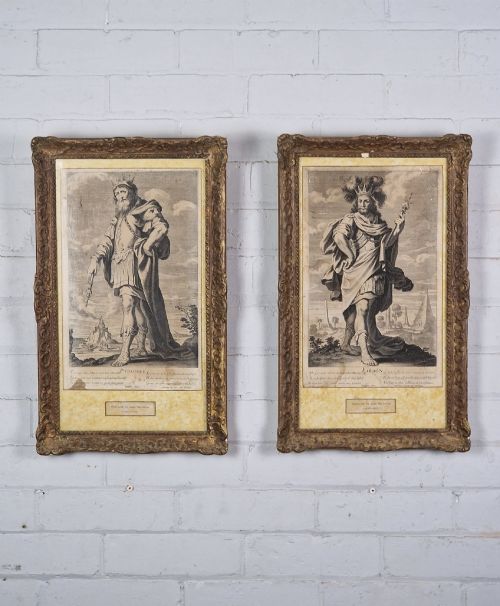
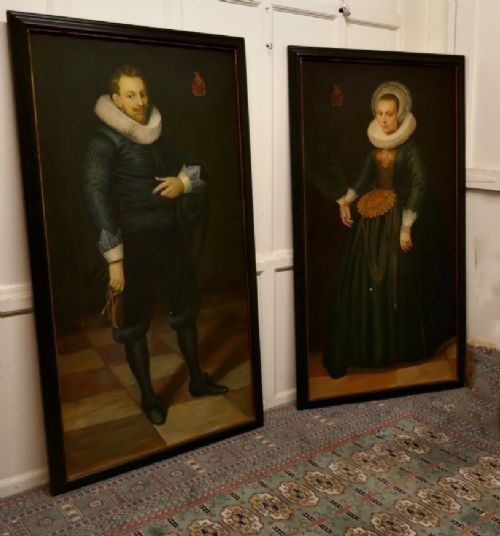
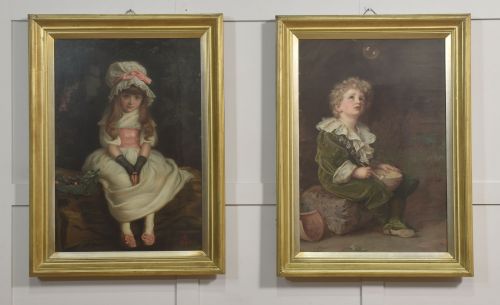
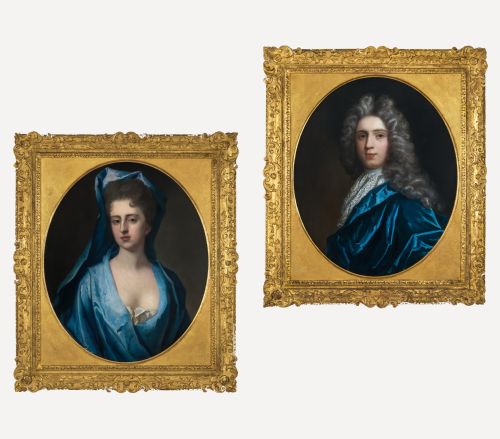
A pair of framed portraits consists of two complementary pictures of people, created as matching companion pieces and housed in synchronous frames. When searching for a pair of framed portraits, buyers encounter oil paintings, watercolours, pastels, engravings, mezzotints and delicate miniature works.
The selections span from the 18th century through the Victorian and Edwardian eras, encompassing Georgian sensibilities, Regency elegance and French stylistic influences. Subjects range from named nobility and children to anonymous folk art figures and classical allegories.
Most entries arrive ready to hang, often retaining their original wooden, rosewood, or giltwood surrounds with protective glass layers. These matched configurations were traditionally commissioned together to decorate family chambers or formal reception spaces.
Materials and construction
Makers applied oil paint to canvas or wood, brushed watercolours and pastels onto paper, or pulled engravings and mezzotints from copper plates. Artists utilised fine gold leaf to gild wooden frames, while some pieces incorporated carved wax or plaster intaglios set behind glass.
Workshops housed these depictions in heavy giltwood, rosewood, or swept frames designed specifically to complement the paired artworks. The structural pairing relied on uniform dimensions, matching sight lines and coordinated framing to present the subjects as an artistic unit.
Grand Tour travellers brought home plaster intaglios, preserving classical statues in miniature for quiet study back in rainy parlours.
Evaluating quality and execution
The distinction between standard works and exceptional pieces rests upon the surety of the draughtsmanship and the psychological depth captured in the faces. Master hands render hands, fabrics and facial expressions with life and precision, whereas lesser examples rely on formulaic repetition.
Original matching frames contribute substantially to the integrity of the pair, particularly when retaining period gilding or native rosewood grain. Complete provenance, naming the sitters or documenting the maker, elevates historical value far above anonymous likenesses.
Guido Bach·Jean Mariette·James Sharples·Emily Eyres·Cornelis Van Der Voort·Michael Dahl·Thomas Murray·Charles-Antoine Coypel·Thomas Frye·Richard Purcell·Adam Buck·Jacobus Houbraken
The Pair of Framed Portraits Glossary
- Mezzotint
- A printmaking process of the intaglio family, where the copper plate is roughened to achieve rich tonal gradations. It allows for subtle transitions of light and shade particularly suited to portraiture.
- Intaglio
- A design engraved or incised into a material such as plaster or wax so that the impression rises above or sits within the surface. Grand Tour travellers frequently collected these miniature reliefs.
- Giltwood
- Timber that has been coated with a thin layer of gold leaf or gold paint. This finish frequently decorates 18th and 19th-century frames.
- Pastel
- A dry painting medium consisting of powdered pigment and a binder, worked onto paper surfaces. These works require glass protection to prevent the pigment from smudging.
- Provenance
- The documented history of ownership of an antique object. A clear record helps verify the identities of the sitters and the authenticity of the artwork.
Pair of Framed Portraits: Frequently Asked Questions
How do I hang a pair?
Hang the two portraits at eye level, spaced evenly so they converse across the gap. Keep the centre point of the pair aligned with the furniture below them.
Ensure both frames are secured with two hooks to prevent them from tilting crookedly on the wall over time.
Were these always kept together?
Companion portraits were commissioned and framed as a pair to commemorate marriages, family alliances or partnerships. Their survival together reflects generations of careful preservation by successive owners.
Separating them usually destroys their historical narrative and visual symmetry.
How do I date the frames?
Examine the timber construction, joinery methods, and the type of gilding applied to the moulding. Regency and Georgian frames often feature distinct composition ornaments and simpler sight edges compared to later Victorian variants.
Original glass bubbles and backboards also offer clues to the age of the housing.
Can I reframe an oil painting?
Changing the frame alters the historical integrity of the piece and risks damaging the edges of the canvas or panel. Most collectors prefer to keep portraits in their original companion surrounds even if minor wear is present.
Consult a restorer before attempting any reframing work.