


Maple Framed Wall Art
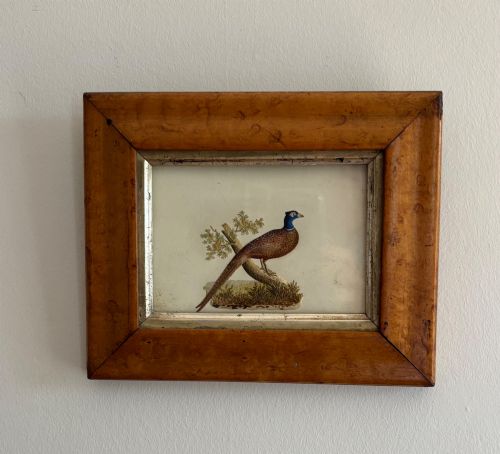
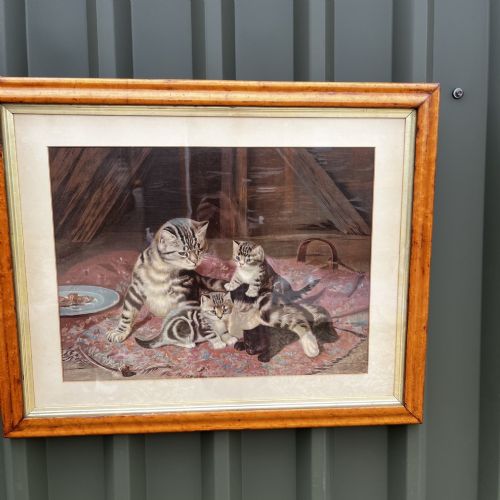
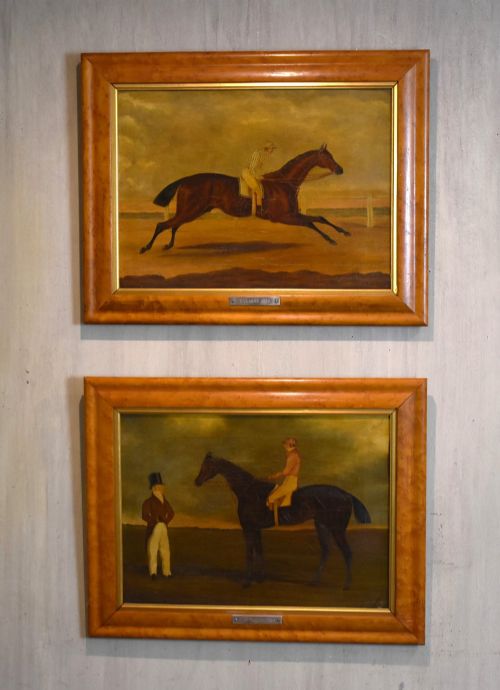
Maple framed wall art brings together soft watercolour paintings, needlework samplers and silhouettes bound in distinct figured wood.
Maple Framed Wall Art
Maple framed wall art comprises a diverse selection of pictures and textiles housed within wooden surrounds made from maple and burr maple. When searching for maple framed wall art, buyers encounter pieces spanning the Georgian, Regency and Victorian periods up to the early twentieth century.
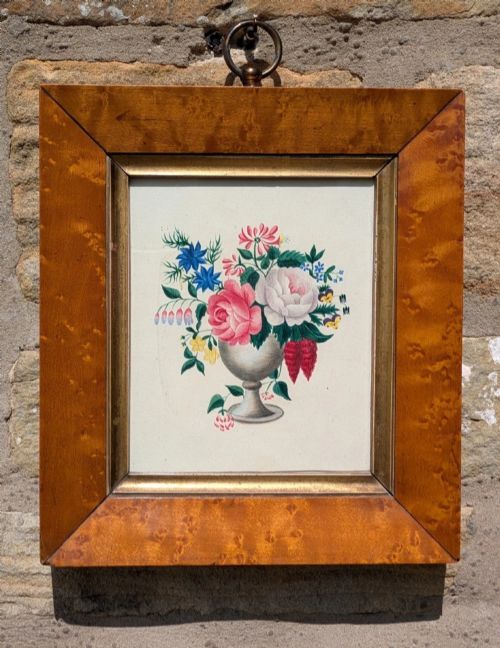
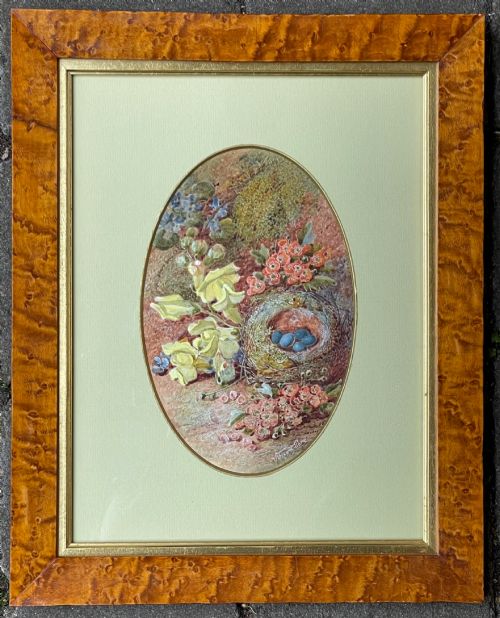
The objects preserved within these timber surrounds include oil paintings, watercolours, chromolithographs, engravings and handmade needlework samplers. Botanical studies, portraiture, sporting scenes and cartography frequently appear within the selection.
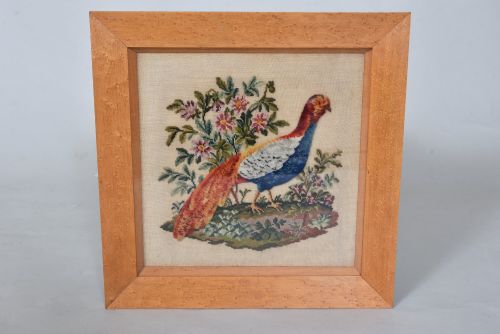
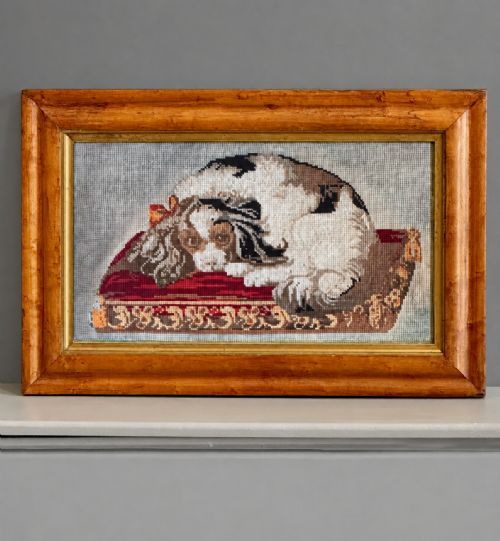
Needlework pieces such as Berlin work and silk floss samplers sit alongside portrait watercolours and oil paintings on panel or canvas. Many pieces retain their original frames, showing the warm grain and rich tone characteristic of nineteenth-century framing traditions.
How they were made
Makers utilised timber, glass, paper, wool and silk to construct these framed works. Woodworkers selected maple and burr maple for its distinctive figuring, shaping the timber into mouldings to enclose delicate paper prints, textiles and panel paintings.
Artists and craftspeople applied watercolours, oils and silk floss onto paper, canvas, linen and wool panels. Engravers and printers produced chromolithographs and reverse glass engravings, while needleworkers stitched detailed motifs using wool and silk thread.
Glazing protected fragile watercolours, prints and embroideries from dust and moisture within the wooden frames. Gold leafing occasionally accented the surrounds, adding contrast to the light grain of the maple wood.
Materials recorded across pieces include glass, paper, wood, maple wood, gold leaf, wool, and linen.
What varies in quality
The depth of figuring in the maple wood influences the visual impact of the frame, with burr maple offering intricate patterns compared to plainer grain. Original framing contributes significantly to the integrity of the piece, particularly when the timber and the artwork share the same period.
The skill of the artist, embroiderer or printmaker dictates the fineness of the interior artwork. Detailed brushwork in oil paintings, precise hand-stitching in samplers and crisp impressions in engravings distinguish finer examples from standard decorative works.
Vincent Clare·Samuel Dixon·Horatio Henry Couldrey·John Frederick Herring Snr·Frederick Frith·Robert Faulkner·W.A. Clark·John Ferneley Jnr
The Maple Framed Wall Art Glossary
- Burr maple
- A wood growth on a maple tree that produces intricate, swirling patterns in the grain. This timber is highly prized for decorative veneer and nineteenth-century framing.
- Berlin work
- A type of wool embroidery popular in the nineteenth century that used charted patterns printed on grid paper. Stitchers worked these designs in brightly coloured wool on canvas grounds.
- Chromolithography
- A planographic printing method used to produce multicoloured images. This technique allowed nineteenth-century makers to reproduce oil paintings and illustrations with varied hues.
- Reverse glass engraving
- An intricate process where an image is engraved and painted on the reverse side of a glass sheet. The finished picture is then viewed through the glass.
- Plushwork
- A raised embroidery technique that created a textured, velvety surface on textile art. Makers often used this method to depict animals and feathers with realistic dimension.
Maple Framed Wall Art: Frequently Asked Questions
What periods do these pieces come from?
The selection spans several centuries, including Georgian, Regency and Victorian eras, alongside early twentieth-century examples. Makers during these periods utilised native and imported timber for framing.
Each era brought distinct artistic styles, ranging from naive folk art and detailed needlework samplers to formal portraiture and botanical studies.
Are the frames original to the artwork?
Many items retain their original maple or burr maple frames, which show appropriate wear consistent with their age. The combination of timber frame and interior art often reflects nineteenth-century framing practices.
Examining the backing boards and fixings helps determine whether the frame and the artwork have remained together since creation.
What types of artwork appear in maple frames?
The category includes watercolour paintings, oil paintings on panel or canvas, and chromolithographs. Artists also produced engravings, silhouette portraits and cartography.
Textile art forms such as silk samplers, wool needlework and plushwork pictures frequently appear behind glass within these wooden surrounds.
How do I care for framed textiles and paper?
Paper and textile items require protection from direct sunlight to prevent fading of watercolours, printed inks and silk threads. Maintaining stable indoor humidity levels prevents warping of the wooden frames and degradation of organic materials.
Displaying pieces away from heat sources preserves both the delicate interior artwork and the polished surface of the maple wood.