



Dutch Genre Style Paintings
Dutch genre style paintings bring domestic interiors and tavern scenes into the room with oil paint on canvas, panel, copper and tin.
Dutch Genre Style Paintings
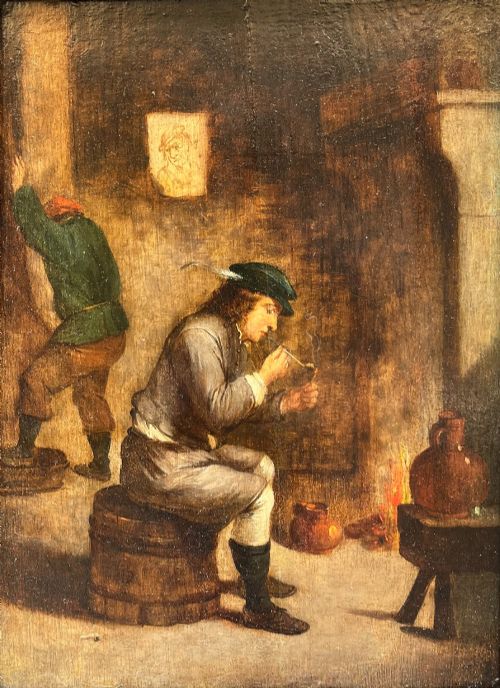
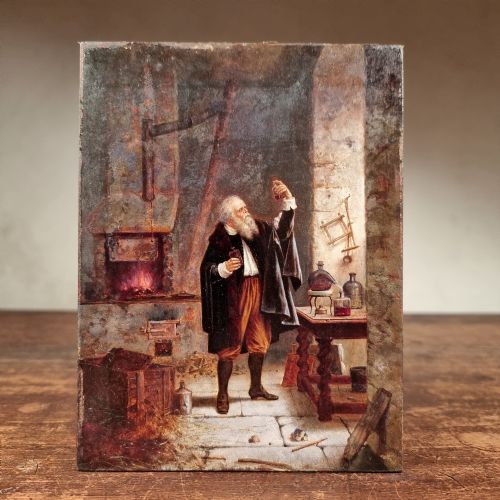
Dutch genre style paintings capture everyday scenes of domestic life, tavern merrymaking, and figures at work or hearthside. When searching for dutch genre style paintings, buyers encounter works ranging from seventeenth-century originals and period copies to nineteenth-century interpretations in the manner of established masters.
The subjects frequently show musicians, smokers, spinners, and servants within interiors rendered with careful attention to light and detail. These works draw upon the traditions of the Dutch Golden Age and Flemish Baroque, often following compositions established by painters such as David Teniers and Jan Steen.
Danish and broader continental hands also produced oil paintings on wood panel, canvas, copper and tin across the eighteenth and nineteenth centuries. Collectors find both small panel paintings intended for intimate display and larger framed canvases.
How they were made
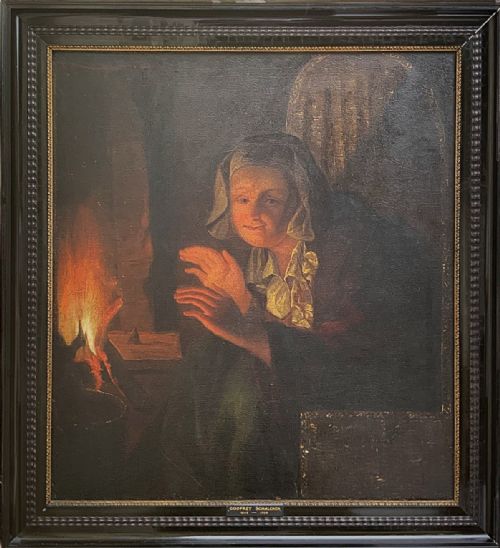
These works rely primarily on oil paint applied to supports of canvas, wooden panel, copper, or tin. Artists built up compositions using layered glazes and pigments to achieve depth in dark interior settings and nocturnal scenes.
Frames of gilt and giltwood were commonly added to enclose the panels and canvases, matching the academic and revival tastes of the nineteenth century. The physical support often dictates the fine detail achievable, with smooth copper and prepared wood panels allowing for minute brushwork.
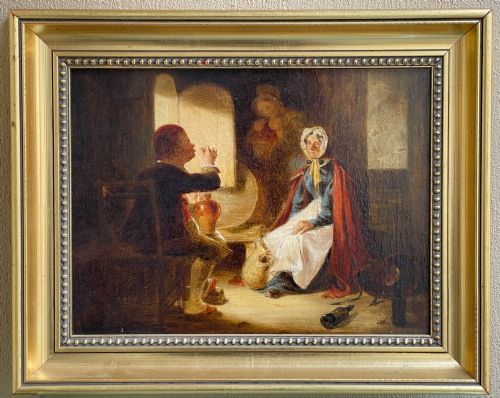
Dogs occasionally peer out from beneath tavern tables and hearths, silently sharing in the domestic meals and merriment.
What varies in quality
Quality rests in the handling of light, shadow, and facial expression within the figures, distinguishing a lively tavern interior from a stiff academic copy. The confidence of the brushwork in rendering textiles, smoke, and interior furnishings determines the artistic success of the piece.
The preservation of the original paint surface and the stability of the wood panel or canvas ground affect the visual integrity of the work over centuries. Finer examples maintain their tonal depth and subtle glazes without heavy modern retouches.
David Teniers·Godfried Schalcken·Quirijn Van Brekelenkamp·Jozef Israëls·Ludolf de Jongh·Willem Johannes Martens·Reinier de la Haye·Jan Steen·Bartholomeus Van der Helst
The Dutch Genre Style Paintings Glossary
- Genre painting
- Painting that depicts aspects of everyday life by portraying ordinary people caught in common activities. These scenes often take place in domestic interiors, kitchens, or taverns.
- Oil on panel
- A painting technique where oil paint is applied directly to a prepared wooden board rather than stretched canvas. This surface was favoured by many early northern European artists for its smooth finish.
- Manner of
- A term used when a painting is executed in the style and general aesthetic of a specific master without being an exact copy or an original work by that hand. It reflects the enduring influence of seventeenth-century painters upon later artists.
- Golden Age
- A period in seventeenth-century Dutch history marked by immense artistic output and innovation in painting. Works from this time established enduring conventions for portraiture and domestic genre scenes.
- Oil on copper
- A painting method utilising a polished sheet of copper as the rigid support for oil pigments. This medium allows for exceptional preservation of fine detail and luminosity.
Dutch Genre Style Paintings: Frequently Asked Questions
What is a genre painting?
A genre painting depicts scenes from everyday life, featuring ordinary people engaged in normal activities such as working, drinking, or sewing.
Rather than recording historical events or mythological tales, these works focus on the intimate details of domestic interiors and public taverns.
How do I date an old oil painting?
Dating relies upon examining the physical support, such as a hand-planed wood panel or a stretched canvas, alongside the style of dress and framing.
Comparing the handling of the paint and subject matter to known works from periods like the seventeenth or nineteenth century helps narrow the origin.
Where should I hang these paintings?
These works suit traditional reception rooms, studies, or hallways where their rich tones and intimate scales can be appreciated up close.
Keeping them away from direct sunlight and excessive moisture protects the oil pigments and wooden panels.
What does after an artist mean?
The phrase indicates that the painting is a later copy or a deliberate homage based upon a known composition by that specific master.
Many nineteenth-century artists painted these versions to satisfy the Victorian demand for seventeenth-century Dutch Golden Age aesthetics.