

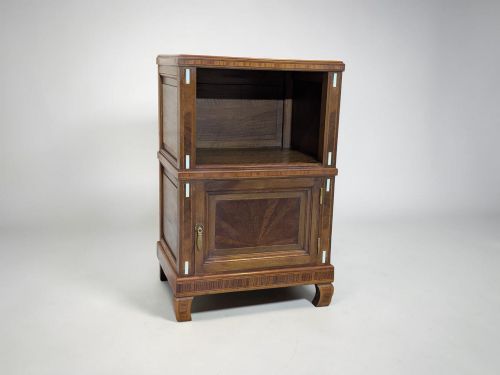
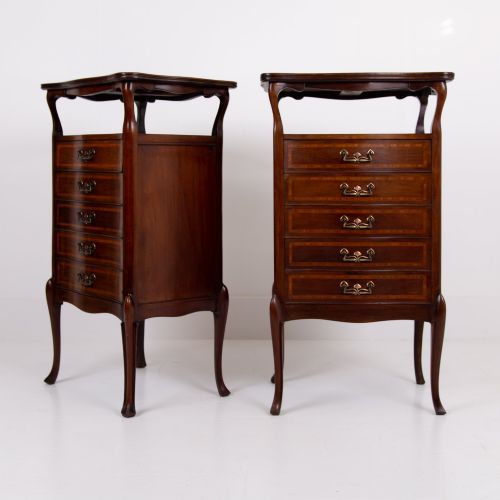

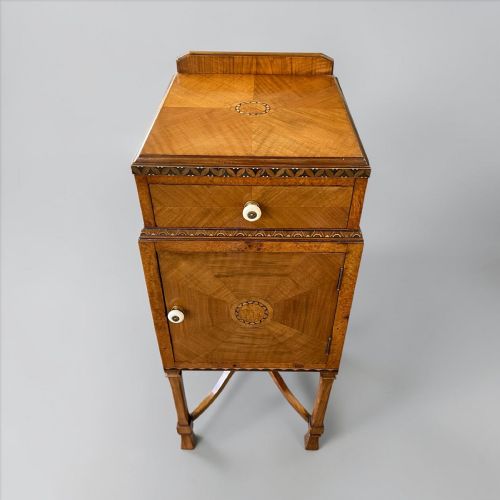
Vintage Inlaid Nightstand
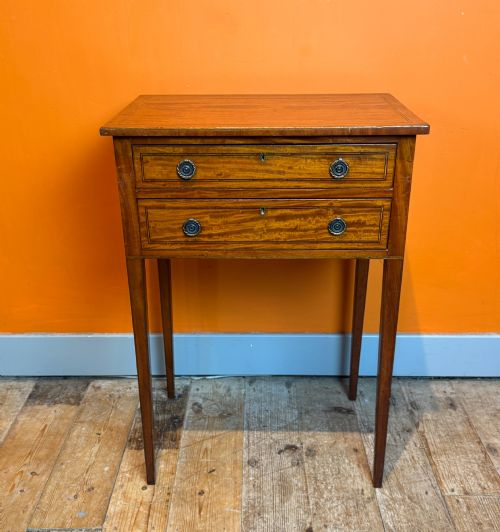
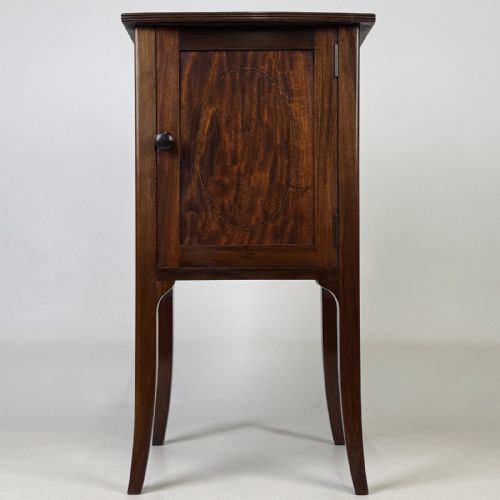
A vintage inlaid nightstand brings practical bedside storage together with decorative timber work and contrasting stringing.
Vintage Inlaid Nightstand
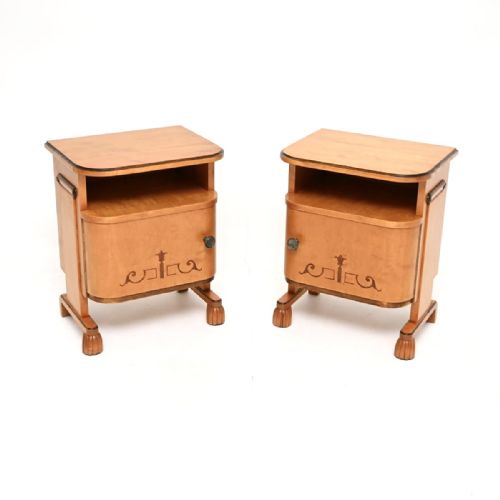
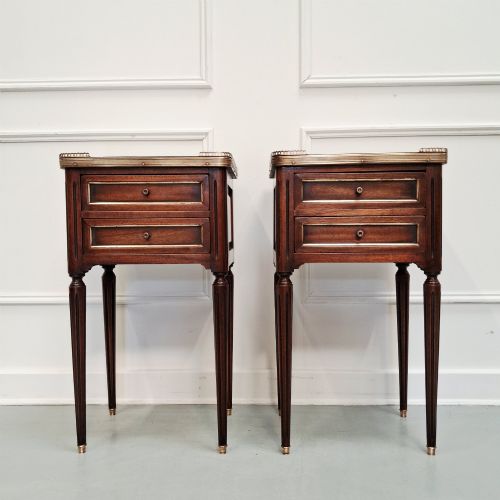
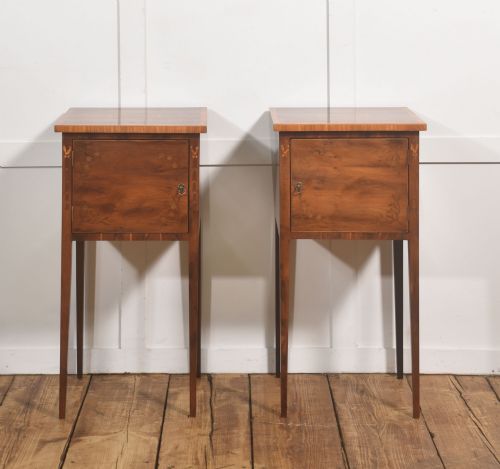
A vintage inlaid nightstand combines utilitarian bedside storage with decorative woodworking traditions spanning the Victorian, Edwardian, and Art Deco eras. Buyers searching for a vintage inlaid nightstand encounter compact bedside cabinets, lamp tables, and small chests fitted with hinged doors or functional drawers.
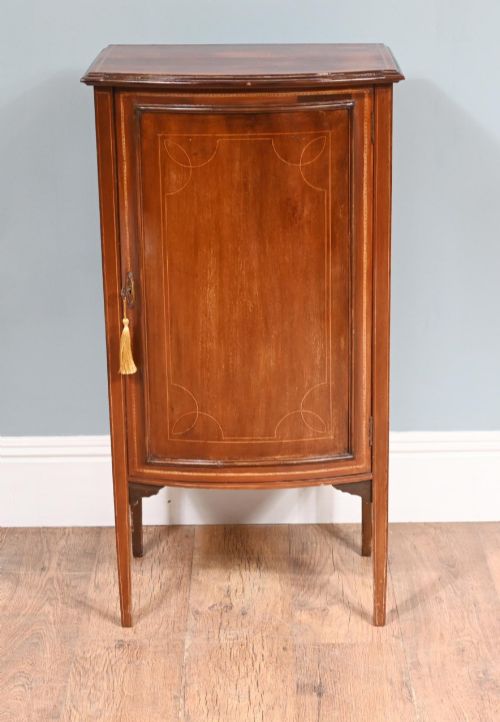
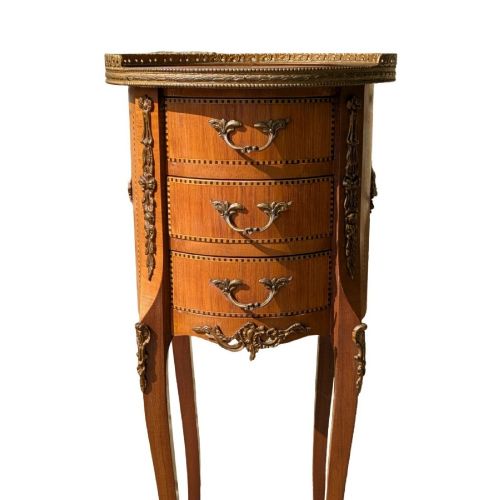
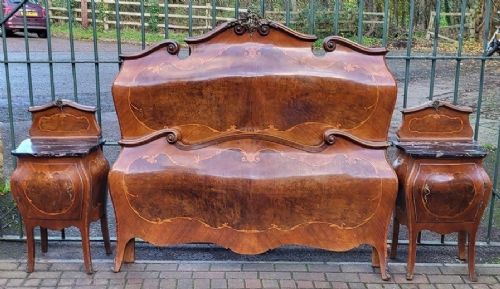
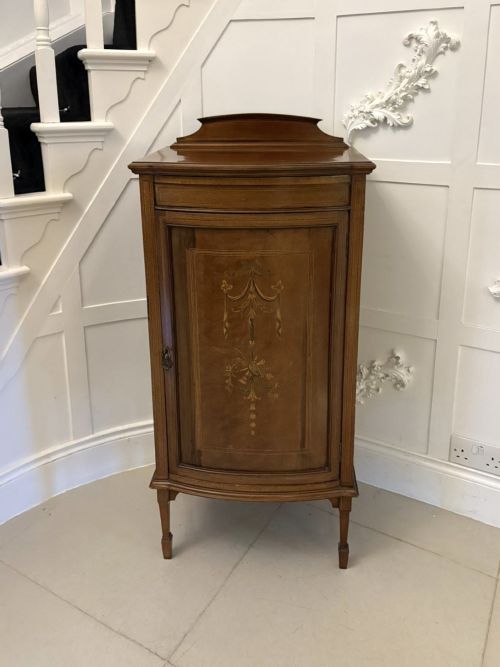
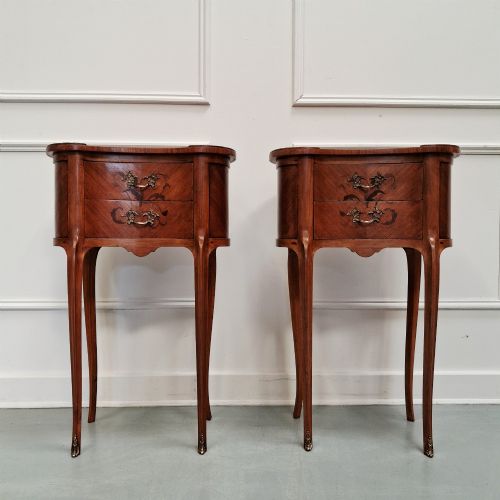
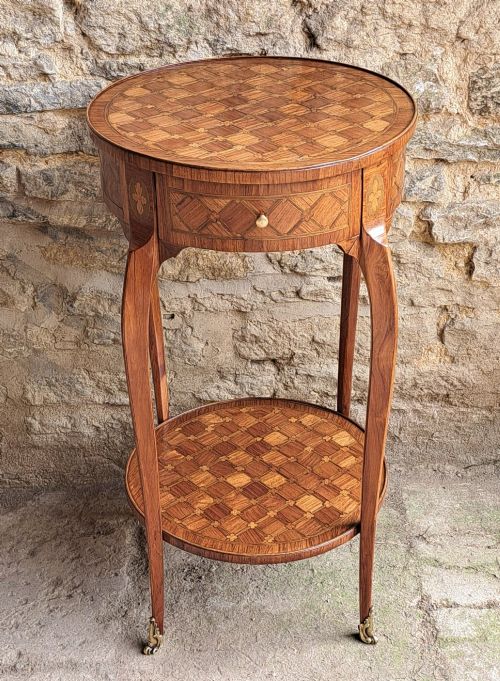
The selection on this page relies heavily on Edwardian mahogany examples alongside French styles featuring marquetry and parquetry. These pieces adapt easily to modern bedrooms while retaining period character through contrasting timber details.
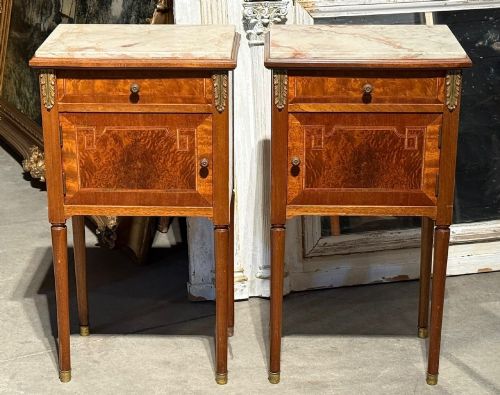
Makers and workshops utilised various woods to create geometric patterns and floral motifs across bedside furniture. Cabinets often incorporate marble tops or brass hardware alongside the characteristic inlaid surface decoration.
How they were made
Cabinet makers constructed carcass frames from solid timbers such as mahogany, walnut, and oak, applying veneers of exotic woods over the primary structure. Satinwood, rosewood, kingwood, and boxwood supplied the contrasting colours necessary for detailed inlay work.
Marquetry techniques involved cutting intricate pictorial or geometric veneers by hand and pressing them into prepared recesses on the timber surface. Brass handles and marble slabs completed the upper surfaces of high-end bedside cabinets.
Vintage Inlaid Nightstand Retail Price Guide 2026
Typical asking prices for vintage inlaid nightstand among the pieces listed under this phrase on Sellingantiques today, from the lower quarter to the upper quarter. They describe what is for sale here now, not the wider market.
Listings feature bedside tables and cabinets from the nineteenth century up to the 1930s, constructed in mahogany, walnut, and kingwood.
What varies in quality
The precision of the veneer work and the complexity of the marquetry patterns set finer examples apart from simpler utility items. Crisp alignment in the contrasting stringing indicates greater skill in the cabinet shop.
Materials such as figured burr walnut, kingwood, and inset marble tops separate standard production items from luxury commissions. The integrity of the timber framing and the original condition of the brass fittings determine the lasting structural merit of the piece.
Morant And Co London·Walter Carter Harrods·Liberty And Co
The Vintage Inlaid Nightstand Glossary
- Marquetry
- Decorative veneer patterns assembled to form pictorial or geometric designs on furniture surfaces. Craftsmen jigsawed different coloured woods together before gluing the entire sheet to the carcass.
- Parquetry
- Geometric wood mosaic work used to pattern tabletops and cabinet doors. It relies on repeating angular shapes like squares, triangles, and diamonds.
- Satinwood
- A durable tropical timber yielding a lustrous yellow or golden sheen prized for fine stringing and banding. It provides strong contrast against darker woods like mahogany.
- Kingwood
- A dense violet-brown Brazilian timber heavily figured with dark streaks. Cabinetmakers utilised it extensively in high-status French revival pieces.
- Stringing
- Thin lines of contrasting wood inlaid into channels cut into the primary surface. It outlines panels and drawers on Edwardian and Sheraton revival furniture.
Vintage Inlaid Nightstand: Frequently Asked Questions
What is a vintage inlaid nightstand?
A vintage inlaid nightstand is a small bedside cabinet or lamp table decorated with contrasting wood veneers and decorative stringing.
These pieces originate from periods including the Victorian era, the Edwardian period, and the 1930s Art Deco movement.
How do I identify Edwardian inlaid pieces?
Edwardian examples typically utilise mahogany carcasses decorated with delicate boxwood and satinwood stringing.
They often present lighter proportions and simpler geometric or floral motifs compared to heavier Victorian furniture.
Are marble tops original on nightstands?
Many French bedside cabinets and lamp tables from the early twentieth century feature fitted marble slabs designed to protect the wood.
These stone surfaces were standard additions on higher-end pieces imported from continental workshops.
How do I care for inlaid wooden surfaces?
Maintain inlaid furniture by applying natural wax polishes sparingly and avoiding direct exposure to strong sunlight.
Keep wooden items away from extreme temperature shifts to protect delicate veneers from lifting.