



Vintage Inlaid Bench
A vintage inlaid bench offers distinctive seating, bringing period character and detailed woodwork to a hallway, bedroom or reception room.
Vintage Inlaid Bench
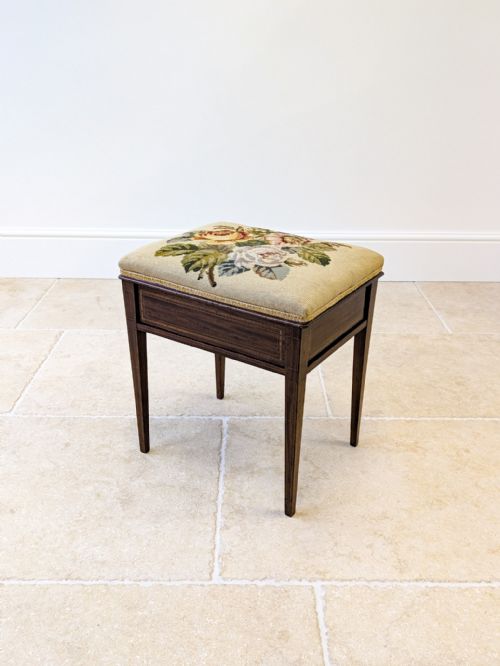
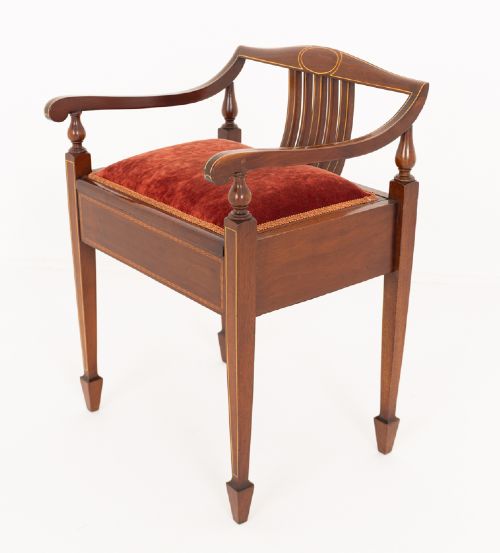
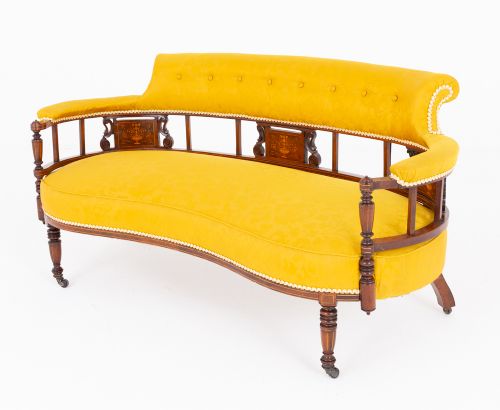
A vintage inlaid bench encompasses a variety of seating forms designed with decorative surface ornamentation, frequently appearing as compact piano stools, small bedroom sofas and salon settees. These pieces emerge predominantly from the Edwardian era and the late nineteenth century, reflecting revival styles like Sheraton Revival and Hepplewhite Revival alongside Chinese Export and Anglo Indian examples.
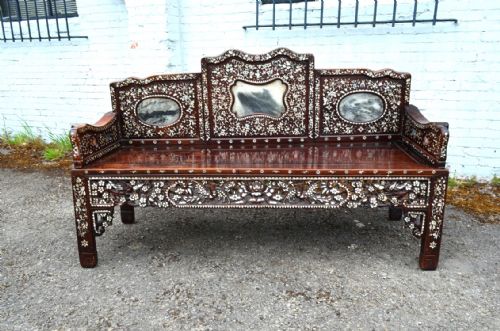
The most common form encountered on this page is the Edwardian mahogany salon settee or piano stool, typically featuring delicate contrasting wood inlay on the woodwork. Alongside these standard British drawing room pieces, the selection includes larger Chinese export hardwood benches and Dutch marquetry settee forms.
Buyers select these items to introduce functional seating that doubles as decorative woodwork, placing them at the end of a bed, in a hallway, or beside a piano. The combination of upholstered pads with patterned timber frames provides both comfort and visual interest.
How they were made
Cabinet makers constructed the structural frames of these seats using dense timbers such as mahogany, rosewood and assorted hardwoods. These solid foundations were then decorated using precise inlay techniques incorporating lighter woods like satinwood and boxwood, or in specific Asian examples, mother of pearl.
Surface decoration relies on contrasting veneers and detailed stringing set directly into the primary timber of the frame. Upholstered elements use traditional fabric coverings, velvet and fabric upholstery secured over padded seats designed for parlour and salon use.
Vintage Inlaid Bench Retail Price Guide 2026
Typical asking prices for vintage inlaid bench among the pieces listed under this phrase on Sellingantiques today, from the lower quarter to the upper quarter. They describe what is for sale here now, not the wider market.
The selection includes diverse regional styles, ranging from British Sheraton revival salon furniture to Chinese export hardwood and Anglo Indian box settles.
What varies in quality
The distinction between ordinary and superior pieces rests on the crispness of the cabinet work and the ambition of the inlay design. Finer examples display meticulous juxtaposition of satinwood and boxwood against the mahogany base, whereas lesser items rely on simpler, repetitive borders.
Structural integrity and the preservation of the original timber frame dictate the standing of a piece within the range. Pieces retaining their undisturbed frames and sophisticated revival styling demonstrate higher craftsmanship than heavily altered or basic utility seating.
The Vintage Inlaid Bench Glossary
- Inlay
- A technique where pieces of contrasting timber, such as satinwood or boxwood, are inserted into depressions carved into the primary wood surface to create a decorative motif.
- Sheraton Revival
- A late nineteenth and early twentieth century design movement that reinterpreted the lighter, neoclassical furniture forms associated with the eighteenth-century designer Thomas Sheraton.
- Marquetry
- An elaborate form of inlay where veneer pieces are assembled to form pictorial or geometric patterns across the entire surface of the furniture.
- Salon Settee
- A light, decorative two-seater sofa designed for formal reception rooms during the Edwardian period and late nineteenth century.
- Piano Stool
- A low seat, often with an inlaid mahogany frame, originally manufactured to be placed at an upright or grand piano.
Vintage Inlaid Bench: Frequently Asked Questions
Where should I put a vintage inlaid bench?
These pieces suit positions where space is modest but decorative detail has impact. An end-of-bed placement or a narrow hallway works well for smaller piano stools and two-seater settees.
Larger salon settees fit principal reception rooms as occasional seating. Their detailed woodwork benefits from placement away from direct heat sources to protect the veneers.
How do I identify an Edwardian inlaid settee?
Edwardian examples typically combine a mahogany frame with delicate satinwood or boxwood stringing and floral motifs. The proportions tend to be lighter than earlier nineteenth-century seating.
Stylistic markers often include Sheraton or Hepplewhite revival characteristics, reflecting a turn-of-the-century interest in eighteenth-century elegance.
What is the difference between a settee and a piano stool?
A settee is designed as a small sofa for multiple people, usually featuring a backrest and arms for comfortable lounging in a parlour or salon. Settees vary from narrow two-seater formats to larger three-piece suite components.
By contrast, a piano stool is a more compact seat, often backless or low-backed, built specifically for use at a keyboard instrument.
Are these benches comfortable for daily use?
Many pieces on this page were built for formal reception spaces or musical practice rather than heavy lounging. Their padding and upholstery reflect the domestic standards of the late nineteenth and early twentieth centuries.
Some salon seats may require reupholstery to suit modern comfort preferences while preserving the historic wooden frame underneath.