



Mahogany Parlour Sofa
These mahogany parlour sofa selections offer refined Victorian and Edwardian seating, designed to bring period elegance and comfortable reception spaces to your interior.
Mahogany Parlour Sofa
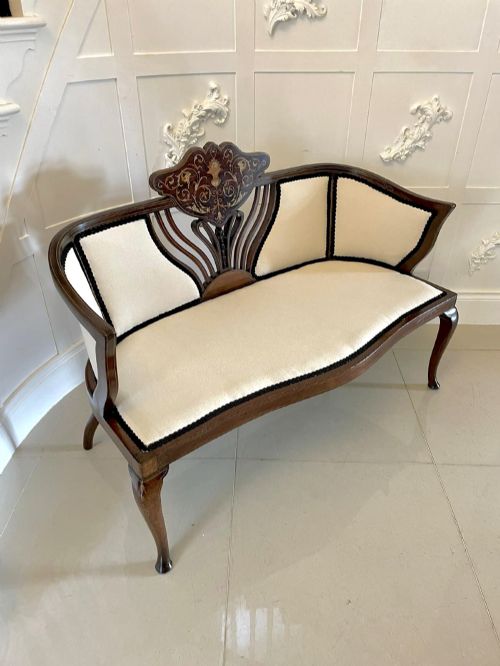
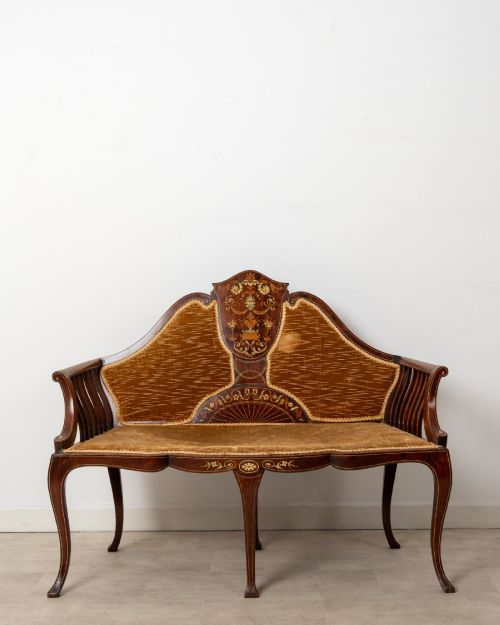
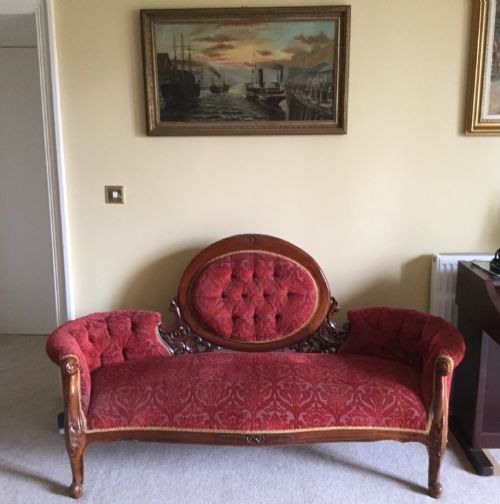
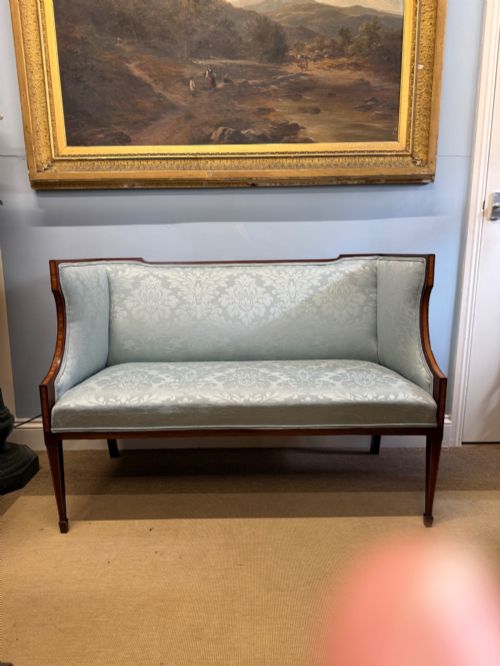
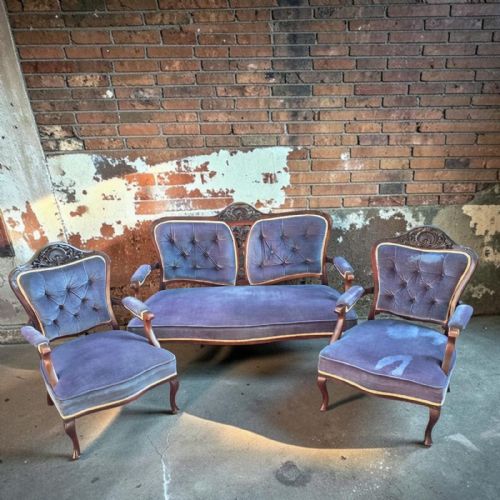
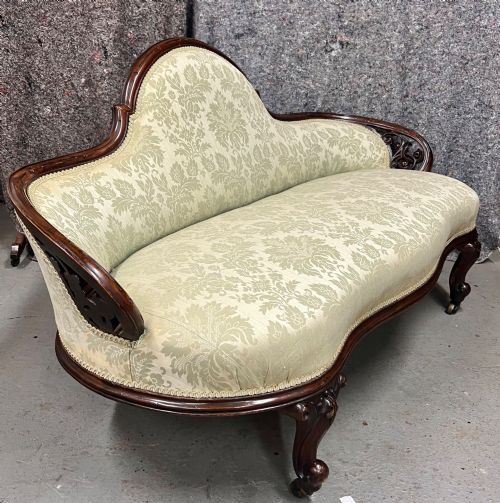
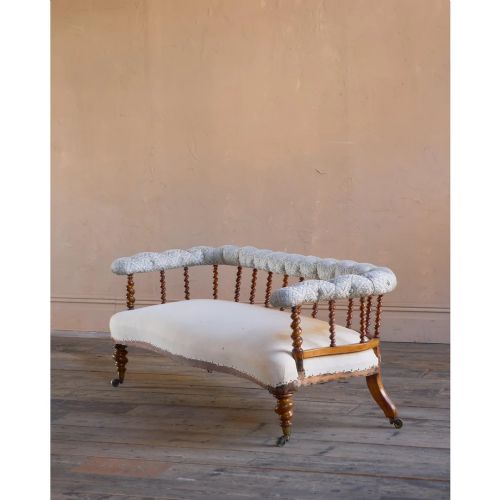
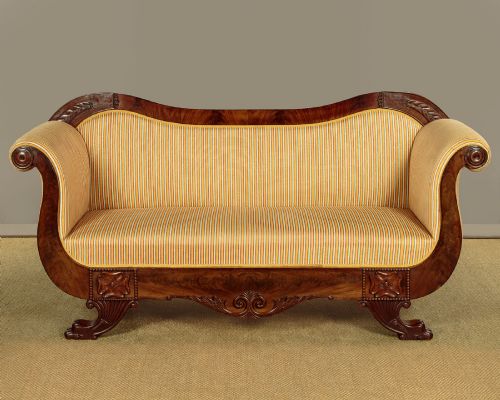
A mahogany parlour sofa provides formal seating developed for nineteenth-century reception rooms and grand sitting rooms. When searching for a mahogany parlour sofa, buyers encounter various nineteenth- and early twentieth-century forms ranging from compact Victorian double-ended couches to spacious Edwardian inlaid two-seater settees. These pieces function as statement seating within traditional rooms, offering structured frames suited to upright social sitting.
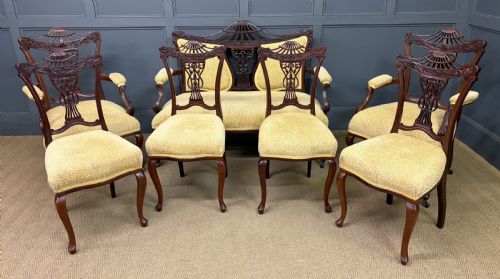
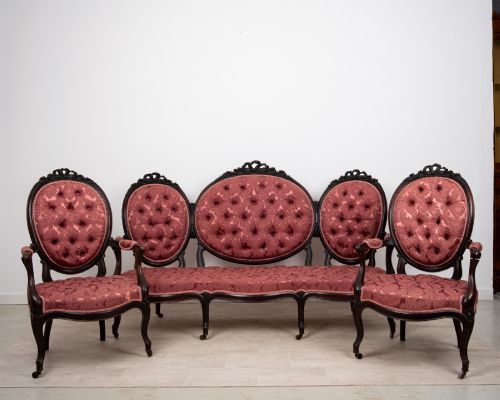
The prevailing examples on this page date predominantly from the Victorian and Edwardian eras, featuring classic show frames and upholstered sprung bases. Makers constructed these settees using rich timber frames, frequently accented with delicate stringing or contrasting wood details. Buyers frequently find these items as individual settees or paired with matching salon chairs.
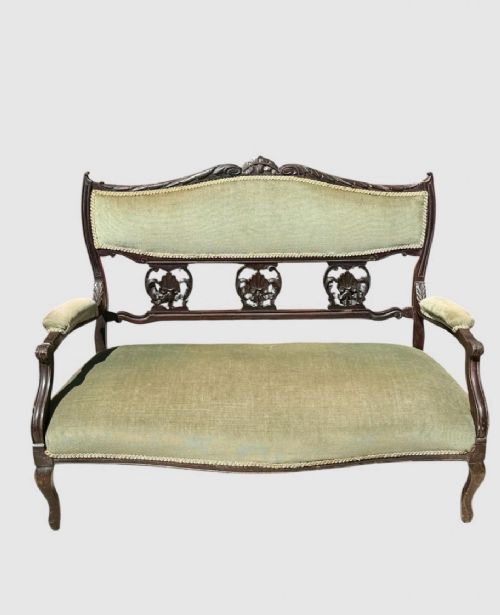
Forms span from double spoon-back settees of the early Victorian period to slender, satinwood-inlaid Edwardian parlour suites. Their compact proportions make them particularly adaptable for drawing rooms, reception spaces, and bedrooms. Each variant reflects the evolving domestic tastes of the nineteenth and early twentieth centuries.
How they were made
Craftsmen built these frames using solid mahogany, chosen for its strength and deep grain, often enhanced by decorative veneers and marquetry. Cabinetmakers integrated boxwood and satinwood inlay to create geometric lines or floral motifs along the crest rails and legs. Structural integrity relied upon traditional joinery, securing sprung seat bases designed to support deep buttoned upholstery or contemporary fabric coverings.
Upholstery methods involved horsehair stuffing and intricate spring systems layered beneath heavy textiles like velvet, brocade, and damask. Show frames exposed polished timber borders, requiring meticulous hand-carving for details such as scroll ends or spindle backs. Brass fittings and castors occasionally appeared on legs to facilitate movement across carpeted drawing rooms.
His and her matching salon chairs frequently accompany these settees, ensuring couples could sit upright together in equal Victorian splendour.
What varies in quality
Quality differences emerge in the crispness of the timber carving and the precision of the contrasting wood inlay. Superior examples display finely figured mahogany grains alongside meticulously cut satinwood and boxwood stringing that remains flush with the surface. Robust joinery and well-preserved show frames distinguish fine pieces from simpler utilitarian seating.
The execution of the upholstery foundation also dictates the tier of the piece, with professional hand-tied springing and high-grade fabric retaining superior shape. Original frames that retain their structural rigidity without excessive timber shrinkage command higher regard among collectors. Minor variations in decorative restraint often separate standard parlour furniture from bespoke salon suites.
C. Hindley & Sons·Maple and Co
The Mahogany Parlour Sofa Glossary
- Show frame
- A wooden structural framework left exposed around the upholstered elements of a sofa. This allows the polished mahogany grain and carved details to remain visible.
- Inlay
- A technique where contrasting woods such as satinwood or boxwood are inserted into recesses within the mahogany surface to form decorative patterns.
- Double-ended sofa
- A couch featuring symmetrical raised scrolled ends rather than a conventional back and single armrest configuration. This layout permits reclining from either direction.
- Spoon back
- A padded backrest shaped to resemble the contour of an antique spoon, characteristic of mid-nineteenth-century seating. It provides ergonomic support while maintaining a slender profile.
- Satinwood
- A lustrous, yellowish timber native to Ceylon and India, frequently utilised in contrasting stringing and banding on late period furniture.
Mahogany Parlour Sofa: Frequently Asked Questions
Where were parlour sofas placed?
These sofas traditionally occupied formal drawing rooms or reception spaces where hosts entertained guests. Their finished backs and decorative show frames also permitted placement in the centre of large rooms.
Today, they function well in living areas, studies, or large hallways, serving as both practical seating and decorative focal points.
How do I date these sofas?
Dating relies on stylistic shifts, from the heavy carved mahogany and deep buttoning of Victorian pieces to the lighter, inlaid satinwood designs of the Edwardian era. Material use and structural proportions offer clear clues to the manufacturing decade.
Examining the joinery beneath and the timber finish helps confirm whether a piece belongs to the early nineteenth century or the later revival periods.
Are these sofas comfortable for daily use?
Most historic parlour sofas feature firm sprung bases and upright backs designed for formal nineteenth-century posture rather than modern lounging. Their supportive structure suits reading or conversational seating in reception rooms.
Many examples have been professionally re-upholstered on traditional sprung bases, combining period character with reliable daily comfort.
How do I maintain mahogany furniture?
Keep mahogany frames away from direct sunlight and heat sources to prevent the timber from drying out or splitting. Regular dusting with a soft, dry cloth preserves the polished finish.
Applying a quality furniture wax periodically helps nourish the wood and maintain its natural lustre without building up heavy residues.