


Edwardian Salon Sofa
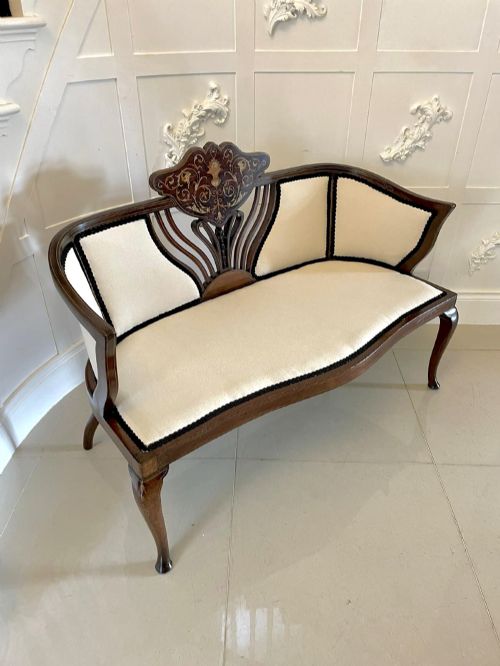
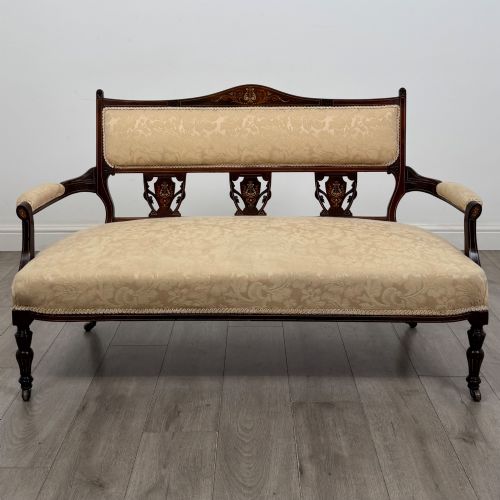
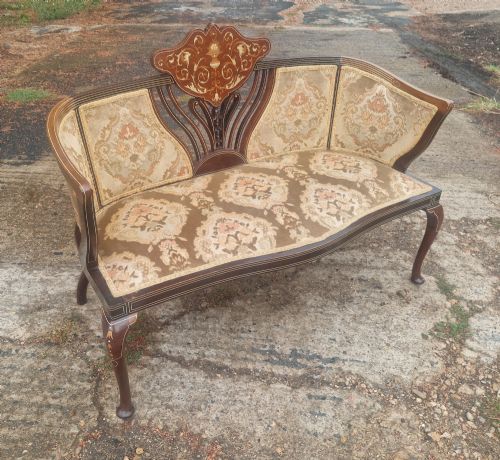
An edwardian salon sofa offers refined parlour seating, combining mahogany frames with delicate inlay for a traditional drawing room aesthetic.
Edwardian Salon Sofa
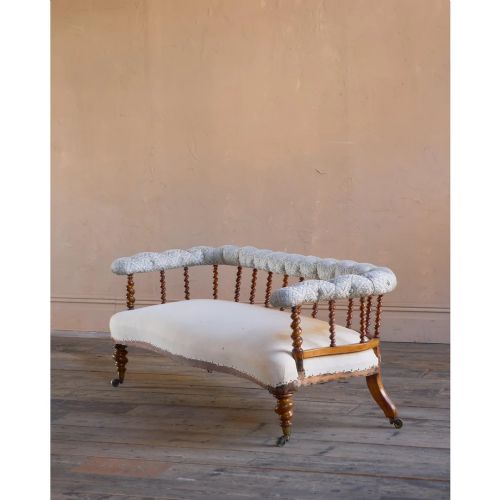
An edwardian salon sofa is a formal two-seater or settee designed for reception rooms, originating predominantly around the turn of the twentieth century alongside late Victorian examples.
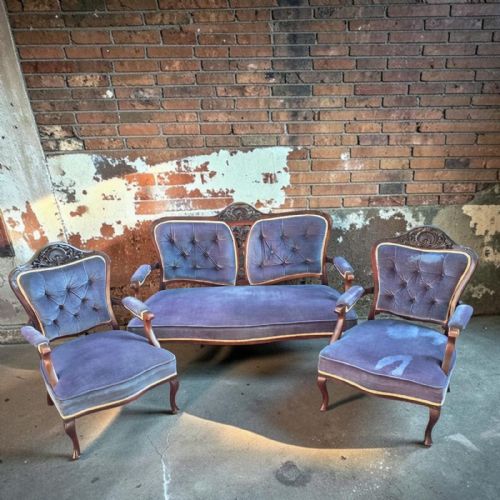
These pieces frequently appear alongside matching armchairs as part of larger parlour or boudoir suites, though single settees and end of bed variants also occur.
Makers often drew upon Sheraton Revival or Louis XVI styles, producing light framework intended for display and comfortable entertaining rather than heavy lounging.
Materials and construction
Frames rely primarily on solid mahogany and rosewood, frequently enhanced with contrasting satinwood and boxwood inlay or delicate bone details.
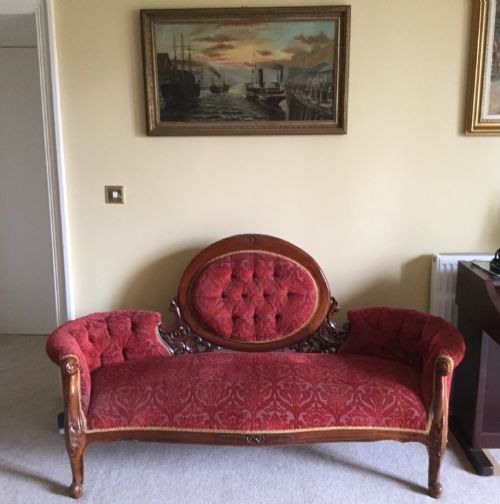
Upholstery materials range from silk damask and deep pile brocade to velvet and tartan fabric, supported by traditional sprung settee bases or webbing.
Listings demonstrate a strong prevalence of mahogany frames combined with satinwood inlay across the Edwardian period.
Markers of quality
Quality rests upon the crispness of the marquetry inlay and the selection of cabinet timbers, distinguishing standard production from finer workshop pieces.
The integrity of the frame construction and the retention of original upholstery styling determine the overall character and historical adherence of the seating.
C. Hindley and Sons·James Shoolbred
The Edwardian Salon Sofa Glossary
- Marquetry
- Decorative woodwork where pieces of contrasting veneer are fitted into a ground material to form geometric or floral designs. This technique defines the surface ornamentation on many Edwardian framework rails.
- Settee
- A small upholstered bench with a back and arms, designed to seat two or more people. These form the primary seating units within salon and parlour suites.
- Sheraton Revival
- A late nineteenth and early twentieth century design style emulating the neoclassical furniture of George Sheraton. It relies on tapered legs, light proportions, and intricate stringing.
- Brocade
- A rich jacquard-woven fabric featuring raised patterns, often utilised for period upholstery. It provides the heavier textural contrast seen on many double ended sofas.
- Parlour suite
- A coordinated set of seating comprising a sofa alongside matching armchairs for a drawing room. These groupings share identical timber framing and inlay motifs.
Edwardian Salon Sofa: Frequently Asked Questions
What is an edwardian salon sofa?
An edwardian salon sofa is a light decorative settee produced around the early twentieth century, designed primarily for formal reception spaces rather than heavy daily use.
These pieces typically feature exposed timber frames in mahogany or rosewood, complemented by delicate inlay and upholstered seats.
How do I identify an edwardian piece?
Identification relies on observing lighter framing timbers, tapered legs, and decorative satinwood or boxwood stringing characteristic of the period.
Comparing the design against Victorian antecedents reveals a transition from heavier walnut towards more refined Sheraton Revival aesthetics.
Were these sofas used alone?
While many were utilised independently as decorative window or end of bed seats, a large proportion formed part of coordinated parlour suites.
These suites paired the central settee with matching armchairs to create a uniform arrangement for drawing rooms.
What fabrics were originally used?
Original upholstery varied from damask and velvet to woven brocade and patterned textiles depending on the intended formality of the room.
Many surviving examples have undergone re-upholstery to preserve their functional usability while retaining period appropriate fabrics.