



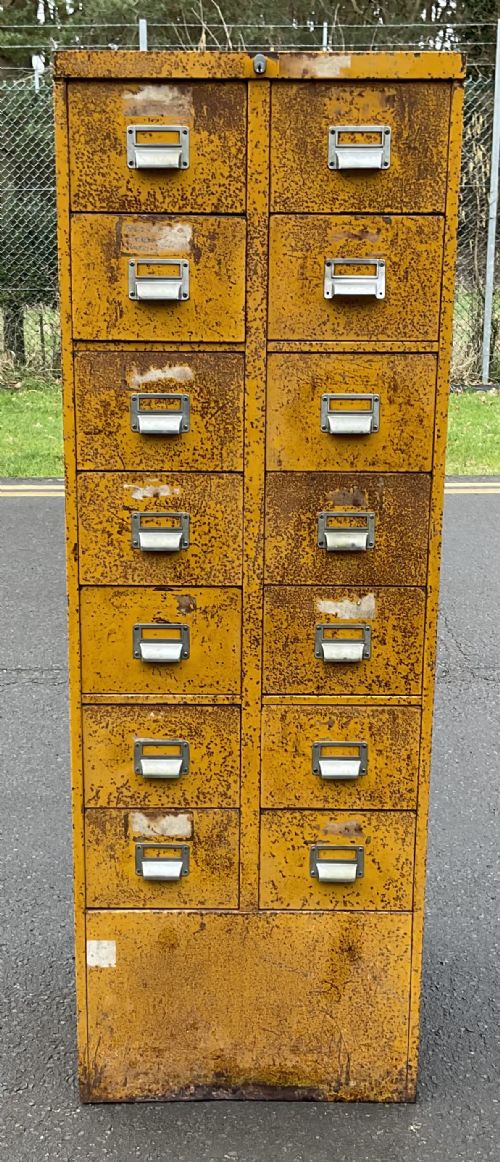
Vintage Index Card Cabinet
These vintage index card cabinet pieces organise small papers and records with character, offering sturdy storage built to last.
Vintage Index Card Cabinet
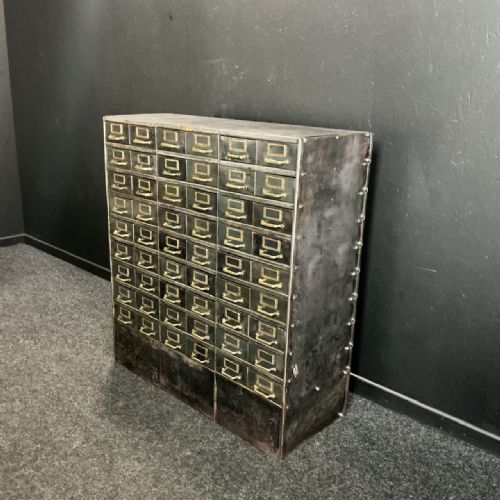
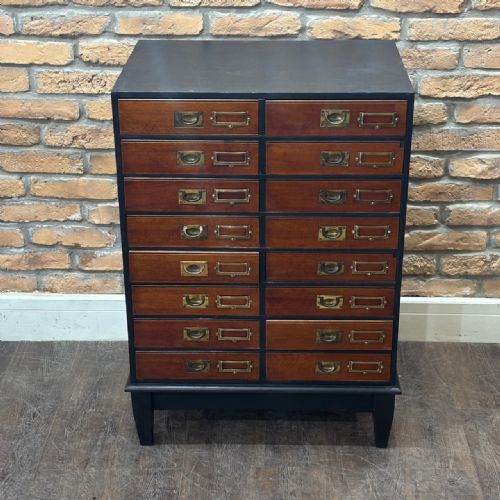
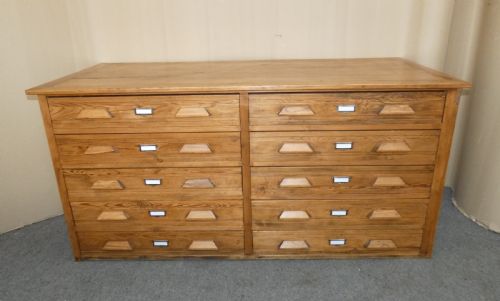
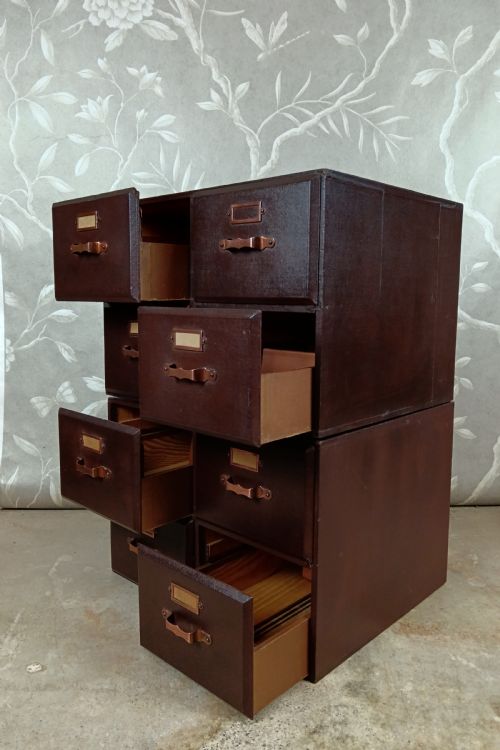
A vintage index card cabinet provides small-scale multi-drawer storage designed originally for libraries, offices, shops and archives. Buyers exploring this phrase encounter a range of forms, from compact desktop filing drawers to large shop fittings and banks of drawers.
The pieces on this page span the Victorian era through to the mid-twentieth century, encompassing Edwardian examples, industrial workshop units and commercial filing systems. Oak, mahogany, pine and metal form the primary carcasses of these functional storage items.
How they were made
Cabinet makers utilised durable hardwoods like oak and mahogany alongside utilitarian pine and painted woods to construct multi-drawer frames. Metal and brass elements appear frequently on handles, label holders and patent locking mechanisms.
Industrial workshops and commercial makers built these units for daily workplace endurance, employing solid timber joints and substantial steel frameworks. Painted finishes and polished wood surfaces received hard-wearing treatments to withstand heavy handling in offices and libraries.
One extraordinary shop fitting listed on this page houses fifty individual pine drawers for maximum organisational delight.
What varies in quality
The distinction between standard commercial storage and exceptional cabinet making lies in the choice of timber and the complexity of the drawer arrangements. Multiple small drawers require precise joinery to ensure smooth operation across dozens of compartments.
Makers' patents, specialist brass hardware and intact original label holders elevate the status of individual pieces. Uniformity in timber grain and the survival of original painted or polished surfaces determine the standing of each cabinet.
Amberg·Shannon
The Vintage Index Card Cabinet Glossary
- Bank of drawers
- A large multi-drawer cabinet housing numerous small compartments for structured storage. These units often served commercial, retail or archival functions.
- Haberdashery cabinet
- A set of shallow drawers originally utilised in shops for displaying and storing small dry goods and textiles. Collectors repurpose them today for sorting small items.
- Patent letter file
- A specialised filing system incorporating mechanical elements to secure documents and cards in place. Amberg produced notable examples of this mechanism.
- Shop fitting
- Heavy-duty furniture built specifically for commercial retail premises rather than domestic interiors. These pieces typically display robust construction and utilitarian proportions.
Vintage Index Card Cabinet: Frequently Asked Questions
How were index card cabinets used originally?
These cabinets served in offices, libraries and commercial premises to organise reference cards, correspondence and small stock items. Each small drawer held specific categories of index cards for rapid retrieval.
Businesses relied on these multi-drawer units to maintain orderly records before digital filing systems existed. Their compartmentalised design made sorting large volumes of data efficient.
How do I date an oak filing cabinet?
Dating involves examining the construction methods, timber choices and hardware styles present on the piece. Edwardian and 1920s examples often display specific brass label holders and dovetail joints characteristic of the period.
Patent marks and manufacturer names stamped on the hardware or interior woodwork provide exact chronological markers. Industrial items from the 1930s onwards introduce more metal components into the carcass construction.
Can I use these cabinets for modern storage?
The small drawer proportions suit the organisation of craft supplies, stationery and small collectables in contemporary homes. Collectors frequently place desktop filing drawers and small chest formats in studies and workspaces.
Larger banks of drawers function effectively as standalone storage units in living areas and kitchens. Their robust timber and metal construction handles everyday modern usage comfortably.
What is the difference between industrial and Edwardian cabinets?
Edwardian cabinets typically feature polished hardwood exteriors in oak, mahogany or walnut intended for professional offices. They prioritise refined domestic aesthetics alongside practical filing utility.
Industrial versions utilise exposed metal, painted pine or steel frameworks designed purely for workshop and factory endurance. Their visual character leans towards utilitarian function rather than formal cabinetry.