

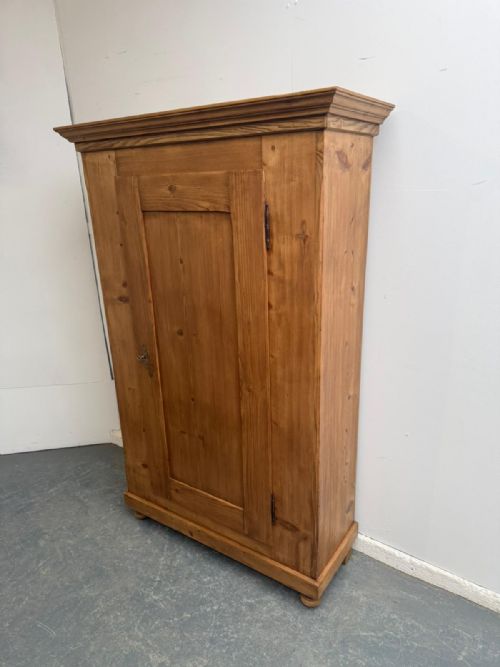
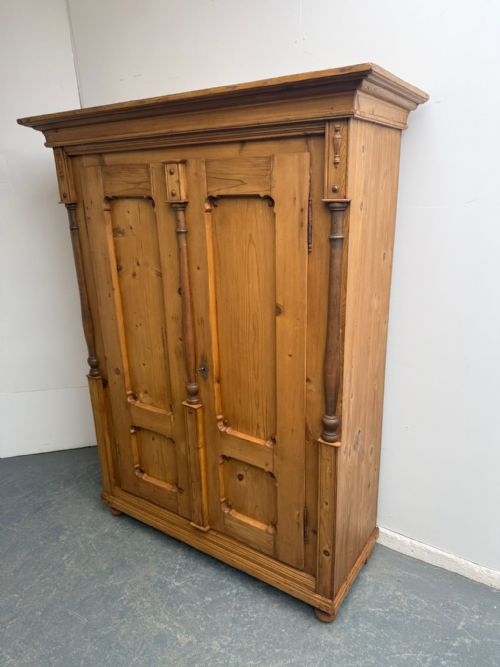


Hungarian Pine Cabinet
A Hungarian pine cabinet brings robust central European character and practical storage to a room through solid timber construction and distinct regional painted finishes.
Hungarian Pine Cabinet
A Hungarian pine cabinet encompasses a broad variety of domestic and commercial furniture forms spanning the Georgian, Victorian, and nineteenth-century periods. Buyers searching this phrase encounter diverse utilitarian objects built primarily in pine, ranging from bedside cabinets and shallow hall wardrobes to multi-drawer shop fittings and kitchen dressers.
The pieces appearing on this page heavily favour Victorian examples alongside Georgian and nineteenth-century items. Regional expressions such as European folk art and rustic farmhouse styles frequently define these cabinets, alongside specific functional configurations like marble-topped bedside pieces and large multi-drawer apothecary style counters.
Quality variations
The integrity of secondary materials like integrated marble tops, ceramic handles, and iron fittings also establishes distinction across the range. Structural scale influences the hierarchy, from compact bedside cupboards to massive multi-drawer shop fittings and large wardrobes.
Listings feature pieces spanning the Georgian period, the Victorian era, and nineteen-ten, constructed primarily in pine and oak.
The Hungarian Pine Cabinet Glossary
- Pine
- A softwood timber commonly used in regional European furniture construction for its workability and availability. It accepts painted finishes and wax treatments readily.
- Armoire
- A large upright cupboard or wardrobe used for storing garments and household textiles. These pieces often feature double doors and generous interior depth.
- Shop Fitting
- Commercial furniture designed for retail environments, such as multi-drawer counters used in nineteenth-century mercantile settings. They offer extensive compartmentalised storage.
- Polychrome
- Decoration employing multiple colours on a single surface, frequently seen on folk art furniture and painted cupboards.
- Marble
- A hard crystalline metamorphic rock utilised for cabinet and bedside table tops to provide a durable, heat-resistant surface.
Hungarian Pine Cabinet: Frequently Asked Questions
What rooms suit a Hungarian pine cabinet?
These cabinets adapt easily to kitchens, hallways, and bedrooms depending on their specific form. Wardrobes and dressers provide substantial storage, while bedside cabinets fit smaller spaces.
The presence of painted finishes or natural wax allows them to complement both traditional and contemporary interiors without overwhelming the room.
How do I care for a painted pine cabinet?
Painted surfaces require gentle dusting with a dry or slightly damp cloth to preserve the original finish. Avoid harsh chemical cleaners that might strip historical paint layers.
Waxed pine surfaces benefit from occasional application of traditional beeswax to nourish the timber and maintain a soft sheen.
Are these cabinets purely decorative or practical?
Every piece originates from a utilitarian background, designed specifically for storage, display, or commercial shop use. Cupboards, dressers, and drawer units offer robust everyday capacity.
Their decorative qualities stem from regional folk art traditions and original painted palettes rather than purely ornamental design.
How can I tell a Victorian piece from a Georgian one?
Dating relies on structural characteristics, stylistic markers, and recorded periods associated with each item. Georgian examples often showcase simpler lines or specific chest configurations, while Victorian pieces frequently incorporate richer painted schemes, marble tops, or extensive banks of drawers.
Comparing hardware, timber selection, and construction methods helps clarify the period of origin.