


Painted Apothecary Drawers
Painted apothecary drawers are utilitarian banks of small compartments bearing the worn pigments of old dispensaries and trade counters, offering superb character for modern interiors.
Painted Apothecary Drawers
When searching for painted apothecary drawers, a buyer encounters multi-drawer banks, chemist shop fittings, spice cupboards, and drapers' cabinets originating from the eighteenth, nineteenth, and early twentieth centuries.
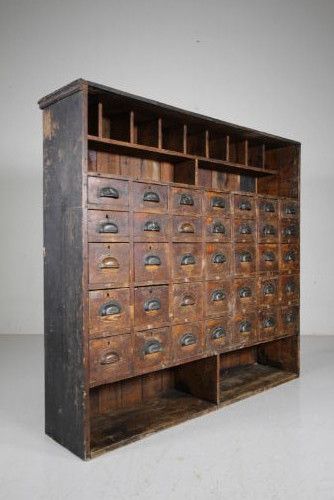
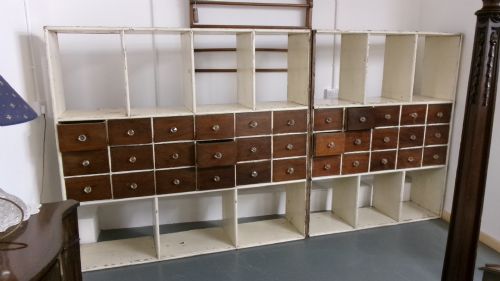
The version most commonly met on this page is the Victorian pine shop fitting or bank of drawers, featuring numerous small compartments designed for medicines, herbs, and sundries.
Geographic origins span English, French, and Hungarian workshops, taking the form of tall banks, long shop counters, or small tabletop collector cabinets.
Materials and construction
Construction relies primarily on sturdy pine carcasses built to endure heavy daily trade use, fitted with numerous small wooden drawers often accented with brass pulls or handles.
Surfaces bear layered historical paint finishes, ranging from original white, cream, light green, and black with gold leaf to bare wood destined for waxing or painting.
Some towering nineteenth-century shop fittings contain up to fifty tiny drawers once tasked with holding obscure apothecary ingredients.
Judging quality in multi-drawer units
Quality rests heavily on the integrity of the original paint surface, distinguishing genuine historical wear and undisturbed patination from later cosmetic decoration.
Proportion and scale dictate desirability, separating massive fifty-drawer banks and smaller spice cupboards from standard utility furniture through their striking architectural presence.
The Painted Apothecary Drawers Glossary
- Shop fitting
- Fixtures and furniture built specifically for commercial retail spaces, such as chemist counters and drapers' cabinets. These pieces were constructed for heavy commercial utility rather than domestic drawing rooms.
- Collectors chest
- A specialised cabinet containing numerous shallow drawers designed for organising botanical specimens, coins, or small objects. They are prized by collectors for their meticulous internal compartmentalization.
- Pine
- A softwood commonly utilised for utilitarian eighteenth and nineteenth century furniture carcasses and drawer linings. Its receptive grain holds historical paint layers particularly well over centuries of use.
- Gold leaf
- Extremely thin gold beaten into delicate sheets used for lettering and decorative highlights on signwriting and fine cabinetry. It imparts a subtle metallic lustre to dark trade cabinet surfaces.
Painted Apothecary Drawers: Frequently Asked Questions
What were painted apothecary drawers used for?
These multi-drawer units originally served in chemist shops, dispensaries, and drysalters to organise powders, dried herbs, pills, and medicinal ingredients. Each small drawer kept distinct remedies separated and accessible for rapid dispensing.
Over time, merchants and apothecaries relied on these sturdy banks of drawers for daily trade. Their dense compartmentalization made them indispensable for sorting small inventory efficiently.
How do I date an old bank of drawers?
Dating relies on observing construction techniques, timber selection, and hardware styles across the carcass and drawer joints. Eighteenth-century spice cupboards display hand-cut joinery, whereas Victorian shop fittings often utilise heavier industrial pine construction.
Surface finishes also provide vital clues, as layers of genuine historical paint and natural wear accumulate distinct patination over decades. Comparing hardware such as brass handles and drawer pulls helps narrow the manufacturing period.
Are these cabinets suitable for modern kitchens?
Painted apothecary drawers integrate exceptionally well into contemporary kitchens as statement islands, sideboards, or clever storage for cutlery and dry goods. Their numerous compartments offer practical organisation for modern utensils.
The substantial presence and weathered paint of these pieces bring warmth and historical texture to modern domestic spaces. They function as both striking focal points and highly functional storage.
How should I care for original painted wood?
Preserving historical paint surfaces requires avoiding harsh modern chemical cleaners, abrasive cloths, and excessive moisture. Dusting gently with a dry, soft cloth protects the fragile patination accumulated over generations.
Keeping the timber away from direct heat sources and drastic humidity changes prevents the pine carcass and drawers from warping. Maintaining stable room conditions ensures the historic finish remains intact.