

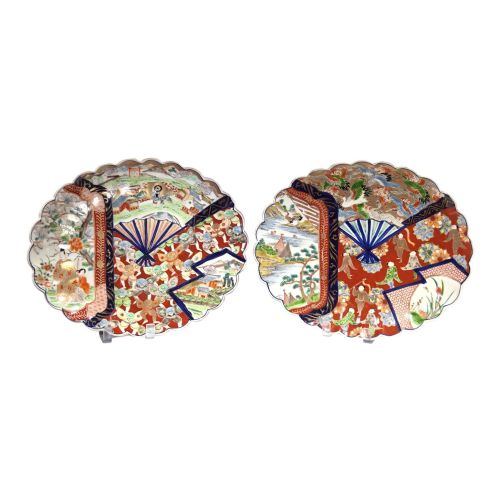


Vintage Imari Wall Platter
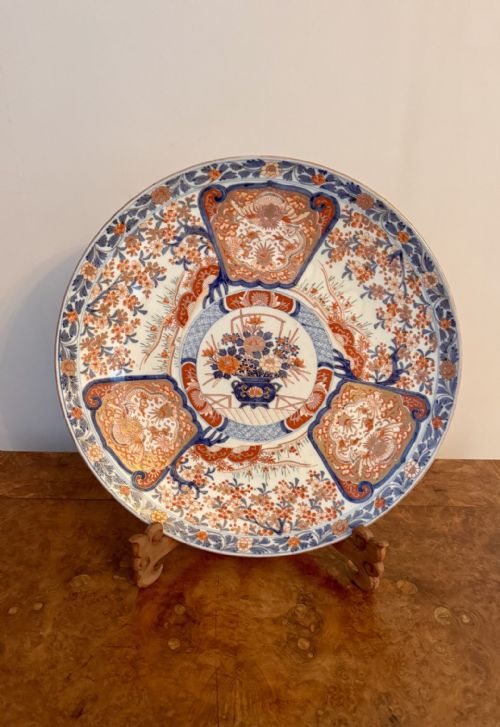
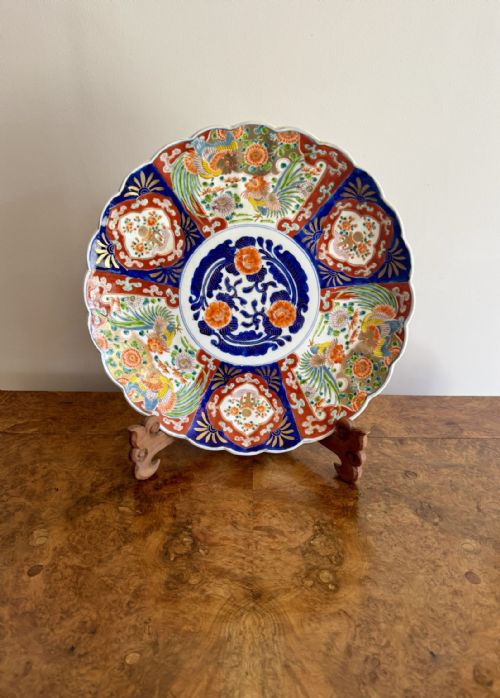
These vintage imari wall platters bring a rich palette of cobalt blue underglaze and enamel to a room.
Vintage Imari Wall Platter
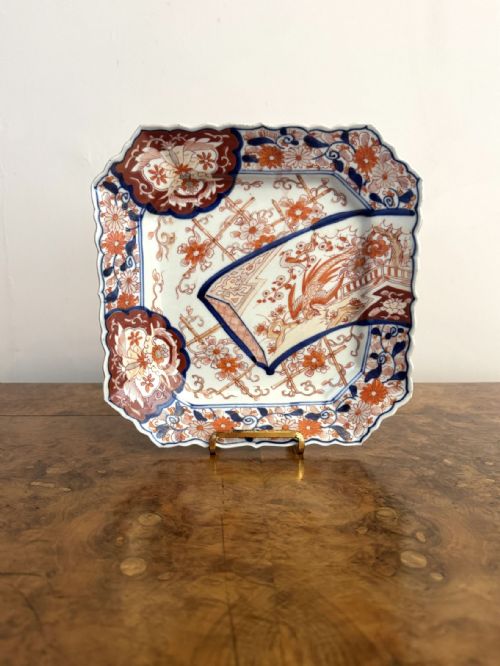
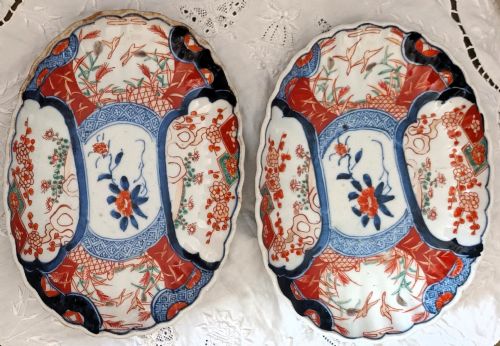
A vintage imari wall platter is a decorative ceramic piece designed for display, drawing on centuries of ceramic tradition. When searching this phrase, a buyer encounters a range of forms from large circular chargers to square, scalloped, oval, and fan-shaped plates.
The pieces on this page span the nineteenth century, the Victorian era, the Meiji period, and the early twentieth century up to nineteen-twenty. Japanese imari ware predominates, alongside examples from the Edo period and Chinese export production.
Many of these large decorative chargers and plates depict traditional subjects such as the Seven Lucky Gods. They arrive as individual statements or in matched pairs ready for wall mounting.
How they were made
Makers shaped these items from porcelain and ceramic body materials, applying underglaze cobalt blue as the foundation of the design. Artisans then added overglaze enamels in rich iron red and other pigments by hand.
Detailing often incorporated gold leaf and gilt highlights to catch the light across the decorated surface. Firing secured the glaze, sealing the intricate patterns into a hard, glossy finish.
Several platters depict the Seven Lucky Gods, offering divine support for longevity and wealth right from your living room wall.
What varies in quality
Quality rests in the precision of the hand painting and the clarity of the cobalt blue underglaze against the white porcelain ground. Stronger pieces show confident brushwork in the enamel pigments and generous use of gold leaf.
Form also distinguishes the selection, with unusual shapes like squares, fans, and scalloped edges demanding greater skill from the potter than simple circular platters. The density of the decoration and the preservation of the glaze define the upper tier of the range.
The Vintage Imari Wall Platter Glossary
- Imari
- A style of Japanese porcelain decorated in underglaze blue, iron red, and gilt. It originated in the town of Arita and shipped through the port of Imari.
- Charger
- A large decorative plate intended for display on a wall or sideboard rather than for dining use. These pieces form the focal point of a collection.
- Meiji Period
- The era of Japanese history running from eighteen sixty-eight to nineteen twelve. Pieces from this time often exhibit dynamic composition and fine hand-painted detail.
- Underglaze Cobalt Blue
- A pigment applied directly to the raw ceramic body before glazing and firing. This technique produces a deep blue colour that remains protected beneath the glassy surface.
- Overglaze Enamel
- Coloured glass decoration applied on top of the fired glaze and fixed with a lower temperature second firing. This method adds rich reds, greens, and golds to the finished palette.
Vintage Imari Wall Platter: Frequently Asked Questions
How do I hang a heavy charger safely?
Wall platters require robust, coated wire spring hangers that distribute weight evenly across the rim. Ensure the fixing goes directly into a wall stud or uses an appropriate masonry anchor.
Check the security of the mounting periodically to keep the ceramic safe from accidental knocks.
Can these plates be used for food?
These decorative pieces are intended for visual display rather than culinary service. The overglaze enamels and gold leaf are vulnerable to cutlery marks and modern detergents.
Display them on walls or stands to preserve the integrity of the antique surface.
How do I clean an imari platter?
Dust the surface gently with a soft, dry microfibre cloth to remove everyday particles. Avoid soaking the piece or using abrasive cleaners that might harm the delicate overglaze enamels and gilt.
Keep them away from direct, strong sunlight to prevent any fading of the traditional iron reds and blues over time.
What is the difference between imari and other porcelain?
Imari is distinguished by its specific palette of cobalt blue underglaze combined with iron red and gold overglaze. This combination creates a dense, vibrant visual texture unique to the tradition.
Other porcelain styles rely on different colour schemes or simpler painted motifs without the characteristic richness.