






Vintage Imari Urn Jar
These vintage imari urn jar pieces bring rich palette decoration and classic ceramic forms into a room, offering the decorative punch collectors prize.
Vintage Imari Urn Jar
When you search for vintage imari urn jar, you are looking at striking ceramic vessels defined by their distinctive palette and patterns. The pieces appearing here span from the Georgian era through the nineteenth century and into the early twentieth century.
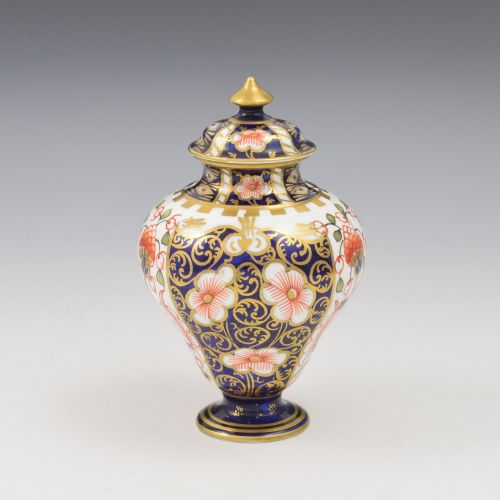
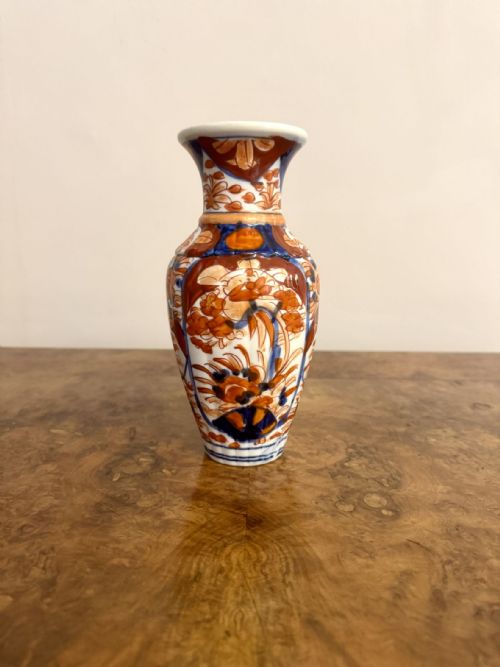
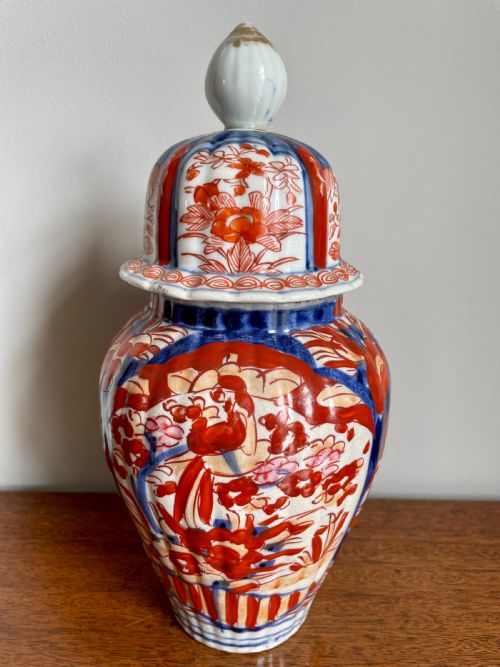
You are most likely to meet Japanese Imari porcelain vases and ginger jars originating from the Meiji and Edo periods, alongside English interpretations such as Mason's ironstone and Royal Crown Derby. Forms range from lidded ginger jars and pot pourri vessels to large decorative vases and miniature covered pieces.
The objects combine traditional eastern manufacturing roots with Western decorative demand, resulting in covered jars and open vases built for display. Their presence ranges from modest nineteenth-century examples to large monumental pairs standing seventy-six centimetres high.
How they were made
Makers shaped these vessels using porcelain, ironstone, and ceramic bodies before applying detailed underglaze and overglaze decoration. The manufacturing process relies heavily on controlled kiln firing to set the characteristic base clays and structural forms.
Workshops applied enamel colours alongside gold leaf and gold gilding to build up the intricate patterns associated with the style. Glaze layers seal the ceramic surfaces, creating the smooth, vitreous finishes seen on both Japanese imports and English factory pieces.
Vintage Imari Urn Jar Retail Price Guide 2026
Typical asking prices for vintage imari urn jar among the pieces listed under this phrase on Sellingantiques today, from the lower quarter to the upper quarter. They describe what is for sale here now, not the wider market.
Listings feature porcelain, ironstone, and ceramic bodies decorated with enamel, glaze, and gold leaf across the nineteenth and early twentieth centuries.
What varies in quality
The hierarchy of these vessels rests upon the crispness of the painted detail and the richness of the applied gilding. Pieces featuring dense, carefully controlled enamel work stand apart from simpler or more hurried productions.
Scale and ambition also dictate the standing of a piece, with large paired urns and intricate bamboo-patterned jars representing greater technical achievement than standard single vases. The inclusion of original matched covers further elevates the integrity of any given jar.
Royal Crown Derby·Mason
The Vintage Imari Urn Jar Glossary
- Imari
- A style of Japanese porcelain decorated in underglaze blue and overglaze iron red, gold, and other colours. It originated in Arita and was heavily exported to Europe.
- Ginger jar
- A wide-mouthed, bulbous storage vessel originally used for spices in China and later adopted across Japan and Europe as a decorative centerpiece.
- Ironstone
- A heavy, durable type of earthenware patented in England as a tougher alternative to porcelain. It often carried Imari patterns in imitation of Japanese imports.
- Meiji Period
- The era of Japanese history spanning from 1868 to 1912, associated with increased trade and the export of distinctive decorative arts to Western markets.
Vintage Imari Urn Jar: Frequently Asked Questions
What is an imari urn jar?
An imari urn jar is a covered or open ceramic vessel decorated in the traditional Imari palette of iron red, underglaze blue, and gold. These pieces were made both in Japan and by European factories imitating the aesthetic.
They serve primarily as decorative display items, bringing strong colour and pattern to mantelpieces, sideboards, and cabinets.
How do I date an imari jar?
Dating relies on examining the ceramic body, the style of the painting, and any factory marks on the underside. Nineteenth-century examples often display hand-painted complexity and specific regional potting traits.
Japanese pieces frequently align with the Meiji period, while British iterations from firms like Mason's or Derby date to the Georgian era.
Where were these jars made?
The tradition began in Arita, Japan, where artisans produced wares for export through the port of Imari. European potteries soon adopted the style, creating their own versions in ironstone and porcelain.
This cross-continental exchange means you will find pieces originating from both Japanese kilns and English factories.
How do I style these jars at home?
These vessels work well as standalone focal points on side tables or grouped with other ceramics to create texture and height. Their rich colours complement both traditional wood furniture and minimal modern interiors.
Keep them away from direct high-traffic edges where covers might be dislodged, as lids are often fragile and irreplaceable components.