




Vintage Imari Style Ceramics
These vintage imari style ceramics bring rich colour and patterned depth to a room, drawing the eye with classic palettes.

Vintage Imari Style Ceramics
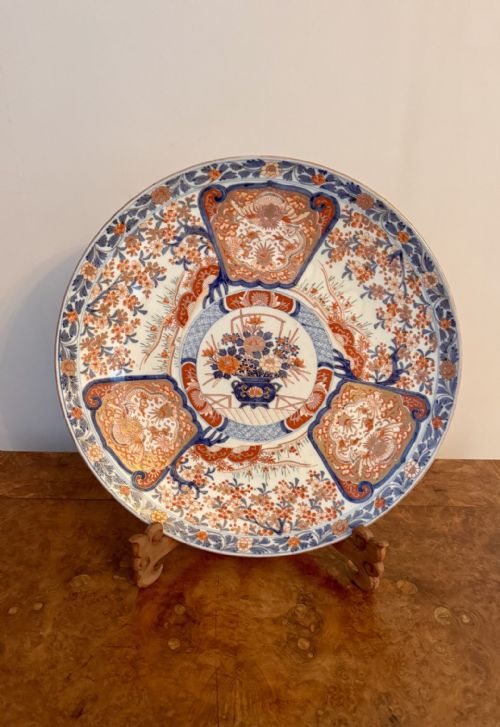
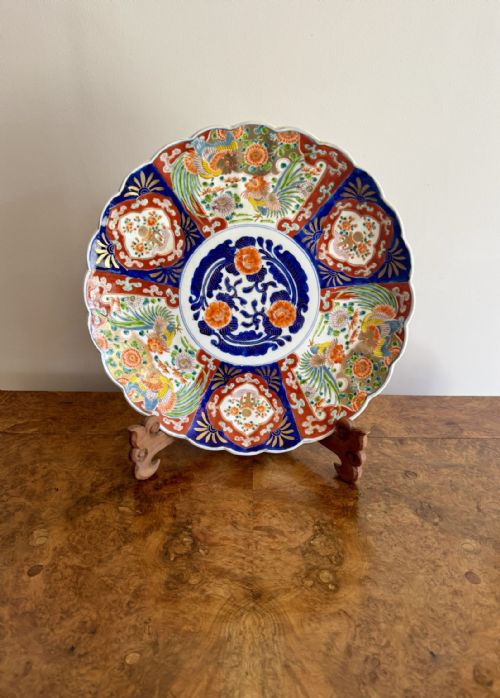
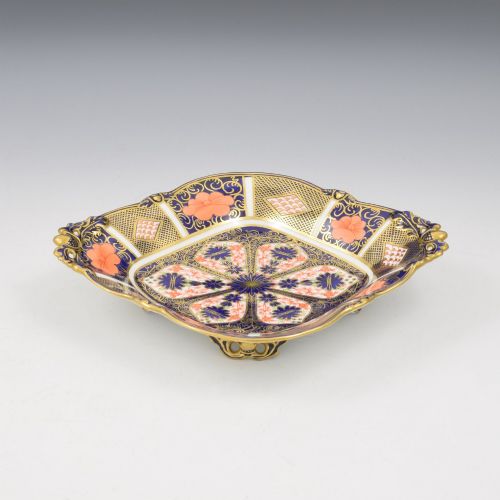
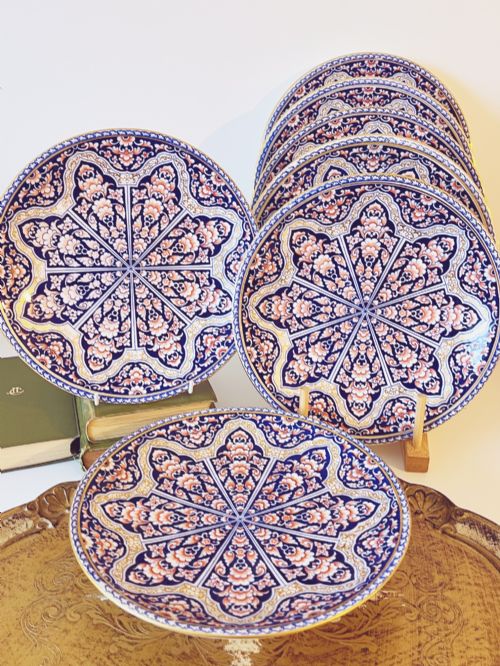
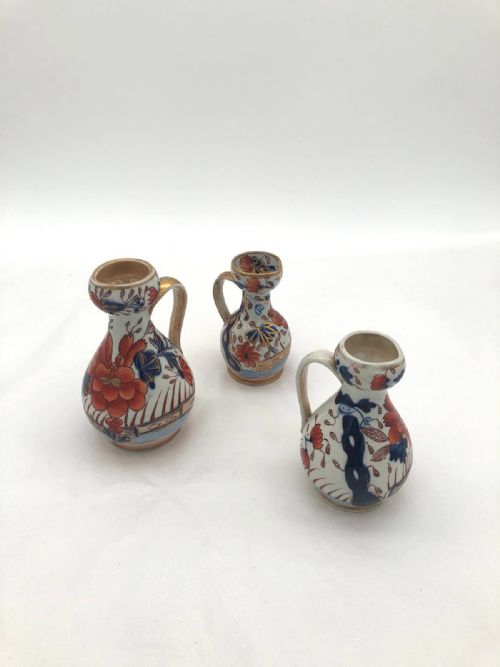
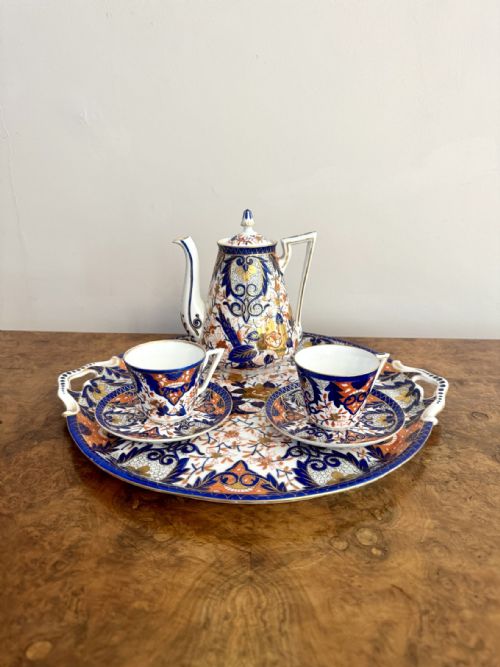
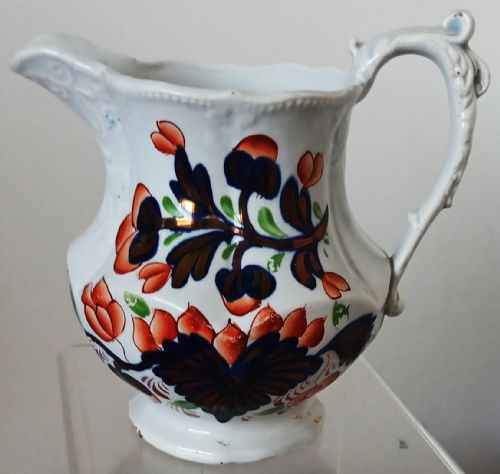
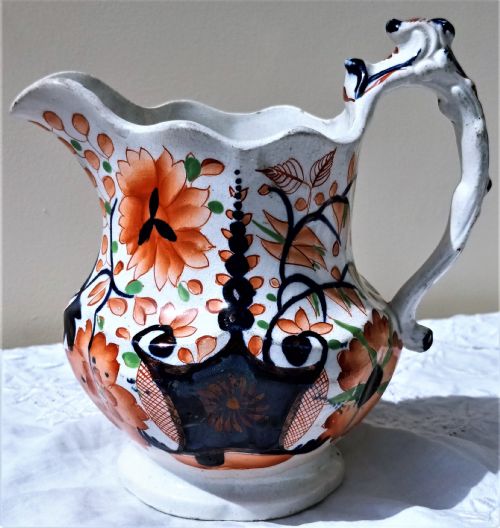
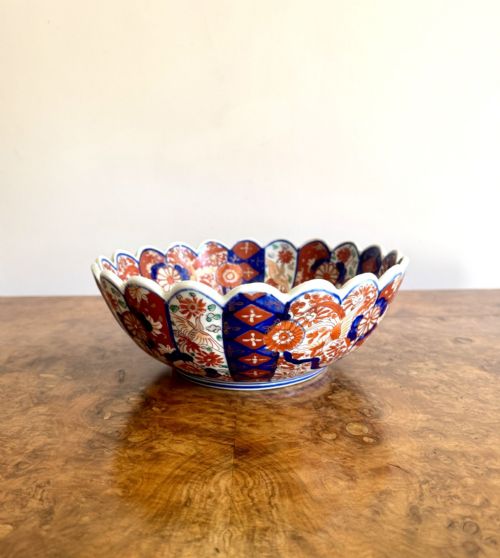
Vintage imari style ceramics encompass a variety of decorative objects, from plates and bowls to jugs, vases, and complete dinner services. When exploring vintage imari style ceramics, one encounters pieces originating from Japanese workshops as well as English interpretations produced by notable potteries.
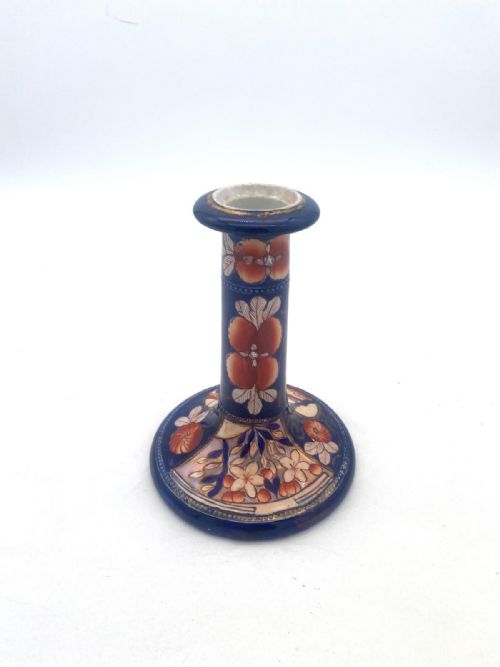
The selection ranges from large scalloped chargers and oval dishes to candlesticks and tureens. Pieces date across the nineteenth century and into the early twentieth century, reflecting both traditional Asian aesthetics and Victorian tastes.
How they were made
Makers utilised durable ceramic bodies, including porcelain, ironstone, and earthenware, shaped into vessels, plates, and service ware. These forms provided a stable foundation for intricate decorative schemes.
Surface decoration relied on enamel paint, glaze, and gold leaf. Artisans applied cobalt blue underglaze alongside iron red and gilt accents to achieve the characteristic vibrant palette.
Listings feature nineteenth-century ironstone jugs and porcelain plates alongside early twentieth-century Japanese chargers and vases.
What varies in quality
The sophistication of the hand-painting dictates the visual impact of each piece, distinguishing finely detailed patterns from simpler applications. Crisp execution of motifs like bamboo, fences, and flowers elevates certain items above standard production.
The handling of the gilding and the clarity of the enamel colours demonstrate the skill of the maker. Weight, ring, and the integrity of the ceramic body further separate everyday items from exceptional service pieces and garnitures.
Royal Crown Derby·Mason's Ironstone·Davenport·Fukagawa
The Vintage Imari Style Ceramics Glossary
- Imari
- A style of ceramic decoration originating in Japan, characterised by a palette of cobalt blue, iron red, and gold. English potteries later adopted this distinct aesthetic.
- Ironstone
- A heavy, durable type of earthenware patented in the nineteenth century. It served as a robust body for transfer-printed and hand-painted tableware.
- Garniture
- A set of matching decorative vessels, usually numbering three or more, designed to be displayed together on a mantelpiece or sideboard.
- Charger
- A large decorative plate or dish intended for display rather than for serving food at the table.
- Comport
- A raised dish or bowl used for serving fruit or desserts as part of a formal nineteenth-century dining service.
Vintage Imari Style Ceramics: Frequently Asked Questions
How do I care for vintage imari ceramics?
Wash these pieces gently by hand using mild soap and warm water to protect the delicate enamel and gold leaf details. Avoid soaking them or placing them in a dishwasher, as harsh detergents will damage the surface over time.
Display them securely away from direct sunlight and areas subject to sudden temperature changes. Careful handling ensures the vibrant colours and glazes remain intact for generations.
Are these pieces meant for daily use?
While many items like plates, jugs, and bowls were originally created for practical dining or serving, most vintage pieces are now treated as decorative display items. The age and presence of delicate gilt work make gentle handling advisable.
If you do use them for serving, avoid hot foods or liquids that might stress the historic ceramic body. Hand washing remains essential after any occasional use.
How can I tell Japanese imari from English imari?
Japanese pieces often feature fine porcelain bodies with traditional motifs such as bamboo and floral panels executed in distinct iron red and cobalt blue tones. The brushwork and glaze characteristics align closely with East Asian potting traditions.
English interpretations, by contrast, frequently utilise heavy ironstone or bone china bodies produced by potteries like Mason's or Royal Crown Derby. Maker marks and the specific weight of the ceramic offer further clues to their origin.
What is the history of imari style ceramics?
Imari wares take their name from the Japanese port city where pieces were shipped to Europe from the seventeenth century onwards. European factories quickly admired the striking red, blue, and gold colour scheme and began producing their own interpretations.
By the Victorian era, English potteries had fully embraced the aesthetic, creating extensive dinner services and decorative items. This cross-cultural exchange produced a rich variety of objects spanning two continents.