

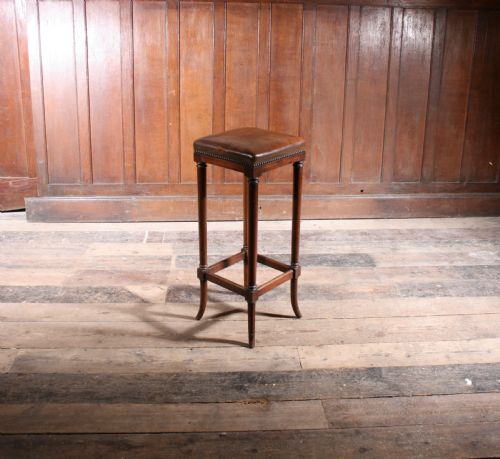

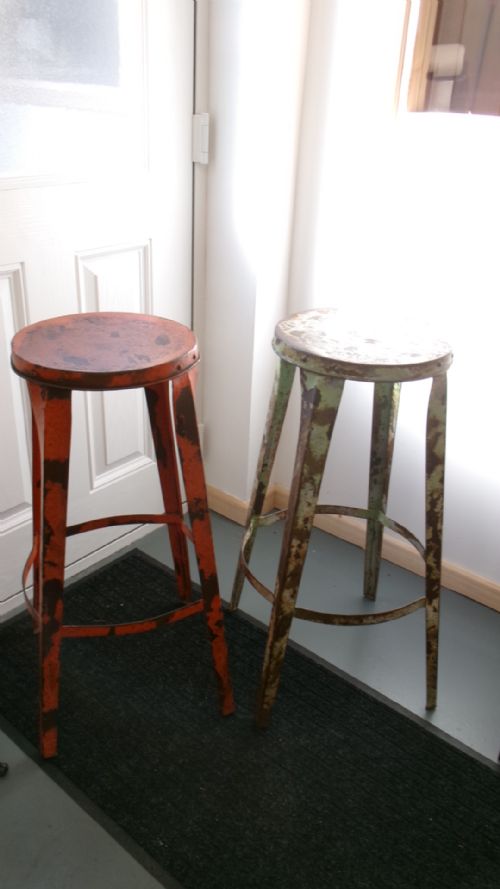


Vintage High Stool
These vintage high stool examples offer practical height and honest utility, shaped by decades of hard use in pubs, mills, and workshops.
Vintage High Stool
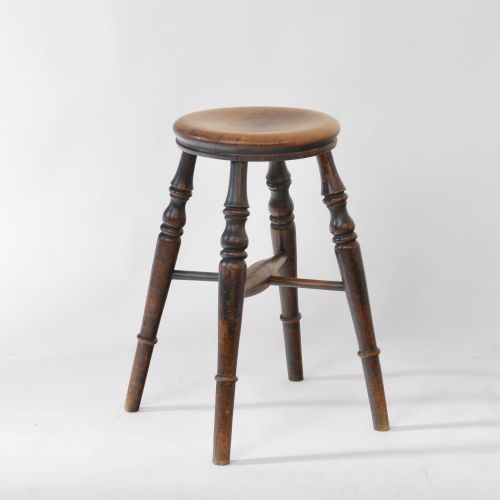
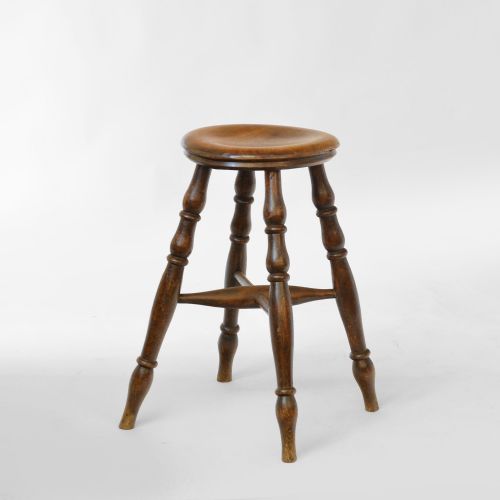
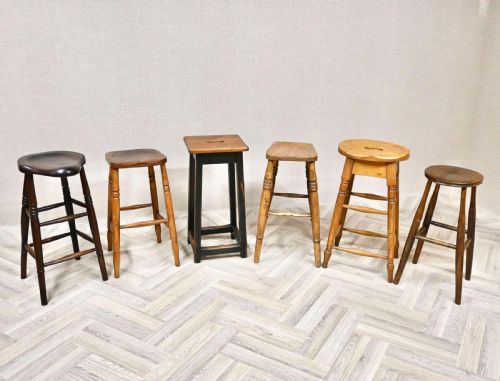
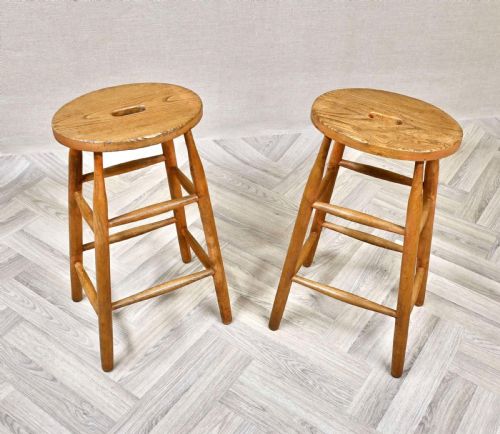
A vintage high stool serves an elevated seat, appearing in forms such as pub tavern stools, clerk stools, and industrial laboratory seating. These pieces originate from the nineteenth century through to the mid-twentieth century, drawing on utilitarian designs intended for working environments.
The most common examples on this page are nineteenth-century wooden tavern and pub stools, alongside industrial metal and beech seating from the nineteen-twenties and nineteen-thirties. Buyers also encounter country house and vernacular pieces designed for specific domestic and commercial tasks.
Makers produced these objects for function rather than display, leading to sturdy structures that survive in homes and commercial spaces today. Their forms range from simple round wooden tops on turned legs to upholstered leather seats supported by iron frameworks.
How they were made
Makers constructed these pieces using solid hardwoods like oak, mahogany, walnut, beech, elm, sycamore, and birch, often combining timbers within a single frame. Workshops also incorporated iron and steel components, utilising riveted metal joints for industrial laboratory and machinist designs.
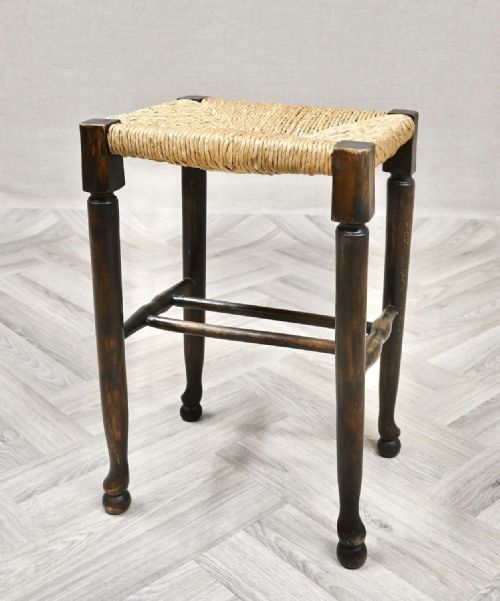
Woodturners shaped legs and stretchers on lathes, creating sturdy spindle supports that braced the tall frames against daily wear. Seats appeared in solid carved timber, rush, or leather upholstery, fixed securely to withstand continuous shifting weight.
Listings span the nineteenth century through the nineteen-forties, featuring oak, beech, elm, mahogany, iron, and leather across rustic, industrial, and Victorian styles.
What varies in quality
Quality rests in the integrity of the timber selection and the rigidity of the joined frame, where tighter joints prevent the wobble common in heavily used seating. Higher grades show careful selection of dense hardwoods like elm and mahogany rather than softer utility pine.
The refinement of the turning on legs and the retention of original surface patination distinguish finer examples from standard workshop utility pieces. Honest signs of period wear add character, provided the structural joints remain sound and unaltered.
The Vintage High Stool Glossary
- Sycamore
- A dense hardwood commonly used by turners for domestic and tavern furniture. Its pale grain takes a smooth finish through heavy use.
- Rush seat
- A seating surface woven from dried marsh plants, traditionally fitted to ladderback chairs and country stools. This technique provides a resilient yet flexible surface.
- Bentwood
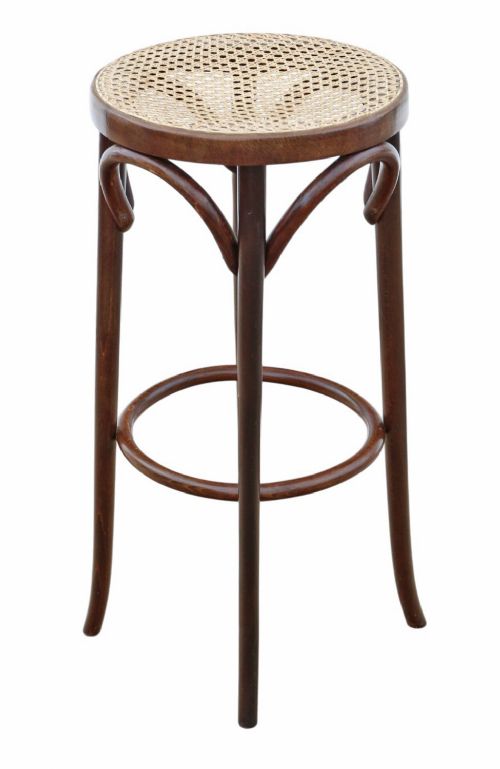
- Wood softened by steam and bent into curved shapes, frequently seen in twentieth-century cafe and bar seating. This process creates strong, lightweight frames without heavy joints.
- Clerk stool
- A tall wooden stool designed for high desks in offices, banks, and mercantile settings. These pieces typically feature turned beech or birch legs with supportive foot stretchers.
- Vernacular
- Objects built by local craftsmen using regional materials to serve a specific practical purpose. These pieces reflect traditional local construction methods rather than formal academic styles.
Vintage High Stool: Frequently Asked Questions
How do I identify a nineteenth-century pub stool?
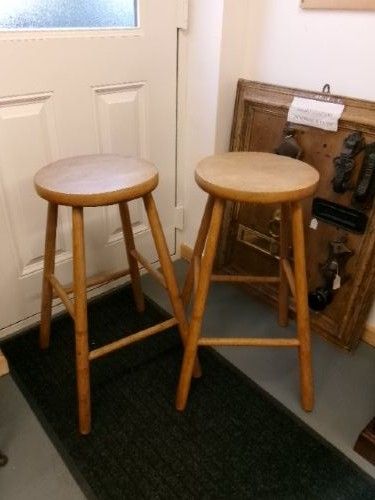
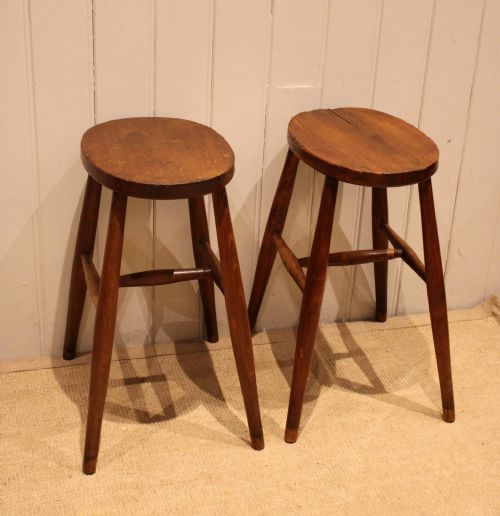
Nineteenth-century pub stools usually feature solid sycamore, elm, or mahogany tops supported by turned wooden legs and substantial foot stretchers. They show deep surface patination accumulated from decades of tavern use.
Look for hand-turned components and traditional joinery rather than modern metal brackets or screws. The wear patterns on the seat and footrests often reveal the genuine age of the piece.
Were industrial high stools used in homes?
Industrial high stools were originally made for factories, laboratories, machine shops, and draughting offices rather than domestic interiors. Their iron frameworks and riveted metal details suited demanding workplace conditions.
Today, buyers place them in kitchens and home bars for their compact footprint and robust construction. Their utilitarian aesthetic contrasts effectively with modern residential decor.
What is the difference between a bar stool and a clerk stool?
Bar stools were typically designed for commercial hospitality settings like taverns and wine bars, focusing on sturdy frames and simple wooden or upholstered tops. Clerk stools were built for office environments to accompany high sloping desks.
Clerk stools frequently display finer spindle turning on the legs and narrower seats suited to upright sitting. Both types offer elevated seating but emerged from distinct working traditions.
How should I care for a vintage wooden high stool?
Maintain vintage wooden stools by applying a traditional beeswax polish occasionally to nourish dry timbers and protect the surface. Avoid placing them near direct heat sources that can cause wood to split or joints to loosen.
Check the stretcher joints periodically to ensure the frame remains stable under daily weight. Gentle cleaning with a soft cloth preserves the historic patination accumulated over the decades.