
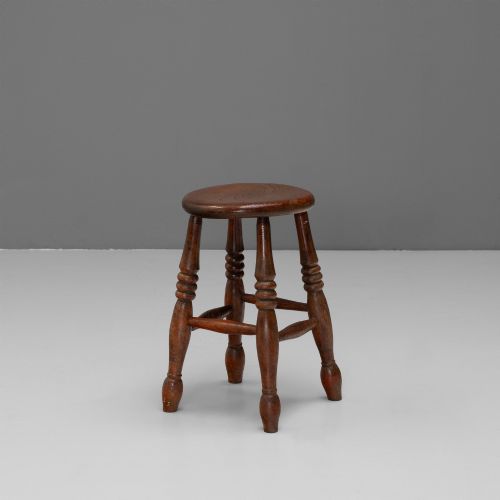
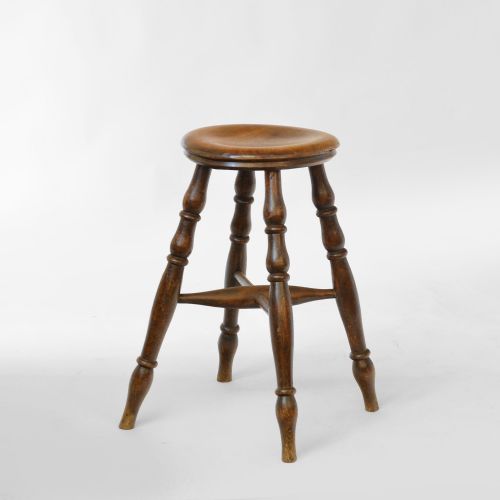
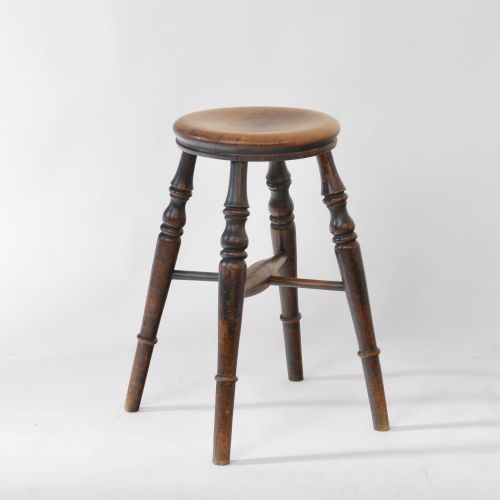

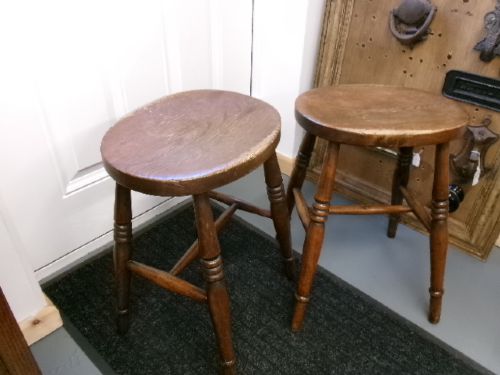


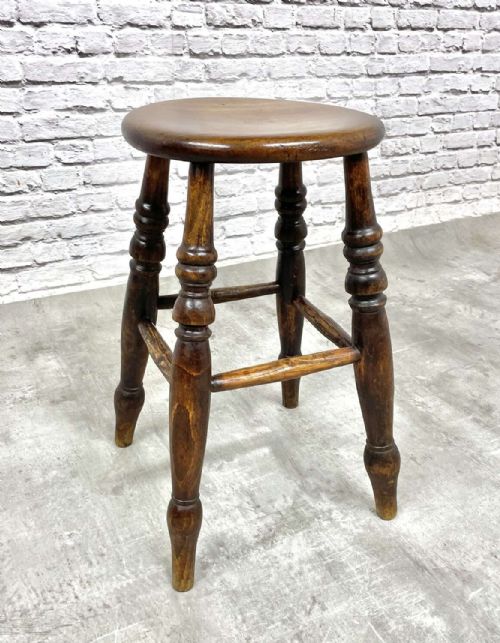

Victorian Tavern Stool
These Victorian tavern stool pieces are sturdy seating made for public houses, offering robust character and honest vernacular design to collectors today.
Victorian Tavern Stool
A Victorian tavern stool is a functional piece of seating designed for heavy use in nineteenth-century public houses and alehouses. When buyers search for this phrase, they find utilitarian forms created for public spaces rather than refined parlour use.
The pieces appearing on this page span the nineteenth century, including specific dates such as eighteen-fifty and eighteen-ninety. Alongside traditional tavern stools, the selection includes bar stools, alehouse stools, cricket tables, side tables, and desk chairs.
Makers working within the English country vernacular produced these items to withstand rigorous daily wear. The designs prioritize stability and utility, featuring circular or oval dished tops supported by sturdy wooden legs.
Materials and construction
Craftsmen built these items from robust native timbers, utilising elm for durable seats alongside beech, ash, oak, pollard oak, sycamore, and general hardwood. These woods were chosen for their toughness and ability to endure constant handling in busy environments.
Construction methods rely on traditional joinery suitable for vernacular furniture, combining solid wood tops with fitted underframes. The heavy elm or sycamore seats are frequently dished to provide comfort for patrons sitting over ale.
Listings for this phrase include examples made from elm, beech, oak, pollard oak, ash, and sycamore.
Assessing quality
Quality in these pieces rests upon the choice of timber and the integrity of the original construction. Thick elm seats and well-figured pollard oak tops display a superior grade of material selected by the nineteenth-century maker.
The balance between utilitarian simplicity and pleasing proportions distinguishes finer examples from heavier, purely functional counterparts. Patina accumulated through decades of use in taverns adds depth to superior pieces.
The Victorian Tavern Stool Glossary
- Vernacular
- Everyday furniture made by regional craftsmen for local use, ignoring formal high-style design rules. This style defines the unpretentious character of nineteenth-century tavern seating.
- Dished top
- A seat surface hollowed out into a shallow concave shape for comfort. This technique appears frequently on nineteenth-century elm seat stools.
- Pollard oak
- Timber taken from trees that were cut back to promote a dense branch crown, resulting in highly decorative wood grain. This material appears on select nineteenth-century table tops.
- Cricket table
- A small, lightweight three-legged table of vernacular design suited to uneven floors. These tables share the honest construction methods of rural pub furniture.
- Windsor stool
- A traditional seat featuring turned legs and spindles wedged directly into a solid wooden base. This form shares construction principles with classic Windsor chairs.
Victorian Tavern Stool: Frequently Asked Questions
What is a Victorian tavern stool?
A Victorian tavern stool is a robust, utilitarian seat built for nineteenth-century public houses and alehouses. These pieces were designed to withstand heavy daily use by patrons.
Craftsmen constructed them using durable native timbers like elm, beech, and oak. Their honest, unpretentious design makes them popular for modern rustic interiors.
How were these stools used?
These stools served patrons sitting at tall tables or bars in nineteenth-century drinking establishments. Their compact and sturdy forms allowed them to be tucked away easily.
Today, buyers use them as accent seating, bedside tables, or high stools in domestic kitchens. Their practical origins suit modern multi-functional living spaces.
How do I live with a tavern stool?
Living with a tavern stool involves appreciating its age and honest patination as part of its charm. These pieces fit naturally into rustic, eclectic, or traditional interiors.
Keep them away from direct heat sources to protect the historic timber. Regular light waxing helps maintain the dry, honest finish of the old wood.
How do I tell different periods apart?
Distinguishing periods relies on observing construction marks, timber selection, and wear patterns. Nineteenth-century examples often display deep surface patination and hand-turned wooden components.
Earlier pieces typically show more hand-tool marks and heavier native hardwood construction. Comparing seat thickness and leg turning styles helps narrow down the date of manufacture.