

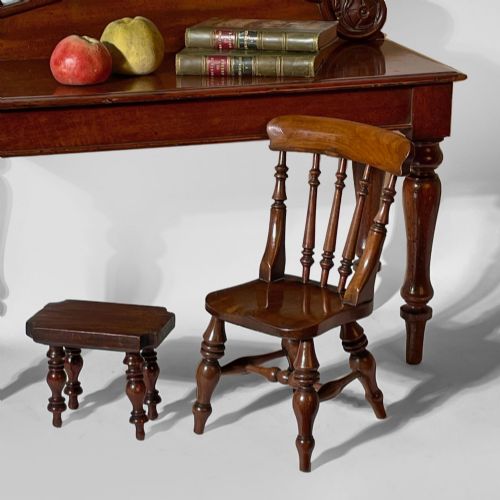

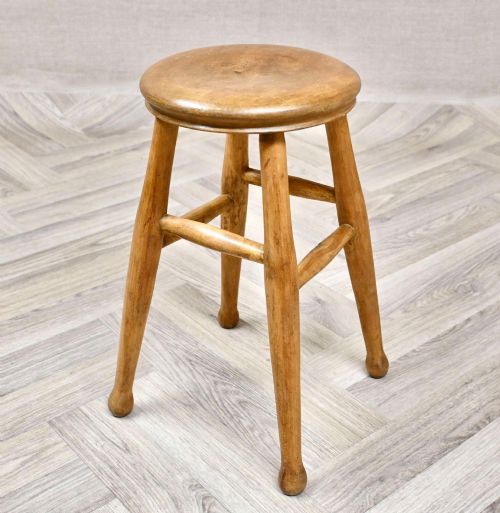
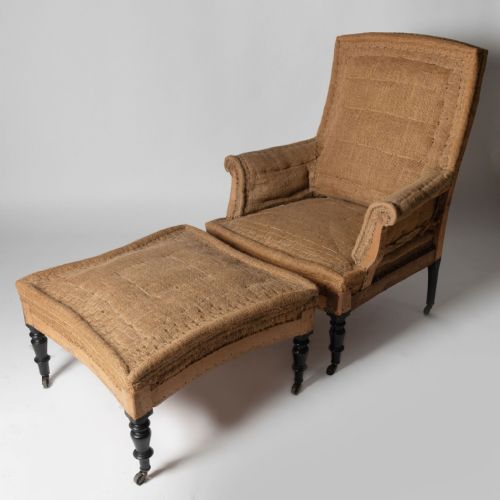

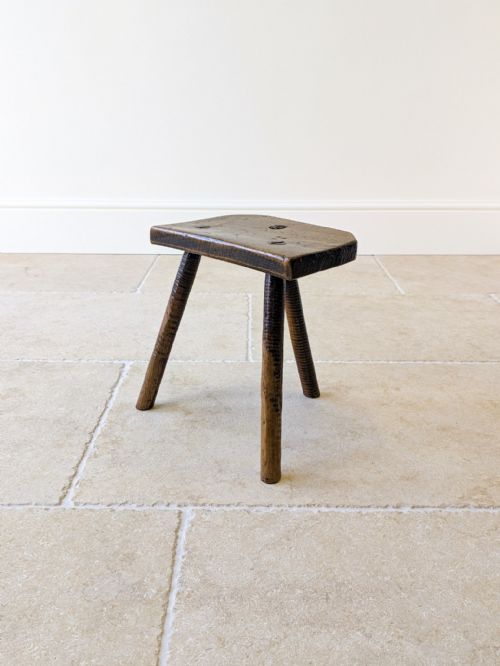
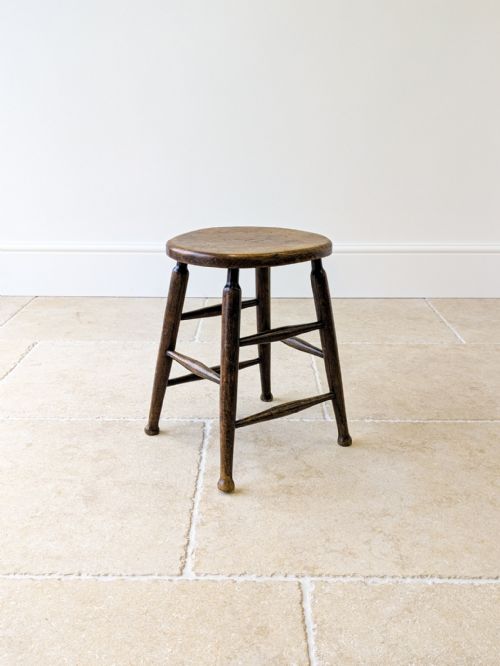
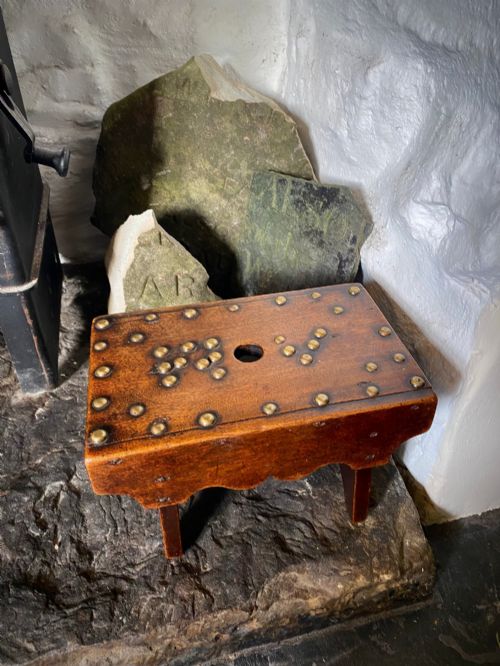

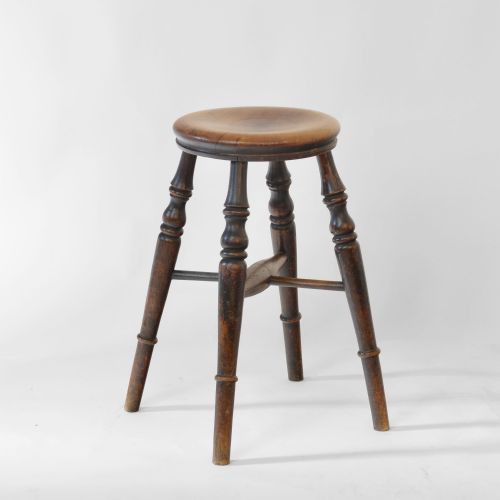
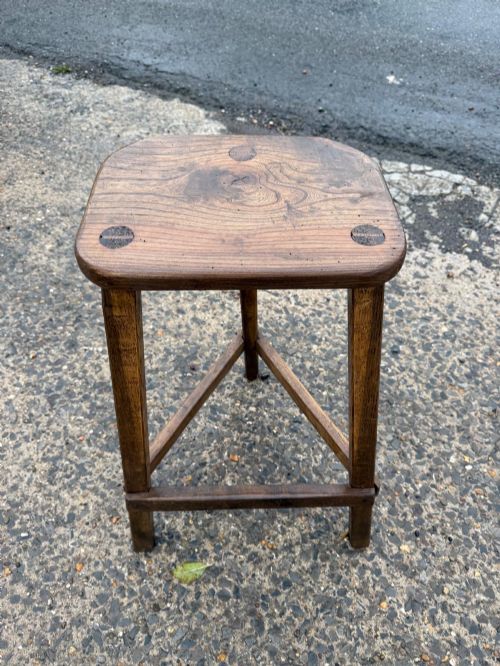
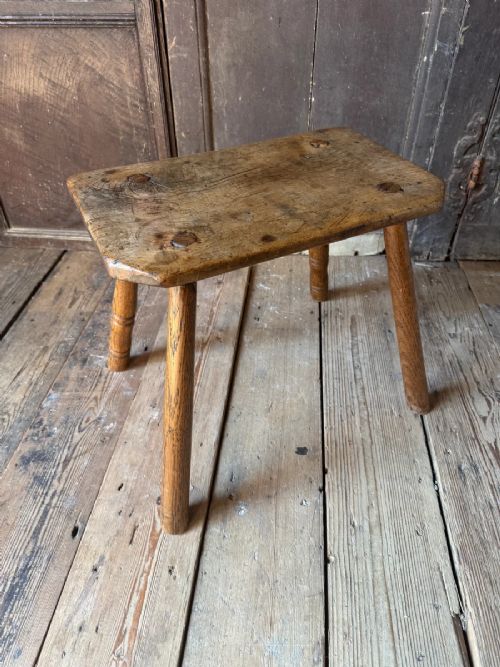
19th Century Country Stool
A 19th century country stool brings honest utility and vernacular character into a modern interior.
19th Century Country Stool
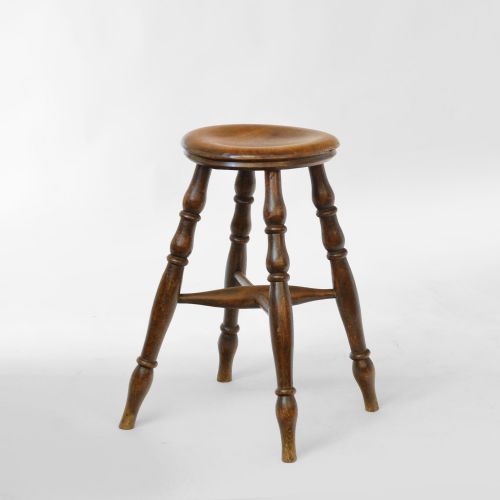
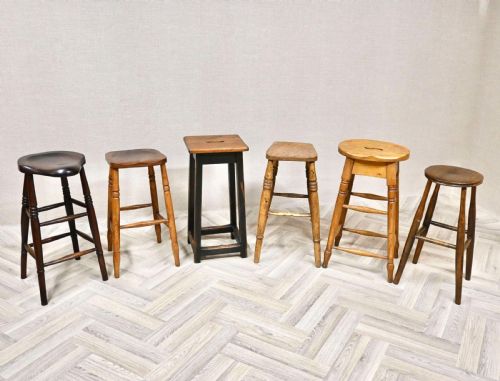
A 19th century country stool encompasses a diverse group of domestic, agricultural and workshop seating shaped by regional traditions. These pieces include low milking stools, tavern seating, tavern and bar stools, and specialised artisan forms originating from British, French and Eastern European makers.
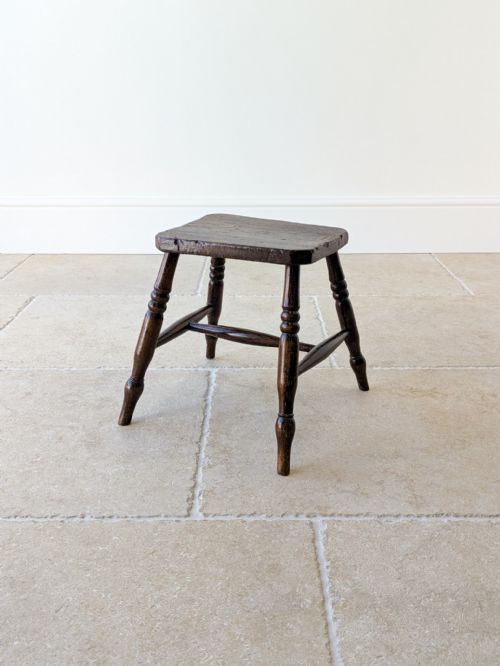
The most common examples encountered in this selection are sturdy domestic stools constructed from domestic timbers like elm, ash and beech. Many display simple three-legged or four-legged designs intended for practical tasks around the farmhouse, dairy or workshop.
Beyond basic domestic seating, the category extends to vernacular variants such as pivoting artisan stools, low hearth stools and rustic game blocks. Each object reflects the specific utilitarian requirements of its original rural context.
How They Were Made
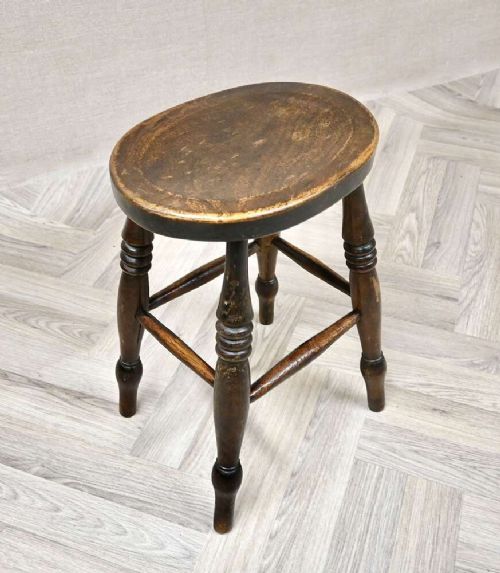
Makers relied on locally sourced hardwoods and softwoods, frequently combining strong timbers for different structural components. Elm often served for durable, shaped seats that resisted splitting, while ash and beech provided resilient legs and stretchers.
Construction techniques typically involved traditional bodging and joinery methods, such as through-wedged tenons securing legs directly into thick wooden seats. Surfaces show the marks of drawknives, adzes and lathes, recording the direct hand of the country craftsman.
Many surviving examples retain traces of their original surface treatments, including historical paint finishes in ochre, yellow, green or dark tones. These coatings protected the timber in working environments and now provide a distinct surface patina.
19th Century Country Stool Retail Price Guide 2026
Typical asking prices for 19th century country stool among the pieces listed under this phrase on Sellingantiques today, from the lower quarter to the upper quarter. They describe what is for sale here now, not the wider market.
Listings feature regional timbers including elm, ash, beech, oak and pine, alongside painted Eastern European and French milking forms.
What Varies in Quality
Quality in a 19th century country stool depends heavily on the integrity of its original construction and the balance of its proportions. Pieces with well-worn yet structurally sound joints demonstrate superior durability compared to those requiring extensive timber replacement.
The character of the seat timber and the expression of the leg turnings or splay dictate visual appeal. Examples retaining honest wear from working use alongside untouched original paint surfaces command greater interest from collectors.
The 19th Century Country Stool Glossary
- Vernacular
- An architectural or furniture style created by local artisans using traditional methods and regional materials without academic design influence. This approach prioritises pure utility over high-style fashion.
- Bodger
- A traditional woodworker who turned chair legs and components in woodland encampments using pole lathes. These semi-finished parts were then supplied to local chairmakers.
- Splay
- The outward angle of the legs from the underside of the seat. A wider splay provides greater stability on uneven rustic floors.
- Milking stool
- A small, low-seated stool traditionally used by agricultural workers for milking livestock. They frequently feature three legs to remain steady on uneven earth or stone floors.
- Adze
- A traditional cutting tool with a curved blade used for carving and hollowing out wooden seat blanks. This tool leaves characteristic shallow scoop marks across the timber.
19th Century Country Stool: Frequently Asked Questions
What were country stools originally used for?
These practical items served daily domestic and agricultural duties around the farmhouse, dairy, tavern and workshop. People used them for sitting while milking, working at artisan benches, or resting by the hearth.
Their robust construction allowed them to withstand heavy daily use in demanding environments without delicate upholstery or complex framing.
How do I care for antique timber stools?
Keep wooden seating away from direct heat sources and rapid temperature fluctuations to prevent the timber from drying out and splitting. Apply a clear microcrystalline wax occasionally to nourish dry surfaces and protect the historic patina.
Avoid harsh chemical cleaners or modern polishes that can strip away original paint or accumulated layers of historic wax.
Are these stools comfortable to sit on?
Most examples feature solid wooden tops shaped with subtle hollows to fit the human form during short periods of sitting. While they lack modern cushioning, their ergonomic carved seats offer surprising support.
They function well as occasional seats, side table surfaces, or display stands within contemporary living spaces.
How can I tell a milking stool from a bar stool?
Milking stools are built with very low seats designed for tasks performed close to the ground, often featuring three splayed legs for stability on uneven soil. Bar and tavern stools stand much taller, sometimes incorporating footrests between the legs for comfort during extended sitting.
Specialist workshop stools also include unique height-adjustment mechanisms or swivel functions tailored to silversmiths, cobblers and machinists.