


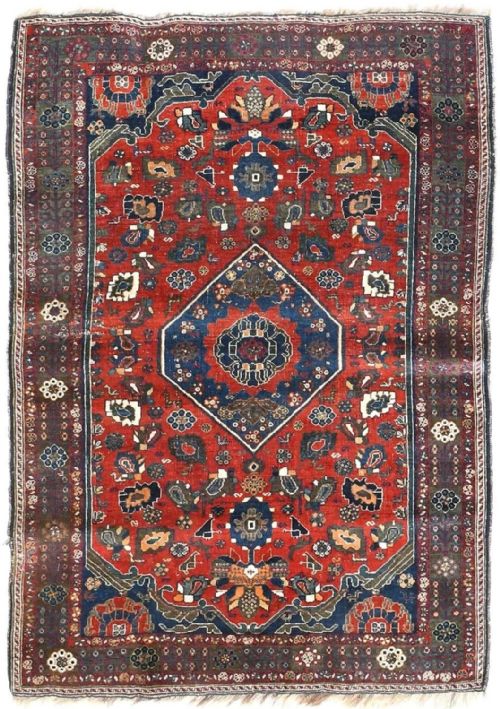

Vintage Heriz Medallion Rug
These heavy floor coverings are vintage heriz medallion rugs, woven in North-West Persia to anchor a room with geometric authority and rich colour.
Vintage Heriz Medallion Rug
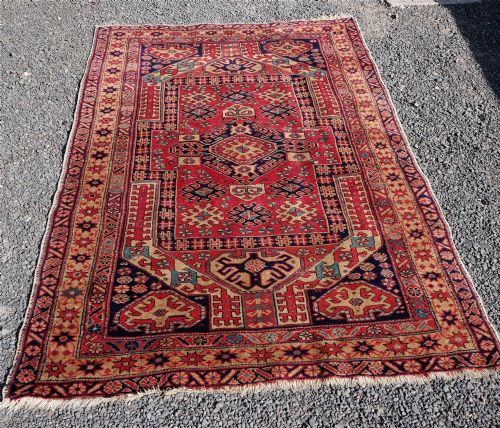
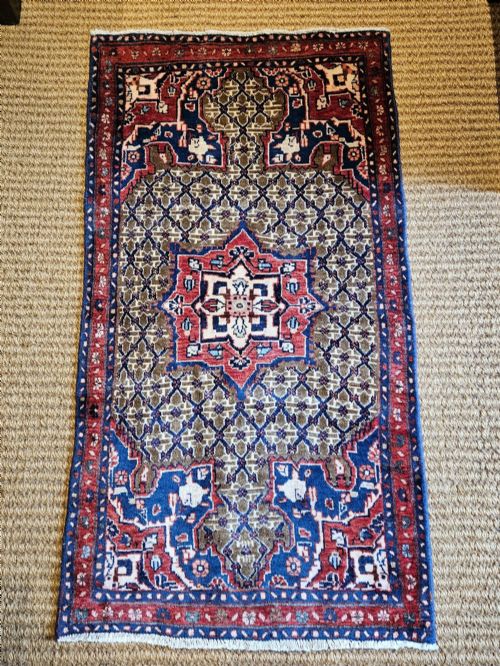
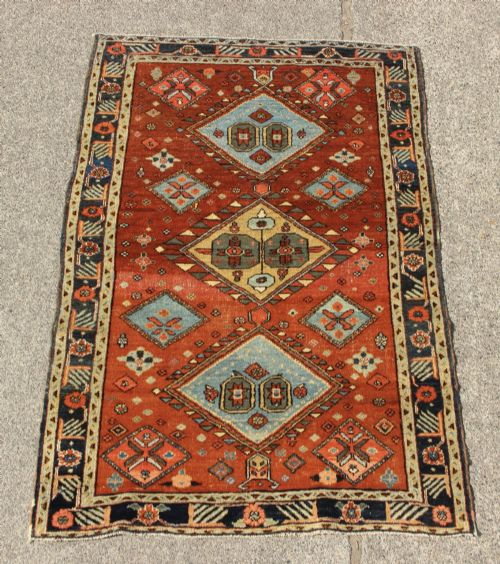
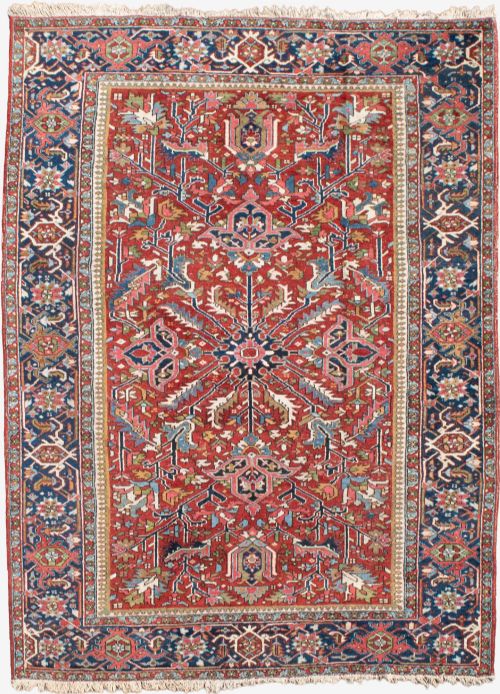
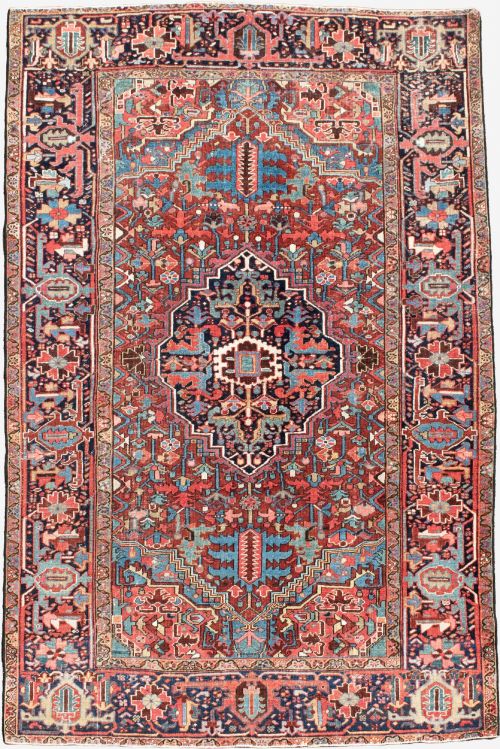
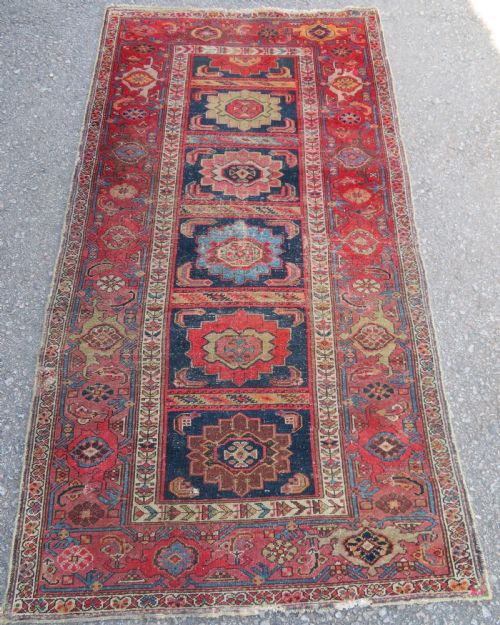
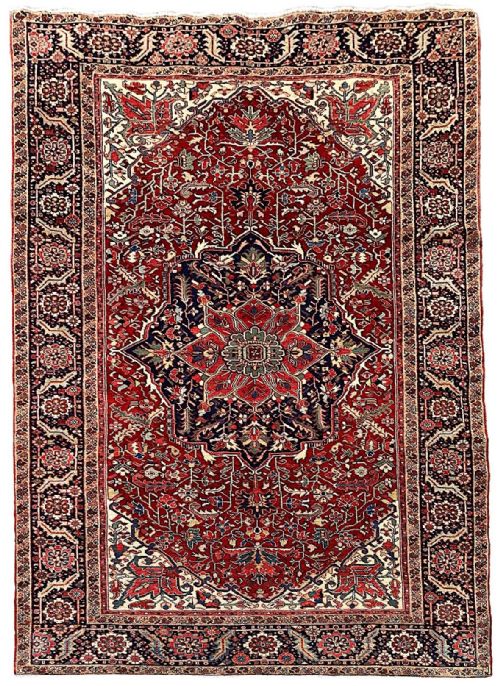
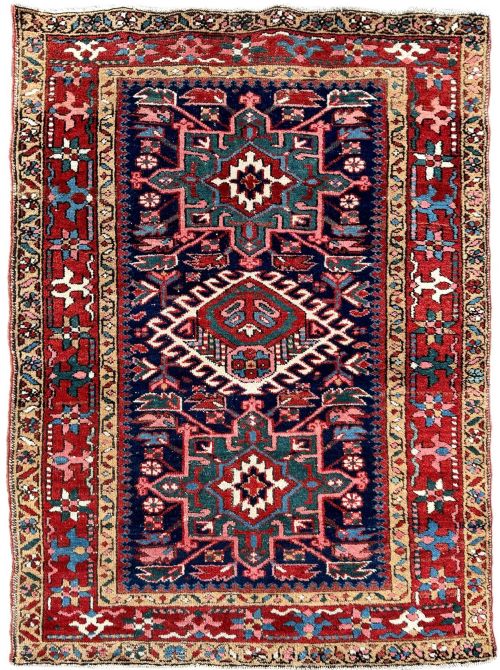
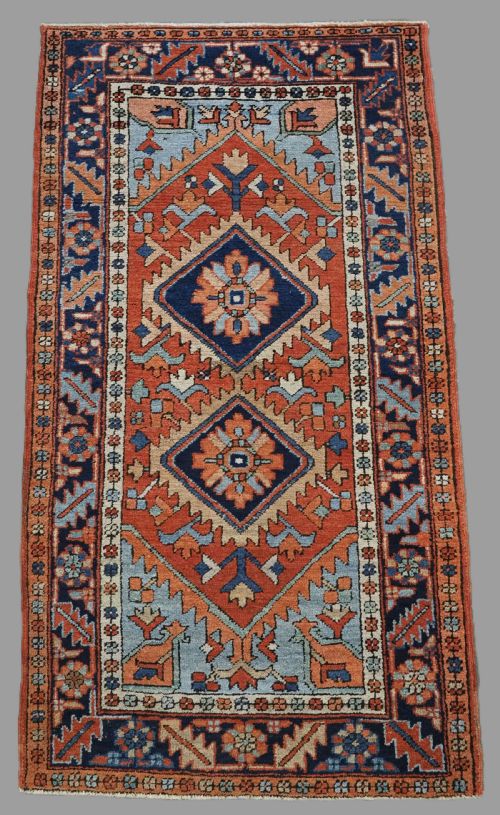
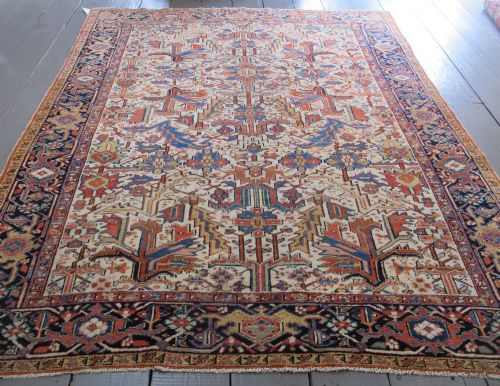
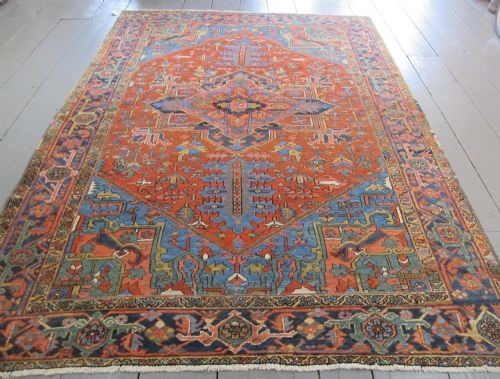
A vintage heriz medallion rug is a heavy wool floor covering originating from the villages of North-West Persia, most frequently encountered in large room-size carpets dating from the late nineteenth century up to the 1930s. The designs are anchored by bold central geometric or star medallions set against fields of terracotta, ivory, or deep blue.
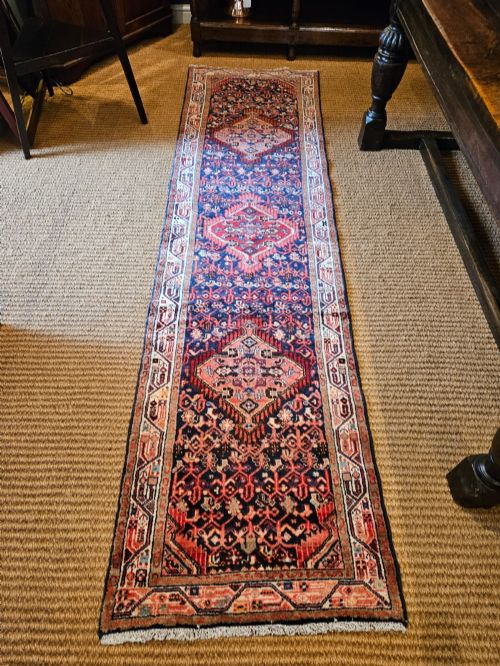
Buyers will also find narrower runner formats and small hearth-sized pieces alongside the standard rugs and carpets. The visual vocabulary relies on stylized botanical motifs and angular corner spandrels rather than the curving florals typical of urban Persian weaving.
Pieces from this region overlap closely in village aesthetic and structure with related styles such as Serapi, Karaja, and Bakshaish. They were built for demanding domestic use, utilising sturdy foundations that allow the wool pile to wear down evenly over decades.
Materials and construction
The foundation of these rugs combines hand-spun wool and cotton warps, providing the heavy, durable structure that defines the type. Weavers employed sturdy woolen pile knotted by hand onto a supportive grid.
Natural dye stuffs yielded the terracotta, madder red, ivory, and indigo tones recorded across the pieces. These materials settled into rich, varied patination as the wool aged under foot.
Listings span production dates from the 1850s through the 1930s, utilising wool and cotton warp materials across village formats.
What separates examples
Quality rests in the graphic clarity of the central medallion and the crispness of the angular drawing across the field. Strong contrast between the ground colour and the primary motifs creates the architectural presence expected in the better woven specimens.
The handle of the wool also distinguishes the grade of a piece, with denser, more resilient piles retaining their structure and colour saturation more successfully through generations of wear.
The Vintage Heriz Medallion Rug Glossary
- Medallion
- A large central ornamental design set into the middle of the rug field. It forms the primary focal point of the geometric composition.
- Spandrels
- The triangular corner pieces situated in the four corners of the field outside the central medallion. They frame the field and balance the central design.
- Warp
- The vertical foundation threads that run the length of the rug from fringe to fringe. Cotton warp provides stability and tension for the knots.
- Serapi
- A sub-style associated with older Heriz carpets, typically displaying a more open geometric design and softer, muted colour palettes. Collectors prize them for their graphic restraint.
- Bakshaish
- An adjacent North-West Persian village type often grouped with Heriz production. Known for whimsical, archaic tribal patterns and early nineteenth-century dates.
Vintage Heriz Medallion Rug: Frequently Asked Questions
How do I style a heriz rug?
These rugs anchor a room by providing a strong geometric centrepiece beneath a dining table or sitting area. Their substantial weight and terracotta tones suit wooden flooring and traditional or eclectic interiors alike.
Allow the bold scale of the central medallion to remain visible rather than covering it entirely with furniture. Keep surrounding decor relatively neutral to let the natural dyes and angular motifs stand out.
Are these rugs durable for daily use?
Village weavers constructed these floor coverings with robust wool and sturdy foundations specifically for heavy domestic traffic. The dense pile absorbs friction well and tends to wear gracefully over decades.
Use a quality underlay beneath the rug to prevent slipping and cushion the base against hard floors. Routine gentle vacuuming without a rotating brush roll keeps the wool pile clean.
How do I date an antique heriz?
Dating relies on assessing the structure, the exact palette of the natural dyes, and the drawing style of the geometric motifs. Pieces from the late nineteenth century often show softer wool and more expansive, open field designs.
Later examples from the 1920s and 1930s typically feature tighter knots and slightly more compressed, formal floral geometry. Examining the weave density on the reverse offers further clues to the period of origin.
What is the difference between heriz and serapi?
Serapi rugs are essentially an earlier, finer iteration of the traditional Heriz style, usually produced during the nineteenth century. They display a more spacious, relaxed geometry with muted secondary colours.
Standard Heriz carpets generally date from around 1900 onwards and feature slightly more robust, heavier drawing within the medallion. Both share the same North-West Persian village heritage and sturdy cotton warp construction.