


Persian Living Room Carpet
A persian living room carpet brings weight and pattern to a floor, grounding a large space with woven wool, cotton, and silk.
Persian Living Room Carpet
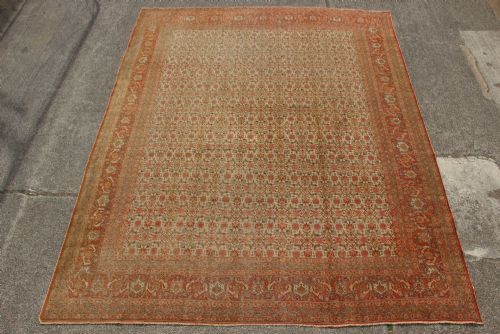
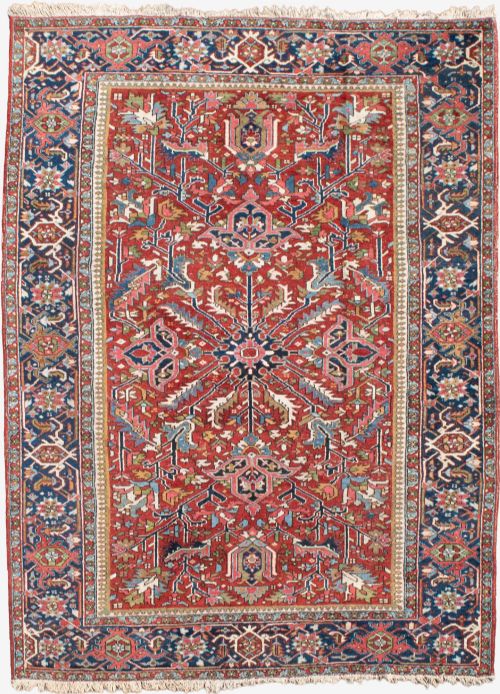
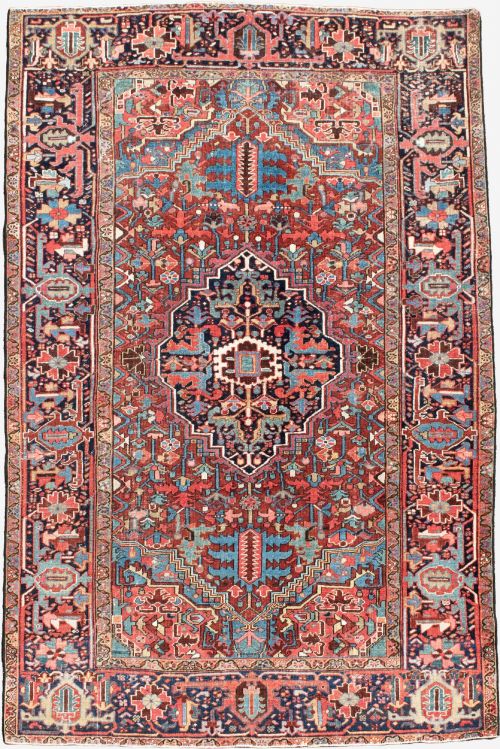
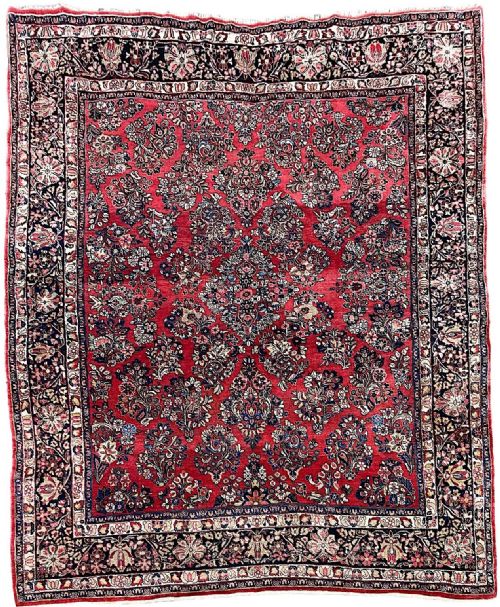
A persian living room carpet is a large floor covering woven in workshops and villages across Persia, appearing in styles such as Heriz, Tabriz, Sarouk, and Sultanabad. These floor coverings span the late nineteenth century into the mid-twentieth century, offering generous dimensions suitable for principal rooms.
Buyers seeking this phrase encounter room-size and country-house pieces measuring over three or four metres in length. Forms range from geometric village weaves to finely detailed city carpets bearing traditional medallions and floral motifs.
Regional variations define the appearance, with Heriz pieces showing bold rectilinear designs while Tabriz and Kirman examples display intricate curves and floral schemes. Each origin brings a distinct palette and knotting density to the interior.
Materials and construction
Construction relies primarily on hand-knotted wool pile set upon cotton foundations, with occasional silk highlights appearing in specific regional work. The combination of durable wool and sturdy cotton warp and weft threads allows these floor coverings to endure generations of use.
Dyes derived from natural sources interact with the wool fibres over decades, creating a softness in the palette. Weavers tie symmetrical or asymmetrical knots by hand, varying the density according to whether the piece originated in a city workshop or a rural district.
Some weavers cleverly hid small intentional irregularities in their geometric patterns to ward off evil spirits and assert human humility before perfection.
Differentiating quality
Quality rests upon the fineness of the knotting and the precision of the design execution. City workshops in centres like Tabriz and Qum achieved high knot densities that allowed for intricate curvilinear detail, whereas village pieces depended on robust geometric strength.
The choice of wool and the integrity of the foundation threads dictate longevity. Even wear across the pile and the preservation of original selvedges and end finishes distinguish superior examples from heavily altered pieces.
Benlian
The Persian Living Room Carpet Glossary
- Warp
- The stationary vertical threads stretched upon a loom before weaving begins. These cotton or wool strands form the structural skeleton of the carpet.
- Weft
- The horizontal threads passed back and forth across the warp to secure the knots in place. They determine the firmness of the textile body.
- Medallion
- A large central ornamental design set into the middle of the carpet field. This focal motif often mirrors corner brackets within the border system.
- Boteh
- A traditional almond-shaped motif with a curved upper end, representing a floral shoot or cypress tree. It appears frequently in Sarouk and tribal designs.
- Selvedge
- The reinforced edge finish on the lengthwise sides of a carpet. Original selvedges protect the structure from fraying and unraveling.
Persian Living Room Carpet: Frequently Asked Questions
Where were these carpets made?
Origin spans specific weaving cities, towns, and tribal regions across Persia, including Tabriz, Heriz, Sultanabad, Kirman, and Hamadan. Each locale developed distinct aesthetic traditions influenced by local materials and master weavers.
City workshops produced refined, detailed compositions while village and tribal groups maintained robust geometric patterns and regional colour palettes passed down through generations.
How do I care for a wool carpet?
Vacuum gently with a suction-only attachment to avoid pulling the pile or damaging the foundation threads. Keep the textile away from direct, prolonged sunlight to prevent uneven fading of the natural dyes.
Rotate the layout periodically to ensure even wear from foot traffic and furniture placement. Professional cleaning by a specialist in antique textiles maintains the integrity of the wool and cotton fibres.
How are different regional styles identified?
Examination of the design geometry, colour palette, and knotting structure reveals the specific origin of a piece. Heriz designs typically feature bold, angular medallions, whereas Tabriz examples favour curves and intricate floral sprays.
Foundation materials and border construction also provide clues to the district of manufacture. Comparing the weave density helps distinguish city workshop production from rural village work.