



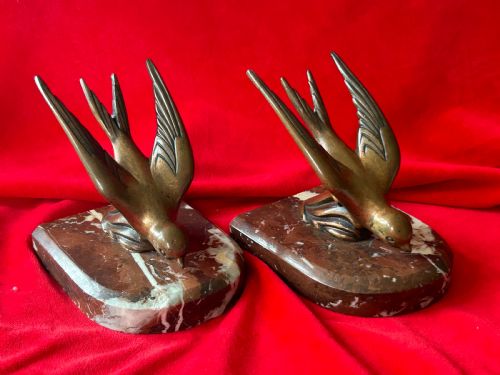

Vintage Heavy Bookends
Vintage heavy bookends hold your volumes firmly in place while bringing sculptural presence to any shelf, combining robust utility with period character.
Vintage Heavy Bookends
When searching for vintage heavy bookends, you encounter substantial shelf furniture designed to anchor large rows of books securely through sheer mass. These items emerge from various decades spanning the nineteenth century through the mid twentieth century, including the Victorian and Art Deco eras.
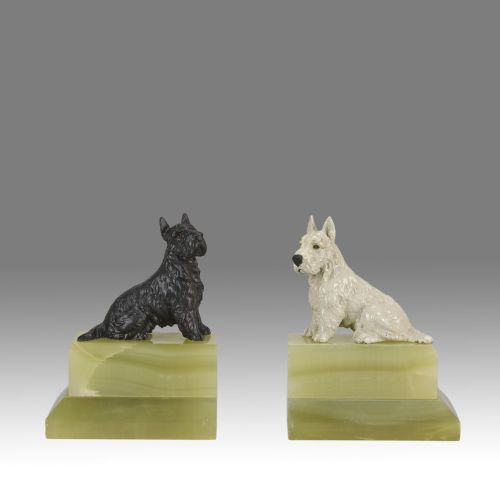
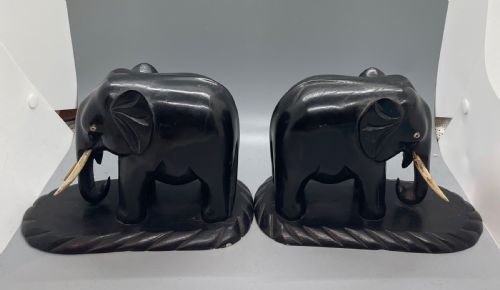
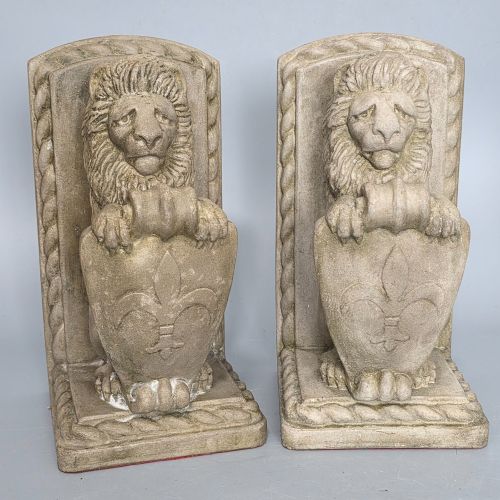
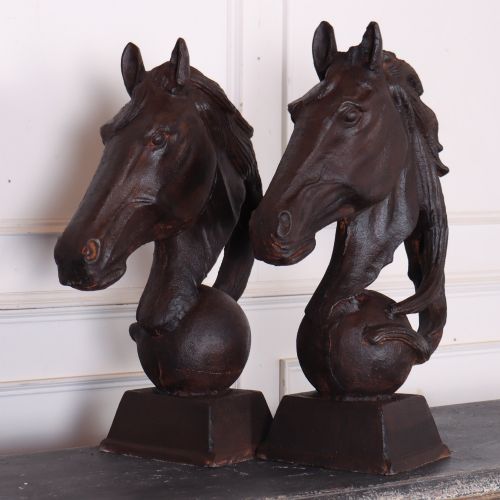
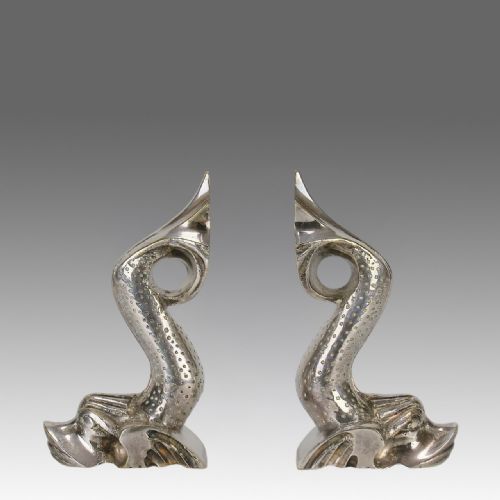
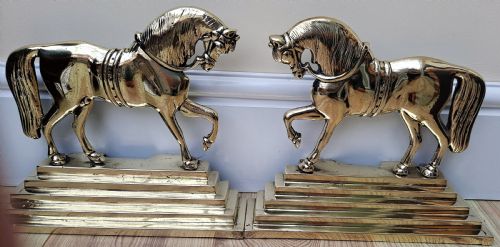
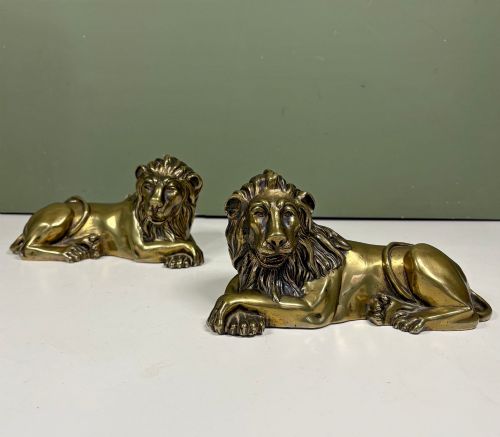
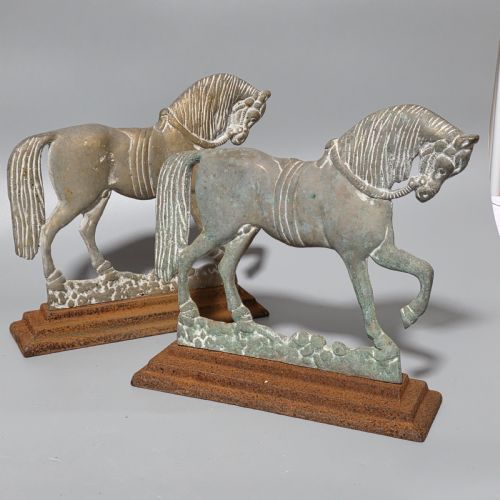
The selections on this page feature animal figures, architectural motifs, and classical subjects executed in durable formats. You meet pairs shaped as elephants, dogs, horses, lions, ships, and owls, alongside geometric alabaster blocks.
Origins stretch across England, France, Austria, and Italy, reflecting diverse stylistic movements from Neoclassical Revival to Victorian Chinoiserie and Anglo-Indian Colonial work. The physical weight required to support dense book collections dictates the materials utilised by makers across these periods.
Materials and construction methods
Metals form the core of many examples, utilising cast iron, brass, bronze, and spelter to achieve the necessary density. Founders employed techniques like cold painting on bronze or silvering surfaces to add colour and detail to animal and figurative subjects.
Natural stones and dense timbers provide alternative weight, incorporating marble, jade, alabaster, ebony, hardwood, pine, and yew wood. Carvers and masons shaped these materials into architectural supports or mounted metal sculptures onto heavy stone bases.
Listings incorporate diverse materials including bone, marble, ebony, cast iron, and spelter spanning Victorian to mid twentieth century periods.
Factors determining quality
The distinction between ordinary and superior pieces rests on the crispness of the casting and the finesse of the hand-finishing. Finely chased bronzes and meticulously carved hardwoods display anatomical precision and depth that mechanical production lacks.
Integration between the sculptural subject and the base indicates superior design and assembly. High-grade items employ genuine marbles or heavy metals that remain balanced and stable when subjected to the lateral pressure of heavy folios.
F Abella & Sons·Franz Gruber·C Omin
The Vintage Heavy Bookends Glossary
- Spelter
- A zinc alloy commonly used as a less expensive substitute for bronze in decorative figures. It accepts patination well but possesses a more brittle structure.
- Cold painted
- A method where bronze figures receive polychrome paint finishes without subsequent firing in a kiln. This technique requires careful handling to preserve the original pigment.
- Vienna bronze
- Small Austrian bronze sculptures produced around the turn of the twentieth century, known for realistic animal subjects and detailed cold-painted finishes.
- Dog of Fo
- Traditional Chinese guardian lion figures often rendered in jade or marble. They symbolise protection and frequently appear in decorative shelf supports.
- Alabaster
- A fine-grained mineral stone used for carving decorative objects and book supports. Its translucent quality allows light to penetrate the surface slightly.
Vintage Heavy Bookends: Frequently Asked Questions
Why are vintage bookends so heavy?
Substantial mass is necessary to counteract the sliding force exerted by rows of heavy books. Makers used dense metals, solid hardwoods, and thick stone bases to ensure the supports remain stationary.
Heavier specimens handle large folios and hardbacks without tipping or shifting across the shelf surface.
Were doorstops used as bookends?
Many heavy items listed as doorstops or door porters share identical weights and casting designs with shelf supports. Nineteenth-century brass lions and horses served versatile functions around the home.
Collectors often repurpose these sturdy brass and cast iron figures to anchor heavy volumes on library shelves.
What is cold painted bronze?
Cold painting involves applying oil paint or enamel colours to a bronze casting without subjecting the piece to high-temperature kiln firing. This technique produces vibrant surface details on animal figures.
Careful preservation is required because the unbaked pigments remain susceptible to moisture and abrasion over time.