
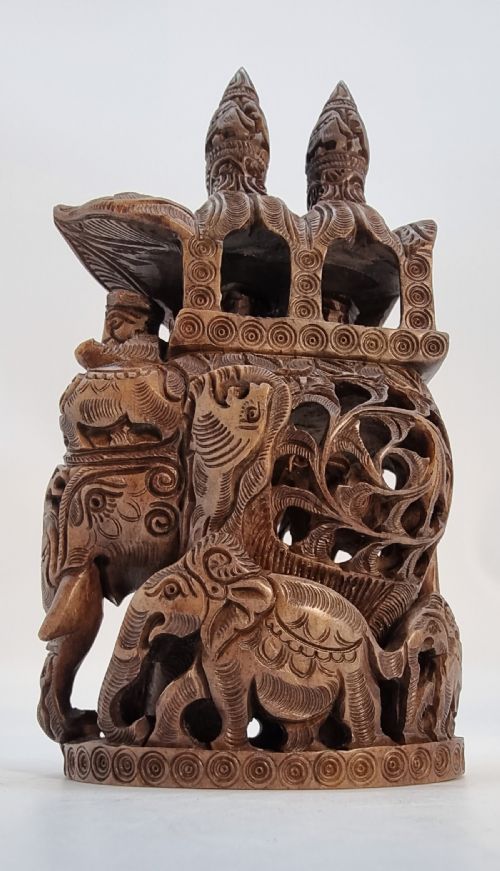


Carved Elephant Statues
These carved elephant statues bring decades of global craftsmanship into your home, offering carved wood and bone figures from the Victorian era to the Art Deco period.
Carved Elephant Statues
Carved elephant statues span decorative sculptures, bookends, and larger studies originating from distinct regional traditions. You will most frequently encounter pieces from the Victorian and Raj periods alongside Chinese and Burmese examples.
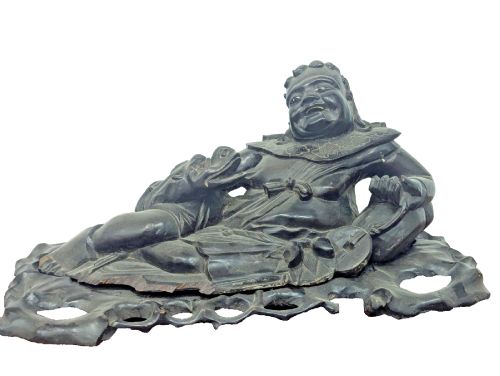
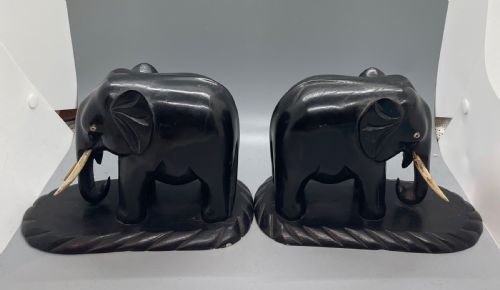
The selection includes pairs of bookends, ceremonial figures with keepers, and substantial hardwood sculptures. These items capture wildlife studies and cultural motifs through traditional carving techniques.
Originating from diverse periods such as the Qing Dynasty and the early twentieth century, these objects reflect global trade and local artisan skills. Each piece demonstrates specific regional aesthetics from Southeast Asia and the Indian subcontinent.
How they were made
Artisans carved these sculptures from dense materials like ebony, teak, and other hardwoods, alongside bone and soapstone. The natural grain of the wood dictates the surface texture and overall finish of each animal study.
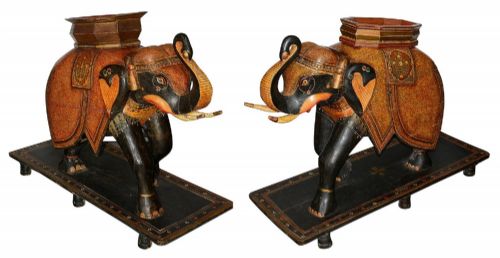
Some pieces incorporate gesso, pigment, and lacquer to add colour and surface detail, particularly in Burmese and Kashmiri examples. These applied finishes highlight specific decorative elements on the statues and bases.
What varies in quality
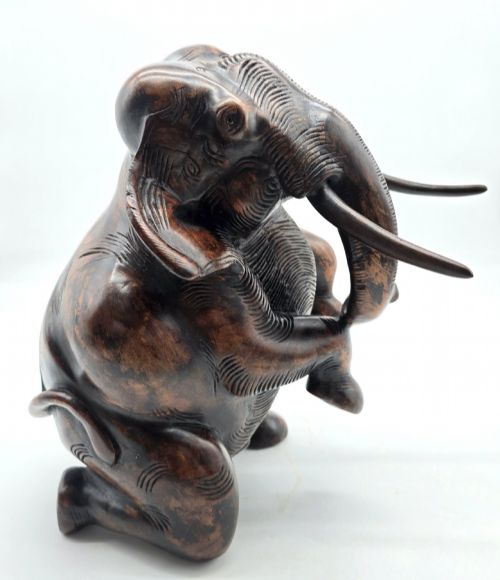
The definition in the carving separates standard production from superior artistic output, particularly in the rendering of the animal's form and posture. Detail work on tusks, feet, and optional caparisons reveals the hand of a skilled artisan.
The choice of material heavily influences the character of the object, with dense ebonised woods and matched pairs commanding attention. Proportions and the stability of integrated wooden bases complete the evaluation of a piece.
The Carved Elephant Statues Glossary
- Raj period
- An era of Indian history under British administration that produced distinctive teak and ebony carvings for export. Items from this time often depict ceremonial processions.
- Anglo-Indian
- A descriptive term for objects combining British stylistic preferences with traditional Indian craftsmanship. These pieces frequently utilise local hardwoods.
- Ebony
- A dense, dark heartwood prized for detailed sculpture work due to its fine grain. It allows carvers to achieve sharp definition without splintering.
- Qing Dynasty
- The final imperial dynasty of China, spanning the seventeenth to the early twentieth century. Carvings from this period demonstrate advanced hardwood manipulation.
- Gesso
- A plaster-like mixture applied to surfaces to prepare them for painting or gilding. It provides a smooth base for polychrome decoration.
Carved Elephant Statues: Frequently Asked Questions
How old are carved elephant statues?
The available examples span from the nineteenth century through the Art Deco period of the nineteen-thirties. Victorian and Raj period pieces represent the earlier end of this timeframe.
Specific dating relies on material choices, regional carving styles, and documented historical periods such as the Qing Dynasty.
What woods were used for these sculptures?
Carvers utilised dense tropical timbers including ebony, teak, and general hardwoods capable of holding fine detail. These materials provide the weight and dark tones typical of nineteenth-century animal studies.
Other mediums such as bone, soapstone, and terracotta also appear across different regional traditions.
How do I care for antique wooden elephants?
Keep wooden and ebony sculptures away from direct sunlight and rapid temperature fluctuations to prevent timber splitting. Dust them gently with a dry, soft cloth.
Avoid using liquid polishes on waxed or lacquered surfaces to preserve the original finish.
Where were these elephant statues made?
The pieces originate primarily from the Indian subcontinent, China, and Burma, reflecting distinct regional aesthetics. Anglo-Indian and Colonial workshops produced many of the teak and ebony studies for export.
Chinese and Kashmiri carvers utilised local materials to create figures with unique cultural characteristics.