



Black Wood Bookends
Black wood bookends anchor a study or shelf with carved animal forms and dark timber tones.
Black Wood Bookends
When you search for black wood bookends, you encounter carved timber supports designed to hold volumes upright on a desk or shelf. The selection on this page relies heavily on Black Forest animal carvings, Victorian ebonised extensions, and dense tropical hardwoods like ebony.
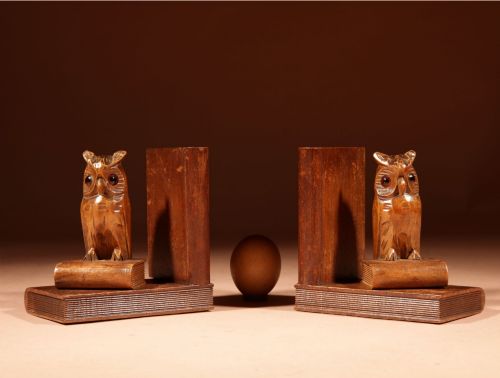
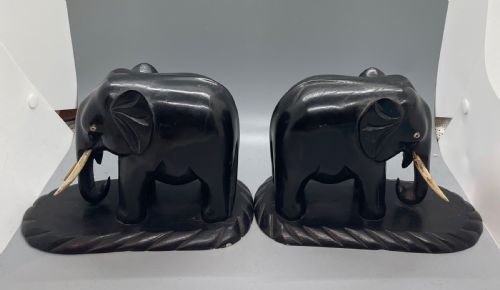
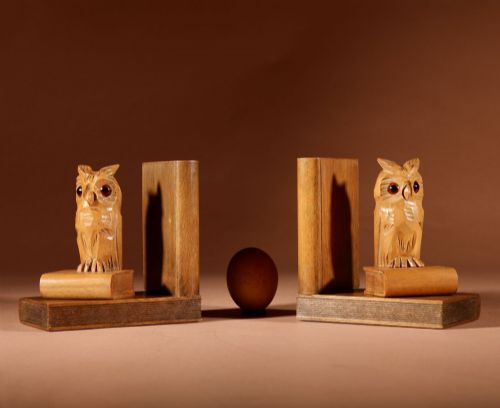
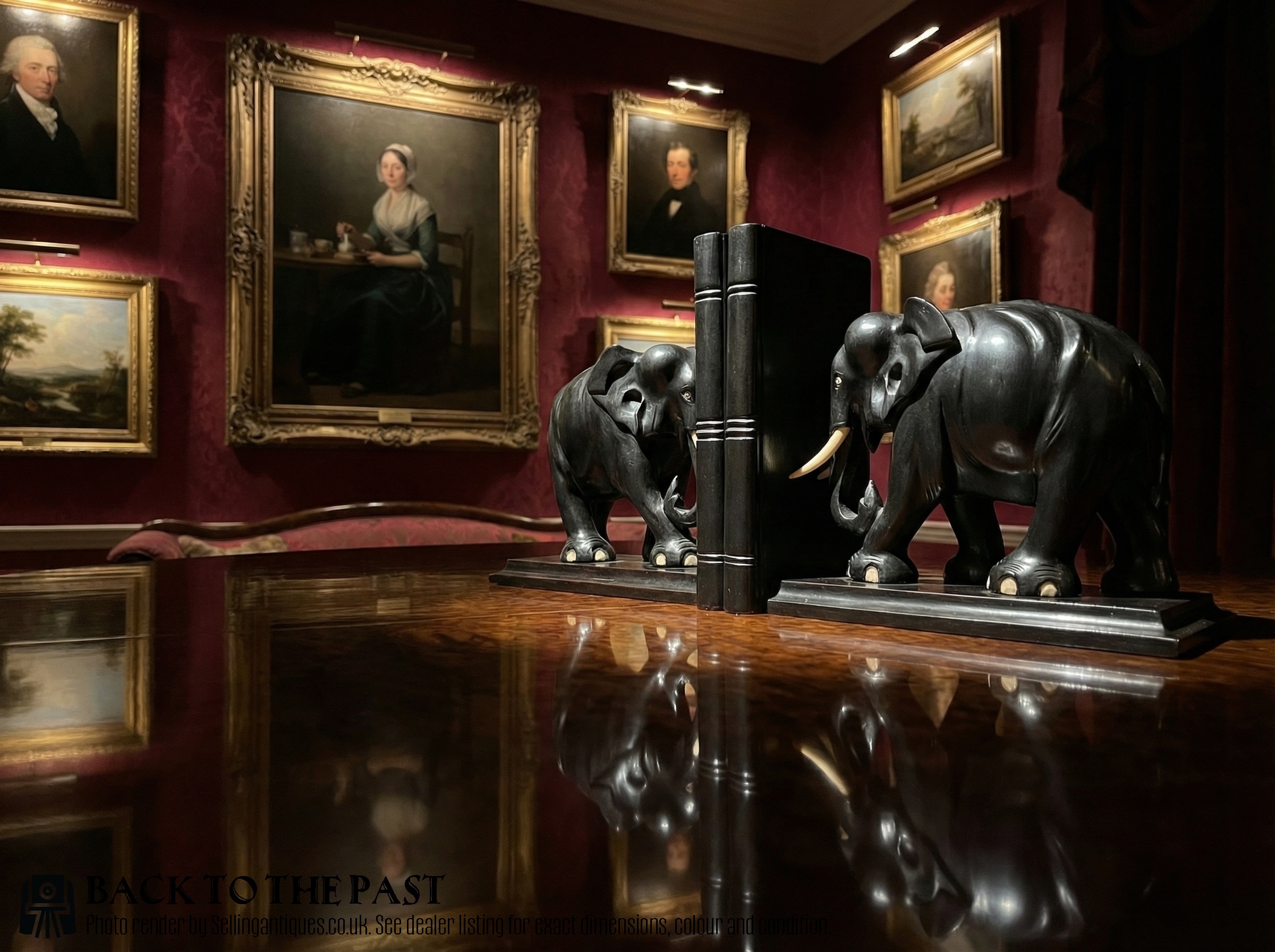
Most examples date from the late nineteenth century through to the art deco era of the nineteen thirties. You will frequently meet pairs depicting owls, elephants, bears, and dogs alongside foo dogs and elephants carved from dark hardwoods.
How they were made
Carvers shaped these pieces using linden wood, hardwood, and ebony, frequently applying dark stains or ebonising finishes to lighter timber. Artisans carved intricate details by hand, creating textured surfaces on animal figures such as owls, bears, and elephants.
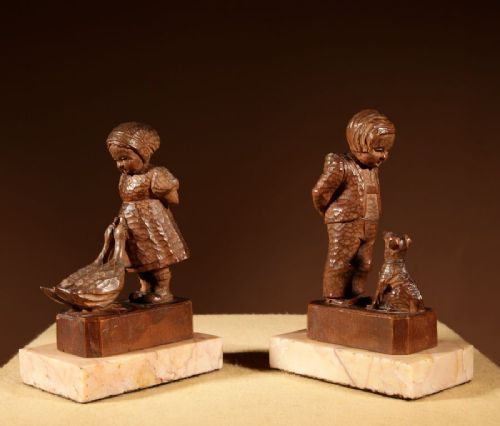
Some Victorian examples incorporate functional mechanisms like extending book slides, combining carved wooden novel rests with hinged supports. Glass and marble elements occasionally appear alongside the carved timber components to add weight and contrast.
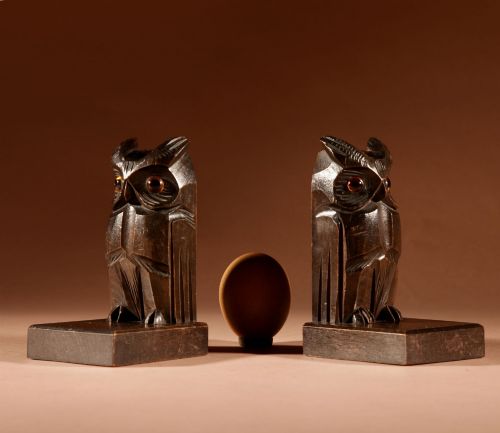
Several solemn owls peer from these shelves, keeping a watchful eye on your library.
What varies in quality
Quality rests upon the depth and animation of the carving, particularly in the rendering of animal subjects like owls, dogs, and elephants. Finer pieces display expressive detail in the faces and naturalistic postures rather than stiff, uniform proportions.
The choice of material also distinguishes the work, with dense ebony and finely grained linden wood holding crisp edges better than softer substitutes. Superior examples maintain intact original surfaces without clumsy repairs to protruding ears, tails, or carved extremities.
The Black Wood Bookends Glossary
- Black Forest
- A style of wood carving originating from the Brienzergrat region in Switzerland, known for realistic depictions of animals such as bears, owls, and dogs. These carvings often served decorative or functional roles in European homes.
- Ebonised
- Wood that has been treated with a dark stain or finish to imitate the appearance of expensive ebony. This technique was widely practiced during the Victorian period on furniture and desk accessories.
- Book Slide
- An adjustable desk accessory featuring extending sides to hold a variable number of volumes between two terminal ends. Victorian versions often incorporated novel rests and hinged wooden brackets.
- Foo Dog
- A traditional Chinese guardian lion depicted in pairs to protect a space, frequently rendered in carved hardwood or stone. These mythical beasts appear in nineteenth-century decorative sculpture.
Black Wood Bookends: Frequently Asked Questions
What periods do these bookends cover?
The pieces span from the late nineteenth century through the Victorian era and into the nineteen thirties. You will find items representing nineteenth-century craftsmanship alongside nineteen-hundreds Black Forest production and art deco design.
Most examples cluster around nineteen hundred to nineteen twenty, reflecting the popularity of carved animal studies during that period.
How were these bookends used?
They served to keep rows of books upright on desks, tables, and library shelves while adding a decorative sculptural element to the room. Some designs doubled as letter stands or incorporated extending slides for flexible storage.
Their heavy timber construction provided the necessary weight to support heavy volumes without tipping.
What animals are commonly carved?
Owls, elephants, bears, and various dog breeds appear frequently across the carved wooden pieces. Artisans also utilised exotic subjects like foo dogs alongside domestic pets such as Westie and Scottie dogs.
These subjects reflect the Victorian and Edwardian taste for naturalism and animal portraiture in household objects.
How do I care for wooden bookends?
Keep the carved timber away from direct sunlight and extreme temperature fluctuations to prevent the wood from drying out or splitting. Dust the intricate crevices gently with a soft brush rather than a wet cloth.
Occasional light application of appropriate wood wax helps maintain the finish on ebony and linden wood surfaces.