

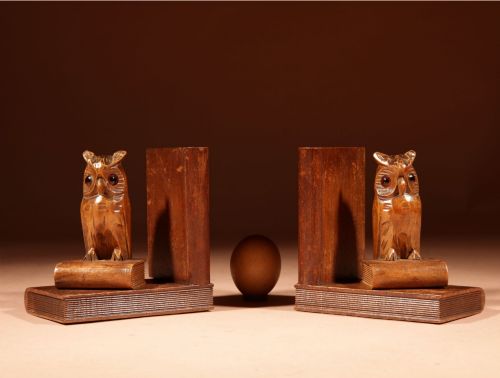

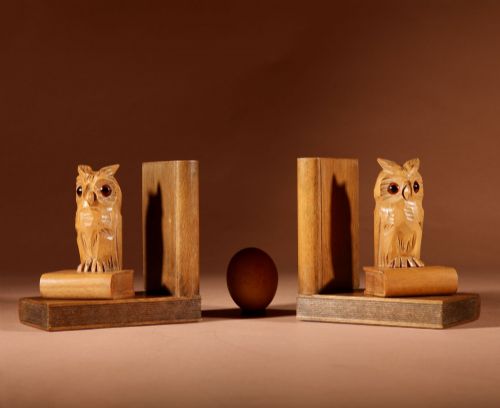


Hand Carved Bookends
Hand carved bookends are solid wooden and stone supports built to hold libraries upright, bringing character and craftsmanship straight to your shelves.
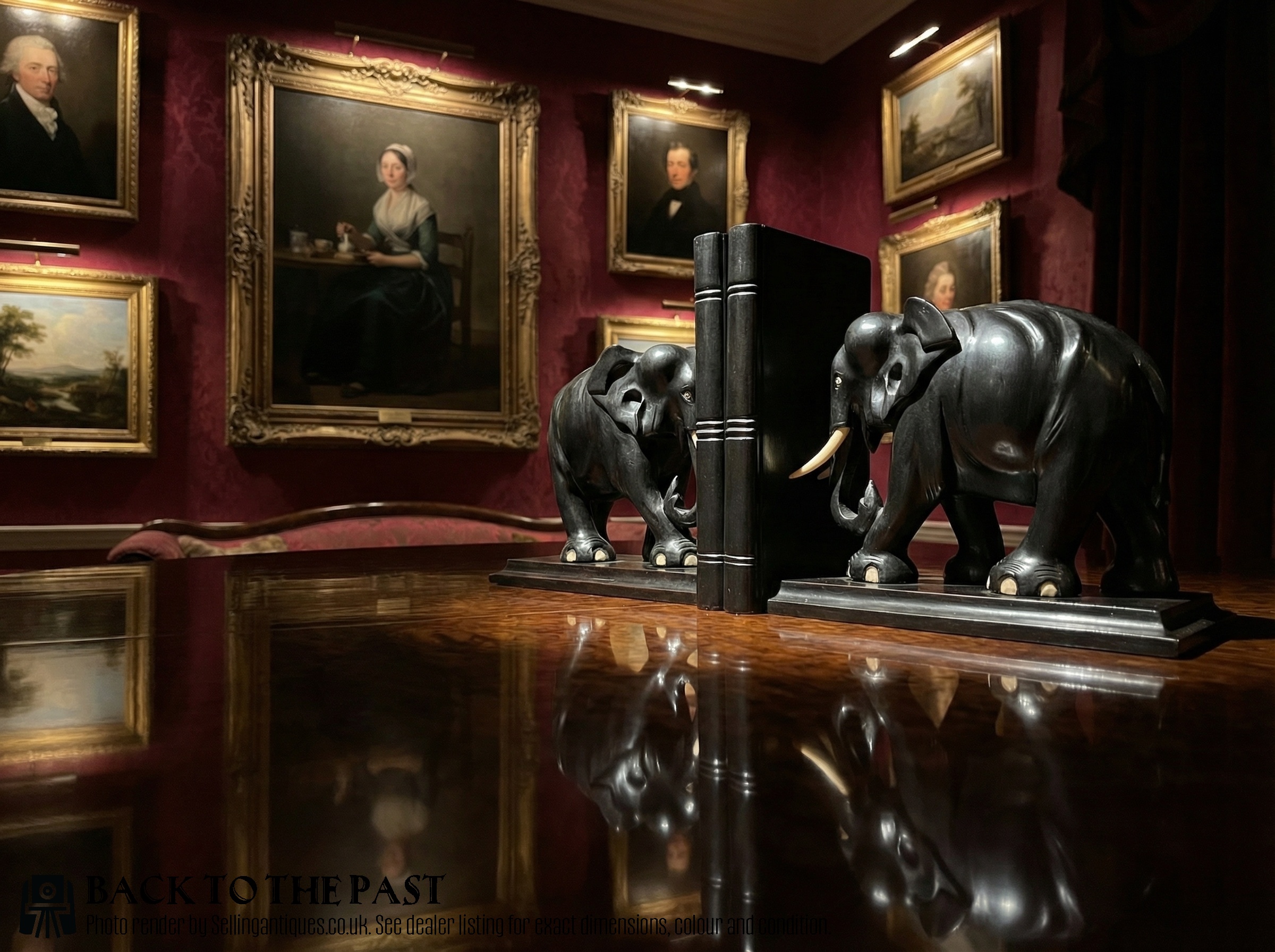
Hand Carved Bookends
Hand carved bookends combine practical library support with sculptural artistry, taking the form of animals, figures, and architectural terminals. When you search for hand carved bookends, you encounter pairs shaped into owls, bears, elephants, and dogs alongside architectural motifs.
The pieces on this page span from the Victorian and Edwardian eras through the 1920s and 1930s, reflecting periods of skilled domestic and colonial woodcarving. Black Forest and Anglo-Indian designs dominate the selection, bringing regional carving traditions directly to domestic desks.
Beyond standard bookends, the selection includes related desk accessories like book slides and carved panels that serve the same organisational purpose. These items range from whimsical animal figures to formal Georgian Revival and Gothic Revival styles.
How they were made
Carvers shaped these pieces from woods such as oak, linden wood, fruitwood, ebony, pine, and beech using hand chisels and gouges. Dense tropical timbers like ebony allowed for intricate detail work, while softer woods suited larger animal forms.
Alternative materials like soapstone and bone appear alongside glass elements, carved and polished to create contrasting textures. Makers applied traditional joining techniques and surface finishes to highlight the natural grain and colour of the material.
Hand Carved Bookends Retail Price Guide 2026
Typical asking prices for hand carved bookends among the pieces listed under this phrase on Sellingantiques today, from the lower quarter to the upper quarter. They describe what is for sale here now, not the wider market.
Listings feature woods such as oak, linden wood, ebony, and fruitwood alongside soapstone and bone.
What varies in quality
Quality rests upon the depth of the carving and the life within the subject, separating standard production from skilled artisan work. Anatomical proportion and expressive detail in figures like owls or lions dictate the overall success of the piece.
The choice of timber and the preservation of original surface patination influence the character of each pair. Solid construction that withstands the weight of heavy volumes ensures the object performs its function effectively.
The Hand Carved Bookends Glossary
- Black Forest
- A style of woodcarving originating from the Brienz region of Switzerland, known for realistic animal subjects such as bears and owls. Pieces from this tradition often utilise linden wood and display deep, naturalistic texturing.
- Anglo-Indian
- Carving styles produced in the Indian subcontinent during the British colonial period, frequently utilising dense timbers like ebony or beech. These items incorporate traditional local flora and fauna motifs into British furniture forms.
- Book slide
- An expanding desk accessory featuring adjustable ends to hold a changing selection of volumes upright. They share the same decorative carving styles as fixed bookends.
- Shi Shi
- A traditional Chinese guardian lion representation, often carved in soapstone as desk seals or decorative figures. They symbolise protection and good fortune in East Asian art.
- Griffin
- A mythical creature with the body of a lion and the head and wings of an eagle, frequently used in architectural terminals and bookend designs. This motif appears in revival styles drawing on classical antiquity.
Hand Carved Bookends: Frequently Asked Questions
How do I clean wooden bookends?
Dust the carved surfaces regularly with a soft, dry brush to prevent dirt accumulation in the recessed details.
Avoid using liquid cleaners or excessive moisture, which can damage aged wood and lift original finishes.
What is a book slide?
A book slide is an extendable desk rack with two matching carved ends that push together to secure a row of books.
It offers a flexible alternative to fixed bookends while displaying the same decorative carving techniques.
How do I date antique bookends?
Examine the wood species, tool marks, and stylistic indicators such as Victorian or Edwardian revival motifs.
Wear patterns on the base and the method of construction help place the piece within its historical period.