

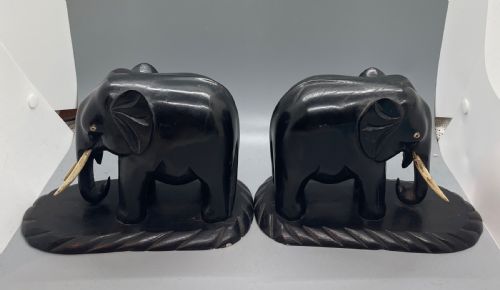


Vintage Elephant Bookends
These vintage elephant bookends anchor a study shelf with heavy materials and carved detail.
Vintage Elephant Bookends
Vintage elephant bookends serve domestic libraries and studies by holding volumes upright while adding sculptural weight to a shelf. The pieces matching this phrase appear across distinct periods including Victorian and Art Deco, alongside earlier nineteenth century origins.
Buyers meet varied regional forms on this page, spanning French and English workshops as well as Anglo-Indian and Chinese outputs. Wooden and metal pairs predominate, often utilising dense timbers or cast spelter.
Carved wooden examples include Black Forest models and dense ebony pairs, while other items incorporate brass, bone, and marble. The selection moves from functional book rests to decorative carved sculptures.
How they were made
Makers shaped these bookends from dense hardwoods such as ebony, oak, and coromandel, employing hand carving to define the skin texture and posture of each animal. Workshops in the Black Forest and Anglo-Indian centres relied on skilled woodworking traditions to produce durable sculptural forms.
Metal versions utilise brass and spelter casting techniques to achieve heavier bases suitable for supporting large volumes. Some pieces combine carved bone details with wooden plinths or incorporate marble bases for added stability.
Vintage Elephant Bookends Retail Price Guide 2026
Typical asking prices for vintage elephant bookends among the pieces listed under this phrase on Sellingantiques today, from the lower quarter to the upper quarter. They describe what is for sale here now, not the wider market.
Some wooden elephants wear expressions of mild astonishment, as if suddenly realising they are holding up a row of encyclopaedias.
What varies in quality
The choice of materials and the stability of the mounting affect the overall grade of a pair. Dense timbers and heavy brass or marble bases provide both aesthetic presence and practical weight.
The Vintage Elephant Bookends Glossary
- Art Deco
- A design style from the nineteen-thirties characterised by sleek lines and stylised geometric forms. Pieces from this era often feature streamlined animal representations.
- Anglo-Indian
- Descriptive of items produced in India during the British colonial period, frequently utilising local hardwoods like ebony and coromandel. These objects combine traditional regional craftsmanship with European furnishing requirements.
- Spelter
- A zinc alloy used as an economical alternative to bronze for casting decorative sculptures and bookends. It accepts patination well and provides sufficient weight for holding books.
- Black Forest
- A regional style of wood carving originating from Switzerland and Germany, known for realistic representations of animals and foliage. Carvings from this tradition often display deep relief and textured surfaces.
- Coromandel
- A dense, heavy timber with dark grain patterns valued for fine decorative objects and furniture. It offers a smooth finish when polished.
Vintage Elephant Bookends: Frequently Asked Questions
Are these bookends heavy enough for large books?
Most pairs utilise dense hardwoods, brass, or marble bases designed to support standard library volumes without tipping.
Heavier cast metal and solid timber versions provide the necessary mass for larger hardback books.
How do I identify Art Deco elephant bookends?
Art Deco pieces typically date from around nineteen-thirty and feature stylised, streamlined forms rather than realistic anatomical detail.
French workshops frequently produced these symmetrical designs in contrasting materials.
What is the difference between ebony and other woods here?
Ebony is an extremely dense, dark tropical timber that allows for sharp carving and takes a high natural polish.
Other listed items utilise oak, coromandel, or general hardwood, each offering different grain patterns and coloration.
How should I care for antique wooden bookends?
Keep wooden pieces away from direct sunlight and extreme humidity fluctuations to prevent timber cracking or warping.
Regular dusting with a dry cloth maintains the surface finish without requiring heavy polishes.