



Black Wooden Bookends
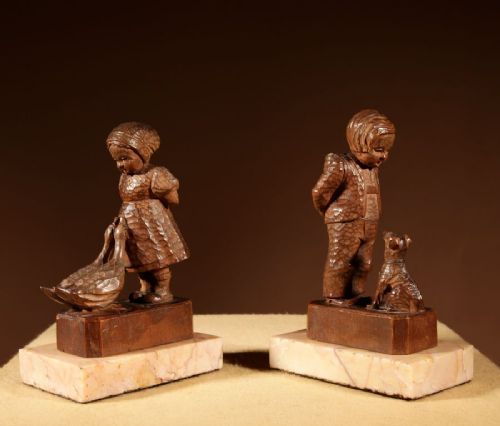
These black wooden bookends bring both heavy function and expressive carving to a shelf, spanning Black Forest animal studies and Art Deco elephants.
Black Wooden Bookends
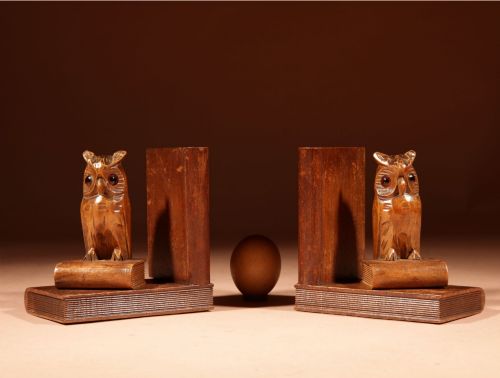
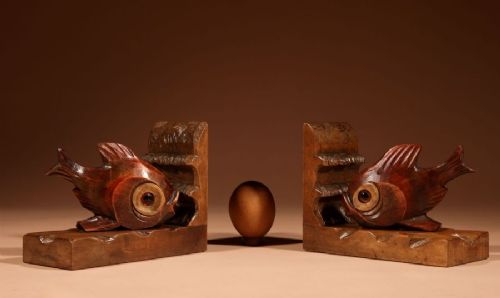
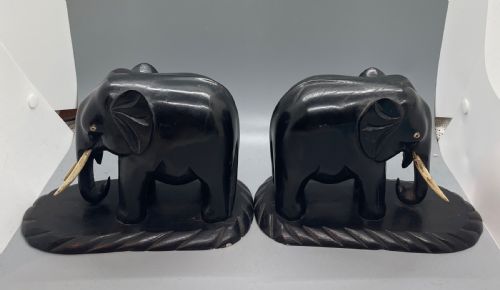
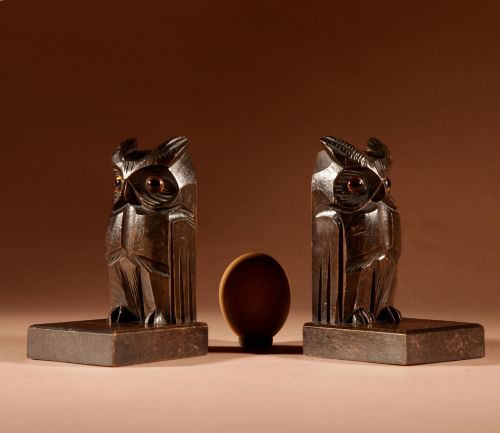
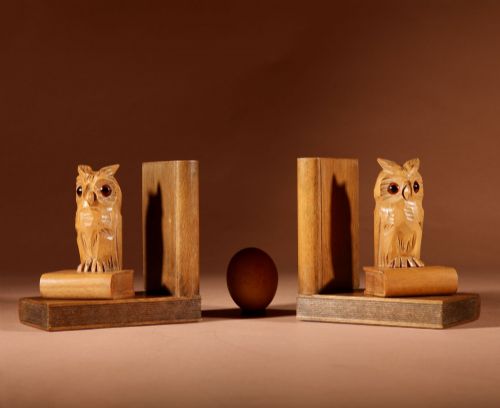
When you search for black wooden bookends, you encounter substantial desktop and shelf supports that manage volumes while doubling as carved sculptures. The selection on this page relies heavily on Black Forest animal carvings featuring owls, bears, goldfish, and elephants, alongside ebonised Victorian extendable slides and hardwood pieces.
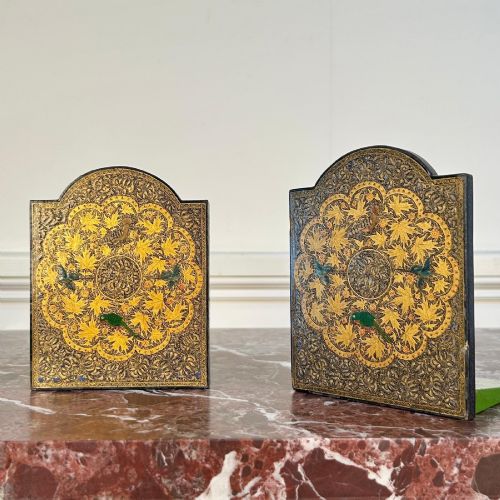
Most examples originate from the late nineteenth century through to the Art Deco period of the 1930s. You will find distinct regional expressions here, ranging from Swiss forest workshops to Anglo-Indian Colonial hardwood interpretations and Kashmiri decoration.
How they were made
Carvers utilised linden wood, ebony, and various dense hardwoods to achieve deep relief and sharp detail. Many pieces rely on natural timber tones darkened by ebonising or staining, while Black Forest works display the distinctive grain of softwoods under careful hand-carving.
Artisans combined functional timber bases with applied or integrated sculptural subjects, such as glass inserts in animal eyes or bone details. The construction prioritises stability to hold rows of books upright without tipping.
Black Wooden Bookends Retail Price Guide 2026
Typical asking prices for black wooden bookends among the pieces listed under this phrase on Sellingantiques today, from the lower quarter to the upper quarter. They describe what is for sale here now, not the wider market.
Listings span several distinct periods including Victorian, 19th Century, and 1900 through to 1930.
What varies in quality
Material choice also dictates standard, with solid ebony and intricate linden wood carvings sitting apart from simpler ebonised softwood alternatives. The integrity of the timber base and the symmetry of the pair complete the assessment.
The Black Wooden Bookends Glossary
- Black Forest
- A style of wood carving originating from the mountain region of central Europe, famous for naturalistic animal subjects like bears and owls. These pieces often exhibit deep undercutting and realistic glass eyes.
- Ebonised
- Timber treated with stain, dye, or polish to imitate the dark, dense appearance of ebony. This finish was widely applied during the Victorian period to fruitwood and other lighter timbers.
- Book slide
- An extendable desktop rack featuring matching end supports that pull apart to accommodate varying numbers of volumes. Victorian versions frequently incorporate folding reading stands or brass mechanisms.
- Foo Dogs
- Traditional Chinese guardian lions depicted in pairs as mythical protectors. When rendered in hardwood or stone, they serve as heavy architectural bookends or decorative sculptures.
Black Wooden Bookends: Frequently Asked Questions
How do I clean carved wooden bookends?
Dust the carved crevices gently with a soft-bristled brush to remove settled particles without disturbing the wood grain.
Avoid liquid polishes and damp cloths, as moisture can damage dry vintage timber and loosen glued components.
How do I date a pair of Black Forest bookends?
Examine the tool marks, the species of wood used, and the realism of the animal subject, as early twentieth-century pieces often show finer hand-carving.
The presence of original glass eyes and untouched surface patination also helps determine the exact manufacturing era.
Where should I place antique bookends at home?
Position them on sturdy bookshelves, sideboards, or mantelpieces away from direct sunlight and sudden radiator heat.
Keep them paired with volumes of a similar height to balance the visual weight of the shelf display.