

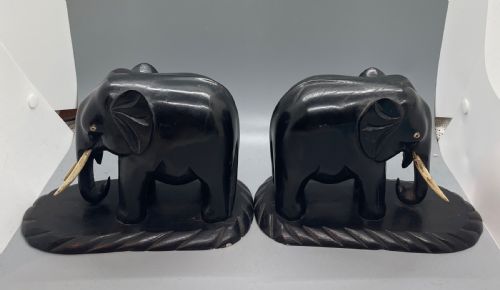


Antique Elephant Bookends
Antique elephant bookends bring the weight of heavy timber and carved bone to a study, offering both utility and character.
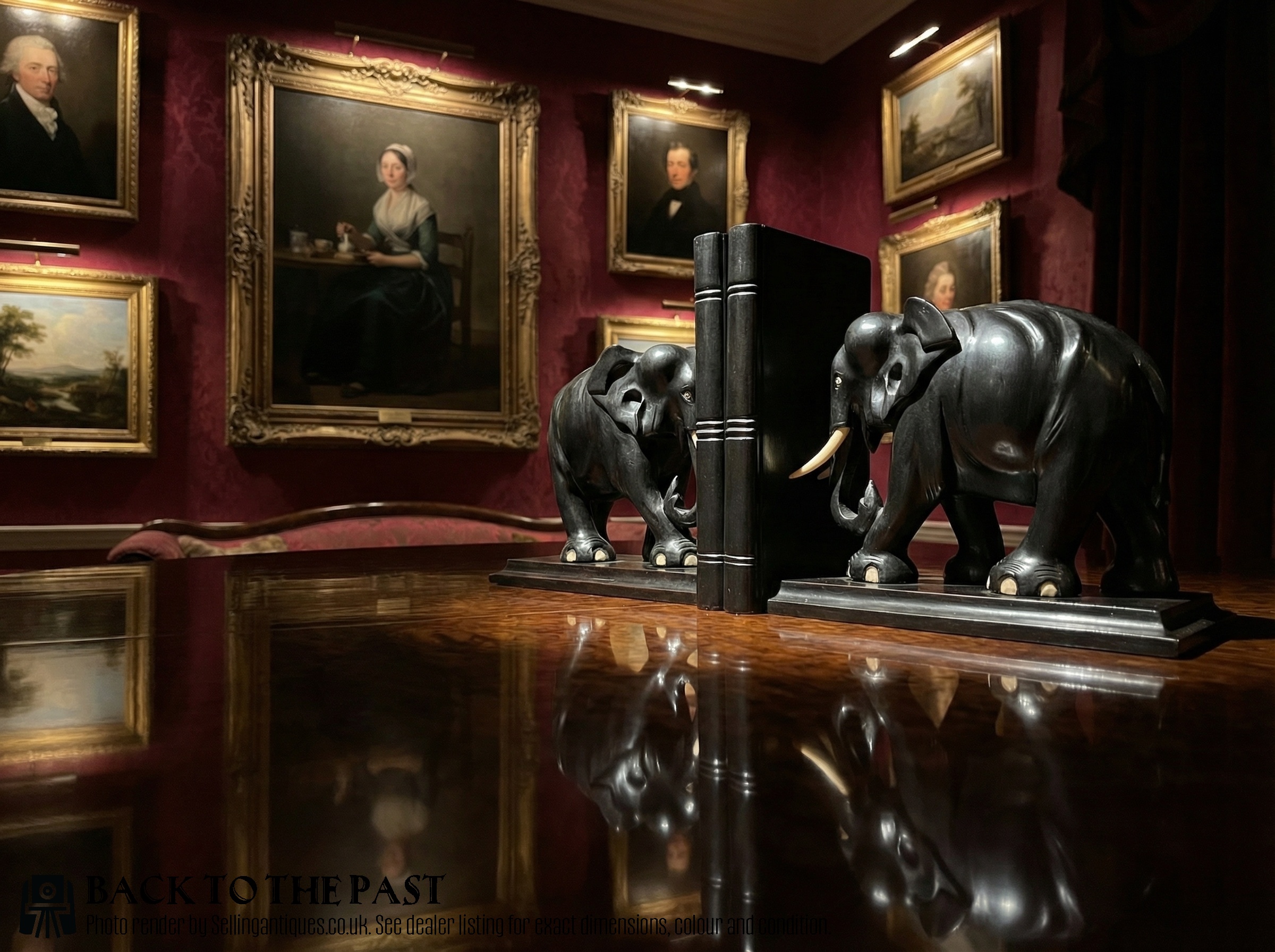
Antique Elephant Bookends
Antique elephant bookends comprise heavy pairs designed to support volumes on a shelf, appearing in forms shaped by carvers and metalworkers from the Victorian era through the Art Deco period. These pieces emerge in varied regional traditions, spanning French studio work, Swiss Black Forest carving, and colonial workshops in India and Africa.
The version most commonly met on this page is the pair carved from dense tropical timber or cast in spelter and bronze. Such pairs frequently feature the animal standing or turning its head, often rendered with ivory tusks.
The materials recorded in the evidence range from bone and mammoth tusk to oak, ebony, coromandel wood, and marble. Styles shift from the naturalism of Black Forest carving to the clean geometric lines of Art Deco pieces from nineteen-thirty.
How they were made
Makers shaped these objects using dense hardwoods like ebony and coromandel, alongside carved bone and mammoth tusk for detail. Woodcarvers utilised hand chisels to define the hide and ears of the animals, particularly evident in Black Forest pieces.
Foundry work produced heavy cast metal versions in spelter and bronze, often given patinated finishes to resemble aged skin. Timber examples relied on natural grain and polished surfaces rather than added pigment to create contrast.
Antique Elephant Bookends Retail Price Guide 2026
Typical asking prices for elephant bookends among the pieces listed under this phrase on Sellingantiques today, from the lower quarter to the upper quarter. They describe what is for sale here now, not the wider market.
Several elephants in the archive appear with carved bone tusks intact, ready to guard your reading.
What varies in quality
The inclusion of intact bone or ivory tusks and the balance of the heavy base dictate the standing power of the pair. Maker origin and regional style also separate standard decorative items from finely executed studio work.
The Antique Elephant Bookends Glossary
- Black Forest
- A style of wood carving originating in Switzerland, known for naturalistic depictions of animals and foliage rendered in deep brown timbers.
- Coromandel
- A dense, heavy tropical hardwood featuring dark brown and black streaking, highly prized for nineteenth-century decorative objects.
- Spelter
- An alloy of zinc used as a cheaper alternative to bronze for casting figures and decorative metalwork during the nineteenth and early twentieth centuries.
- Ebonised
- Wood treated with a dark finish to imitate genuine ebony, a technique common on Victorian and colonial pieces.
- Mammoth tusk
- Fossilised or ancient ivory sourced from northern permafrost, utilised for carving small details on nineteenth-century decorative pieces.
Antique Elephant Bookends: Frequently Asked Questions
What materials were used for antique elephant bookends?
The evidence shows these bookends were made from bone, ebony, oak, hardwood, coromandel wood, marble, spelter, and bronze. Ivory and mammoth tusk also appear as inset details on carved figures.
Makers selected these dense materials to provide the necessary weight for holding heavy rows of books upright on a shelf.
Which periods do these bookends date from?
Listed items and archive records span the Victorian era, nineteen hundred, nineteen-ten, nineteen-twenty, and the Art Deco period around nineteen-thirty.
Stylistic shifts move from ornate colonial and carved Black Forest designs to the streamlined geometry of French Art Deco pieces.
Where were antique elephant bookends made?
Origins recorded in the evidence include France, India, Botswana, and the Black Forest region of Europe. Anglo-Indian and colonial workshops produced many of the dense hardwood examples.
Regional traditions influenced both the choice of timber and the specific carving style applied to the animals.
How do I care for wooden bookends?
Timber pieces benefit from occasional waxing with a neutral furniture polish to keep the grain nourished and prevent drying. Avoid placing them in direct sunlight or near heat sources to protect natural woods and ivory elements.
Metal examples require only gentle dusting with a soft cloth to preserve the patinated surface.