

Vintage Hallway Stick Rack
These vintage hallway stick rack options provide functional organisation for umbrellas and walking sticks while anchoring entranceways with period character.
Vintage Hallway Stick Rack
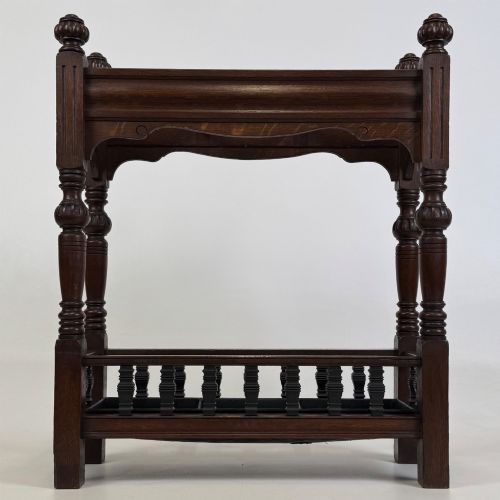
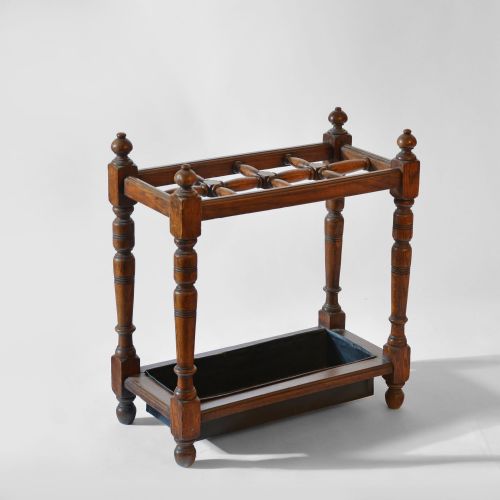
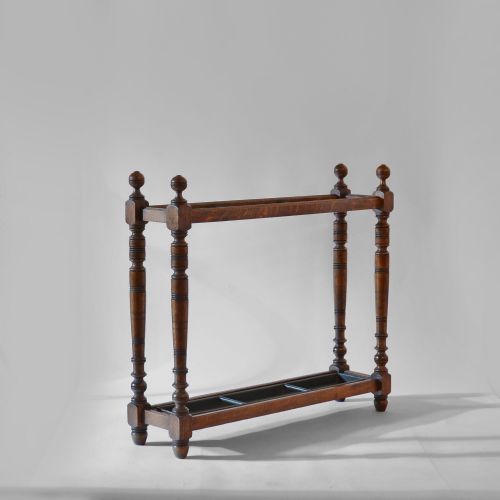
A vintage hallway stick rack serves to store umbrellas, walking sticks and parasols neatly near the entrance of a home. Buyers exploring this category encounter varied designs spanning the Victorian, Edwardian and Art Deco periods, alongside robust Arts and Crafts iterations.
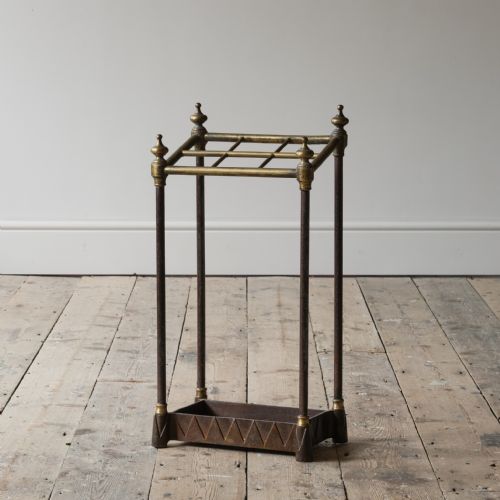
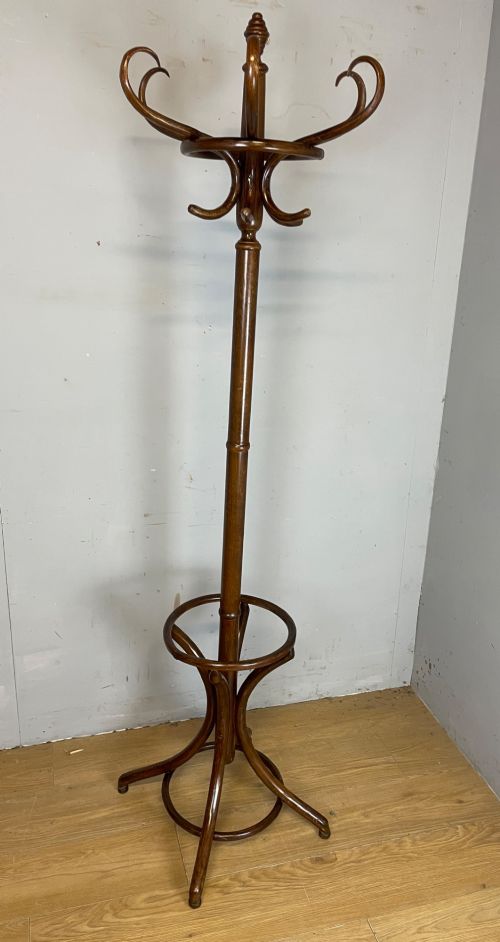
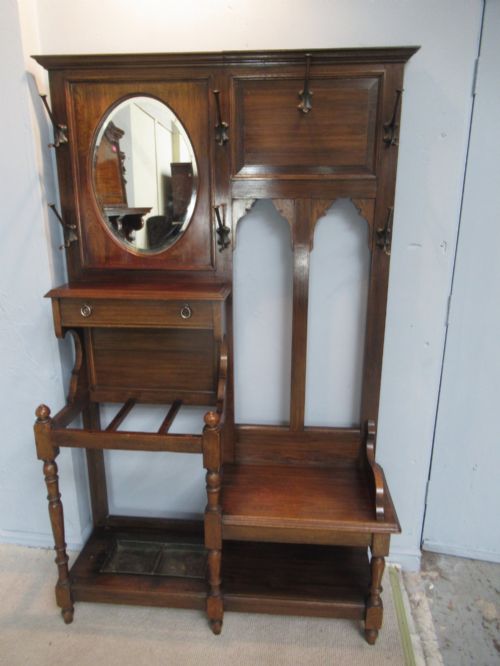
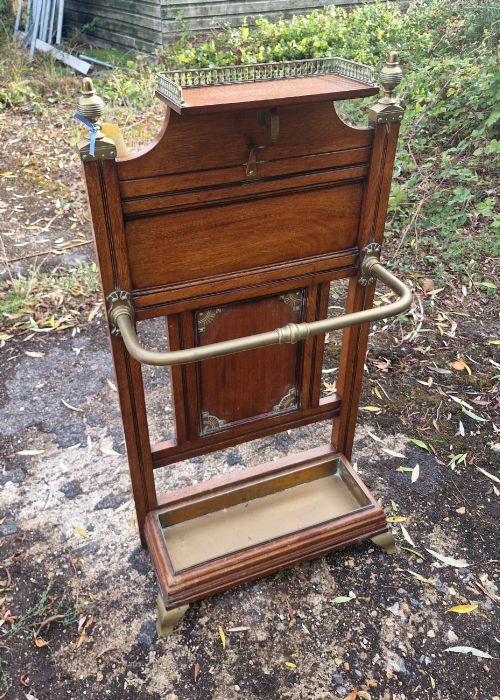
The objects take several forms, appearing primarily as dedicated umbrella and stick stands or broader hall stands incorporating coat and hat storage. Materials shift from heavy cast iron and polished brass to warm timbers like oak, mahogany and pitch pine.
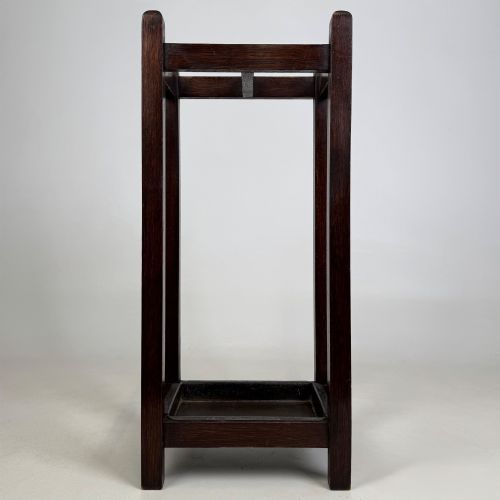
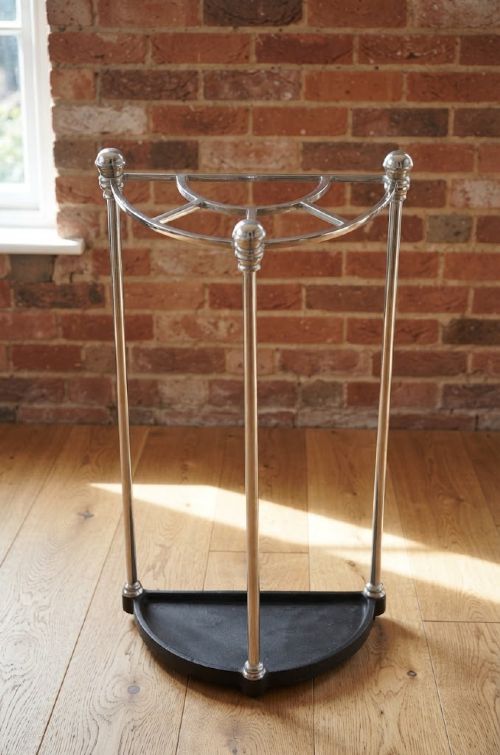
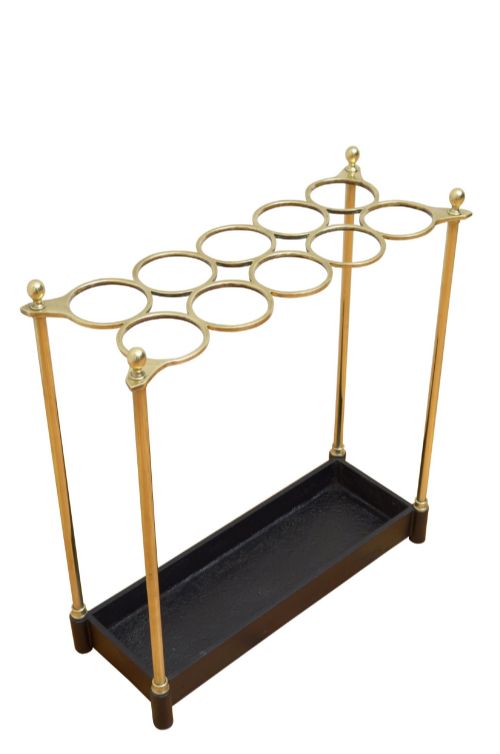
Most pieces date from the late nineteenth century through to the early decades of the twentieth century. Common configurations include demi-lune half-moon shapes designed to sit flush against a wall alongside freestanding rectangular frames.
Materials and construction methods
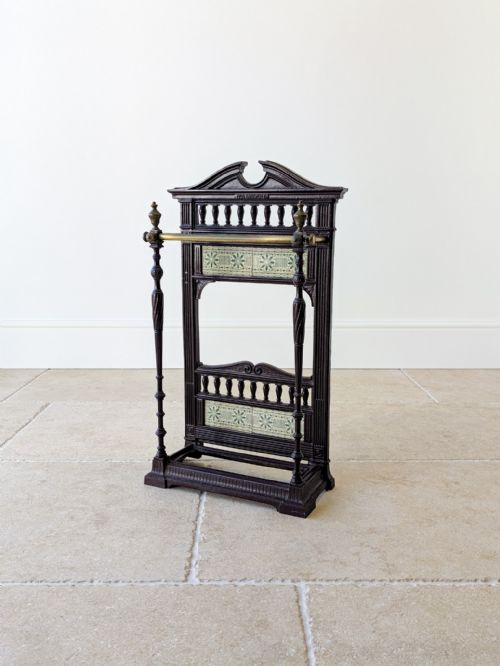
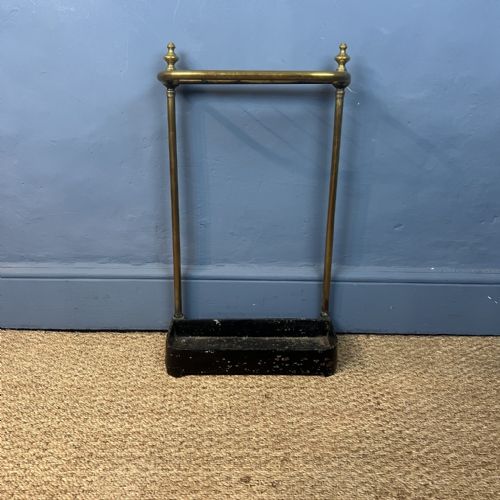
Foundry work defines the metal examples, utilising cast iron, brass and nickel plating to form rigid frames and decorative grilles. Makers frequently paired heavy iron bases with structural brass or steel uprights, incorporating integrated drip trays to catch rainwater.
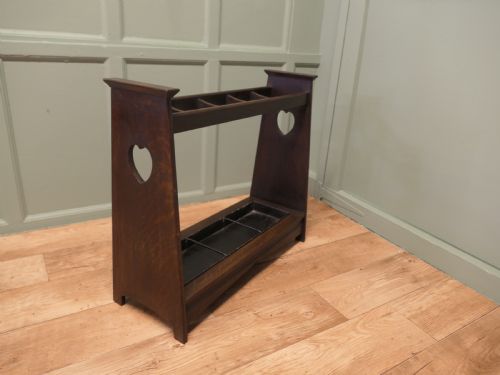
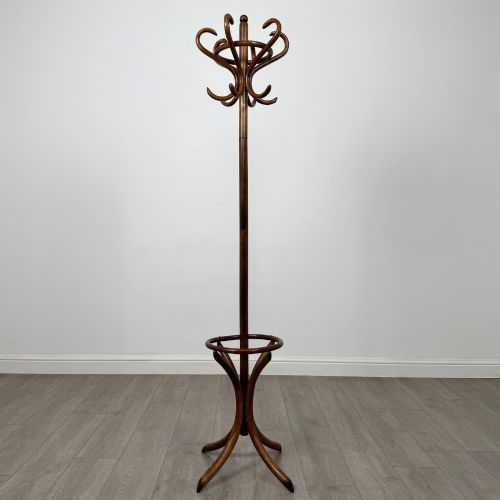
Timber pieces rely on traditional cabinet-making techniques applied to oak, mahogany, beech and pine. Bentwood construction appears in curved beech frameworks, whilst Arts and Crafts examples showcase golden oak with exposed joinery and Liberty design influences.
Formats range from compact demi-lune umbrella stands to large hall stands incorporating coat hooks and mirrors.
Distinguishing quality across examples
Quality reveals itself in the crispness of casting detail on iron and brass frames, where foundry marks and purposeful ornamentation distinguish superior work. Simpler utilitarian designs contrast with elaborate Aesthetic Movement or Art Nouveau pieces featuring complex botanical and figurative motifs.
Joinery and material selection dictate value in wooden variations, with solid golden oak and figured mahogany standing apart from utility pine. The presence of original fitted metal drip trays and intact hardware preserves the structural integrity and historical completeness of each piece.
Coalbrookdale·Liberty Design·Thonet
The Vintage Hallway Stick Rack Glossary
- Demi-lune
- A half-moon shape allowing stands to sit flat against hallway walls. This layout saves floor space in narrow entranceways.
- Cast iron
- An iron-carbon alloy poured into moulds to create rigid, ornate frameworks. It provides the heavy base weight necessary to stabilise wet umbrellas.
- Bentwood
- Wood softened through steaming and then bent into curved structural forms. This technique created lightweight umbrella and coat stands popular in the early twentieth century.
- Drip tray
- A metal base insert designed to catch water running off wet umbrellas. These trays protect timber and flooring from moisture damage.
- Arts and Crafts
- A design movement valuing traditional craftsmanship and simple forms over mass production. Pieces from this style often display honest oak construction and functional utility.
Vintage Hallway Stick Rack: Frequently Asked Questions
How do I protect my floor from wet umbrellas?
Most period stick stands include an integrated metal drip tray positioned at the base. These trays catch runoff water from wet umbrellas and walking sticks.
Ensure your chosen stand retains its original tray to protect wooden flooring or carpets from moisture and rust stains over time.
Where should I place a hallway stick stand?
Position your stand near the main entrance door for easy access upon entering or leaving the house. Demi-lune models work particularly well in restricted hallways by hugging the wall.
Freestanding square or rectangular frames suit larger vestibules where they can act as a prominent decorative feature.
What materials were commonly used for these stands?
Manufacturers utilised durable materials suited to heavy daily use and moisture exposure. Cast iron and polished brass dominate the metal options, often paired together.
Timber variations rely on sturdy woods like oak, mahogany and pitch pine, whilst bentwood pieces utilise steam-curved beech.