
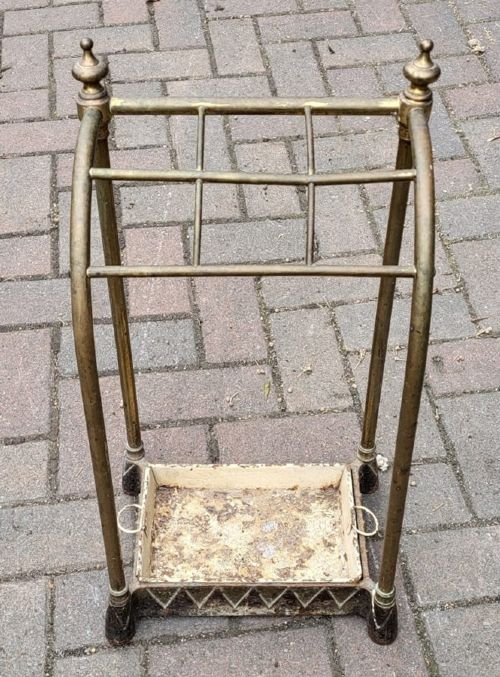


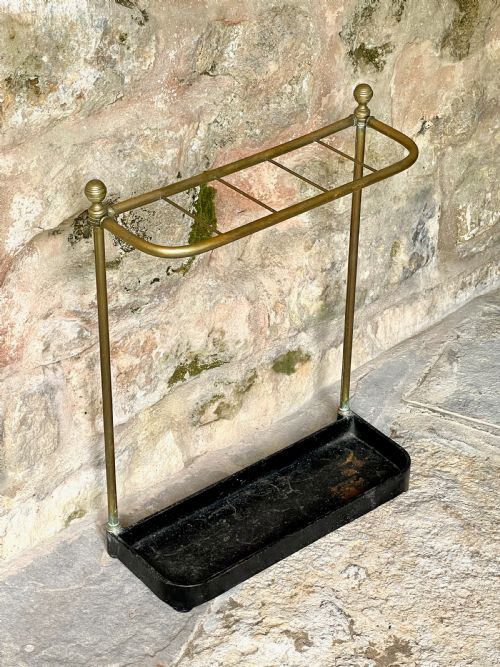

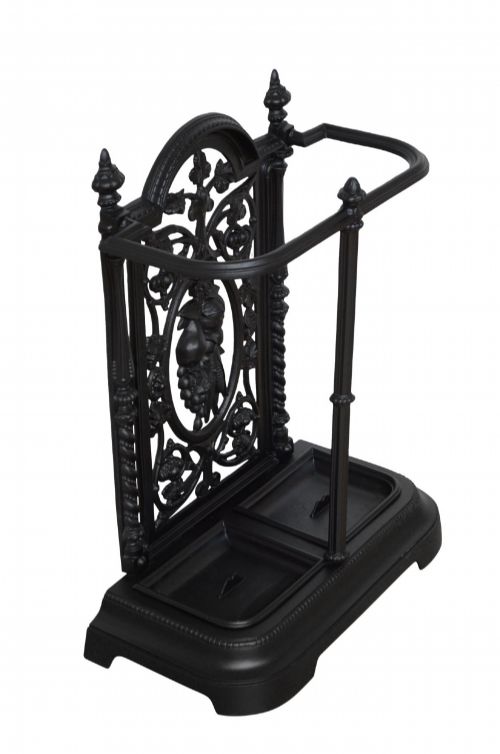
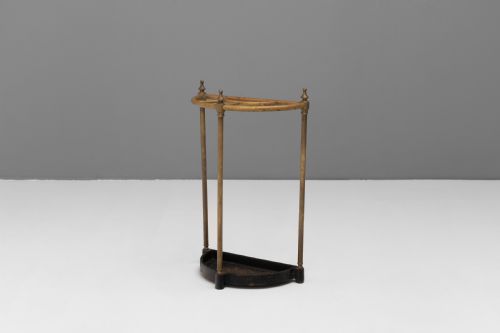
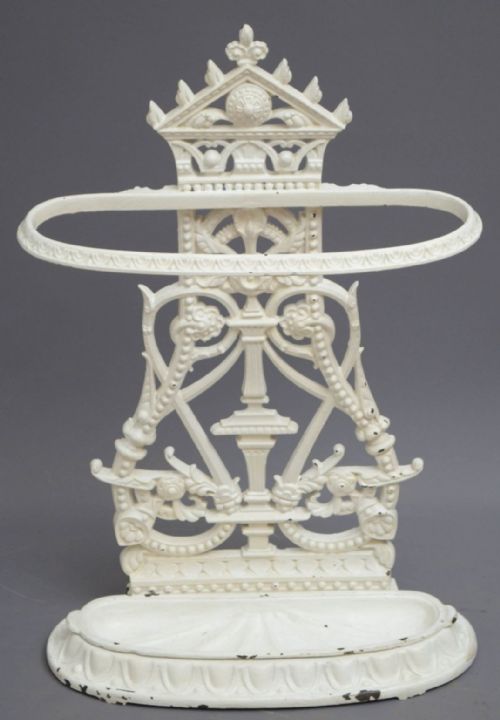


Metal Walking Stick Rack
These metal walking stick rack examples are robust hallway furnishings designed to hold canes and umbrellas neatly.
Metal Walking Stick Rack
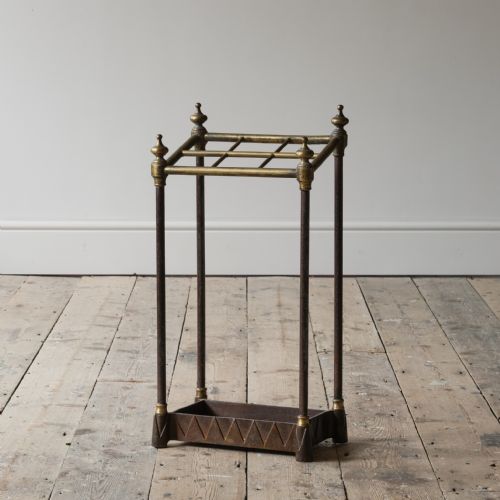
When you search for a metal walking stick rack, you are looking at practical hallway furniture designed to corral umbrellas and walking canes in the nineteenth and early twentieth centuries. The pieces on this page span the Victorian and Edwardian eras, with many dating specifically to the late nineteenth century around eighteen ninety.
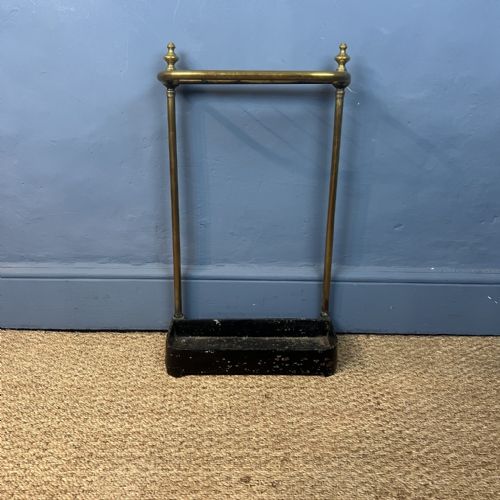
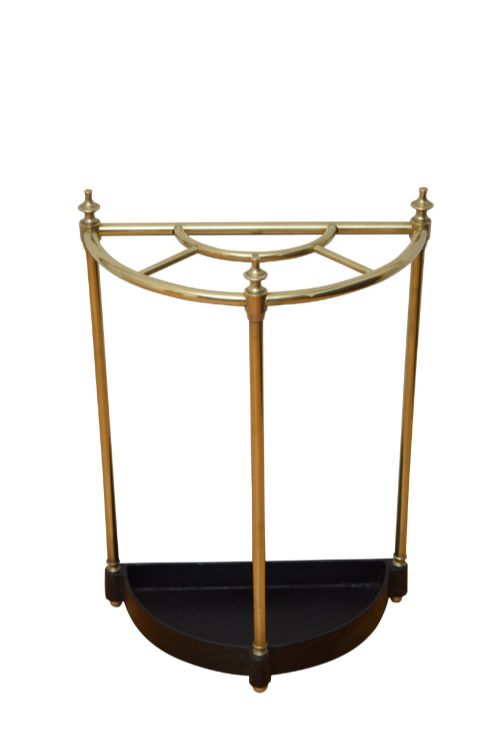
Most examples combine durable cast iron with bright brass components, taking forms such as demi-lune shapes, oval frames, and corner units. Makers produced these stands in various sizes, ranging from small hallway accessories to large country house pieces featuring multiple divisions.
You will also find stylistic nods to the Aesthetic Movement, Gothic Revival, and even faux bamboo designs alongside traditional utilitarian patterns. They remain highly functional items that anchor an entrance hall with period character.
How they were made
Foundries utilised heavy cast iron for the main structure and base trays, ensuring the stand remained stable when loaded with wet umbrellas. Brass loops, rails, and finials were then added to provide a contrasting metallic sheen and secure individual sticks.
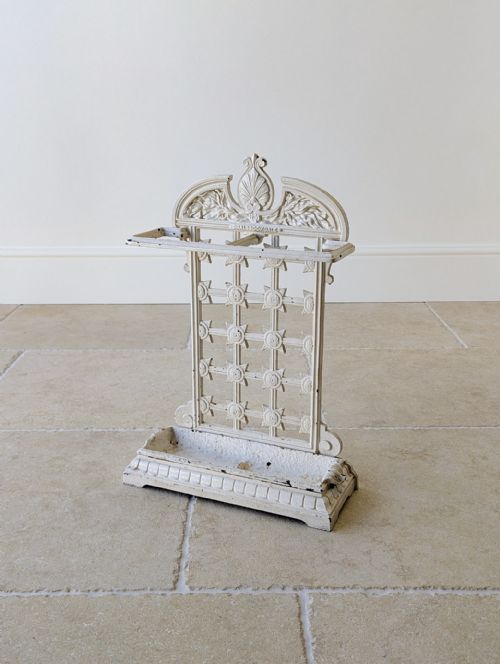
Some examples received a painted finish or enamel coating to protect the iron from rust and match contemporary interior decors. Secondary materials such as oak and walnut occasionally appear in the framework or base construction of hybrid designs.
Listings feature pieces from the nineteenth century, Victorian era, eighteen ninety, nineteen hundred, and the Edwardian period.
What varies in quality
The distinction between ordinary and superior stands lies in the crispness of the cast iron detailing and the substantial weight of the brass components. Finer pieces exhibit intricate moulding, such as the naturalistic textures of faux bamboo or the clean geometric lines associated with the Aesthetic Movement.
Proportion and scale also dictate quality, where larger hall stands or designated factory pieces display more ambitious design work than simple utility items. The inclusion of original drip pans and well-executed division loops further elevates the standing of an individual piece.
Coalbrookdale·Falkirk Ironworks
The Metal Walking Stick Rack Glossary
- Demi-lune
- A half-moon shape popular for hallway furniture designed to sit flush against a wall. This profile allowed stands to occupy minimal floor space while still accommodating multiple umbrellas.
- Cast iron
- An iron-carbon alloy poured into moulds to create sturdy, highly decorative frames. It formed the heavy base and structural body of most nineteenth-century stands.
- Aesthetic Movement
- A late nineteenth-century design style emphasising visual beauty over narrative content. Pieces from this movement often featured stylised motifs and refined metallic contrasts.
- Gothic Revival
- An architectural and decorative style drawing inspiration from medieval forms. Stands in this category frequently incorporate pointed arches and heavy ecclesiastical details.
- Drip tray
- The removable base section designed to catch rainwater from wet umbrellas. Original pans are an important component for maintaining the surrounding hallway flooring.
Metal Walking Stick Rack: Frequently Asked Questions
What is a metal walking stick rack?
A metal walking stick rack is a hallway accessory designed to hold umbrellas, parasols, and walking canes upright. These items keep entryways tidy by collecting rainwater in a base tray and separating individual sticks with metal loops.
Most examples rely on a combination of cast iron for weight and brass for decorative upper rails. They served as essential household furnishings in Victorian and Edwardian hallways.
How do I date a Victorian stick stand?
Dating these stands involves looking at stylistic markers such as Gothic Revival arches or Aesthetic Movement geometry. The presence of registration marks or specific foundry attributions can also narrow down the production period.
Many pieces on this page cluster around the late nineteenth century, specifically the eighteen nineties and the Edwardian era. Material combinations like cast iron paired with brass remain characteristic of this timeframe.
Are these stands suitable for daily use?
These robust stands were originally built for heavy daily use in busy nineteenth-century households. Their heavy iron bases provide the stability needed to hold modern walking sticks and umbrellas securely.
Placing a suitable modern liner inside the original drip tray can help protect antique metal from standing water. This allows you to utilise the stand practically in a contemporary hallway.
What styles are available?
The selection includes plain utilitarian iron frames alongside highly decorative Victorian and Edwardian designs. You will encounter geometric demi-lune shapes, corner units, and occasional faux bamboo treatments.
Some pieces reflect specific design movements, featuring Gothic architectural influences or the refined lines favoured by the Aesthetic Movement. Foundry work ranges from simple industrial casting to ornate artistic ornamentation.
Why do some stands have divisions?
Divided upper frames organise walking sticks and umbrellas so they remain upright and accessible. Twelve-division models and similar configurations prevented items from tangling together in the rack.
These individual loops also protected delicate umbrella ribs from bending against neighbouring sticks. The arrangement distributed the weight evenly across the cast iron base.