
Vintage Haberdashery Drawers
Vintage haberdashery drawers are shop counters, cabinets, and chests built for trade and storage, offering modular organisation and timeless utility.
Identifying Vintage Haberdashery Drawers
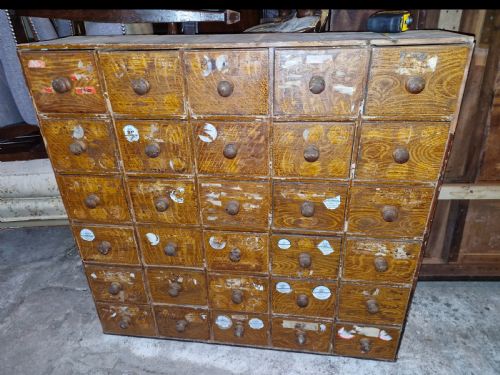
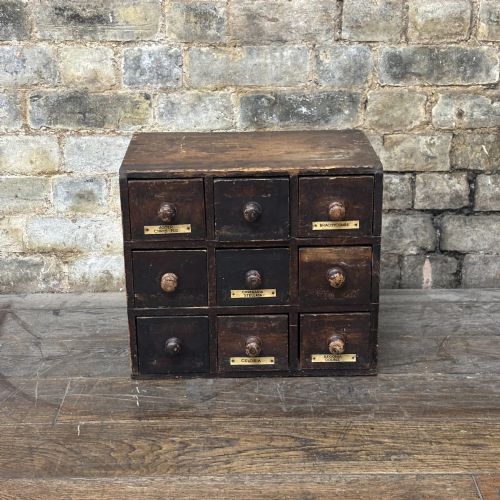
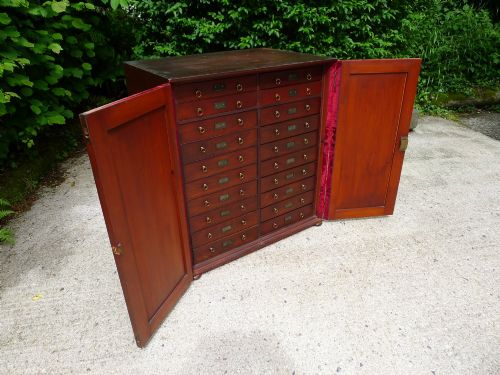
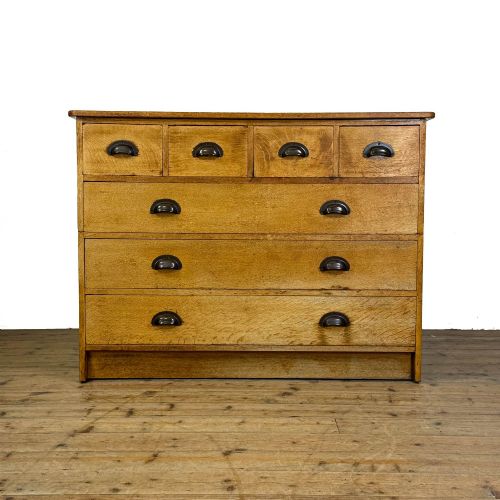
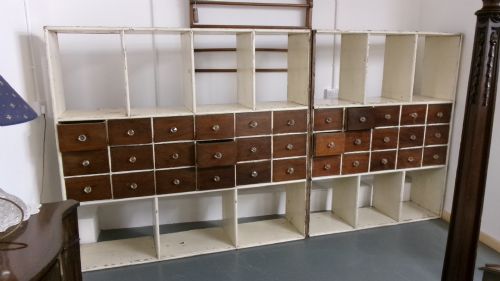
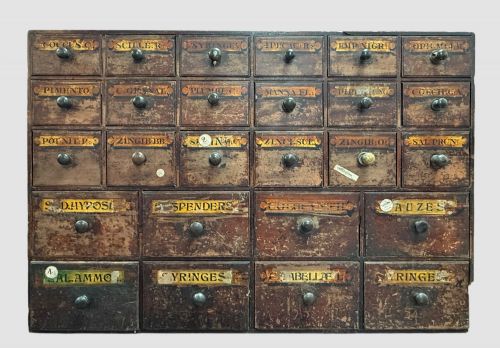
When you search for vintage haberdashery drawers, you encounter shop counters, collectors cabinets, and bank chests designed for retail display and stock organisation. The examples appearing on this page span the nineteenth century, the Edwardian period, and the nineteen-thirties.
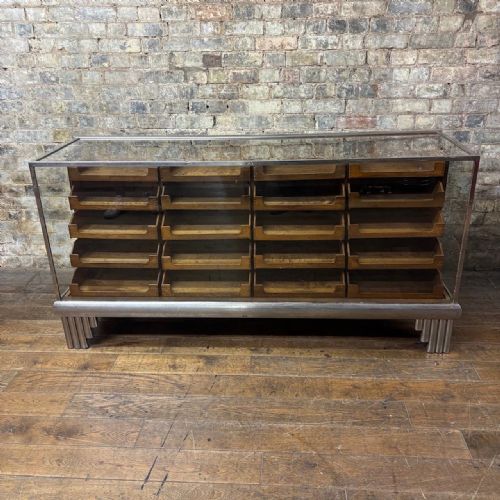
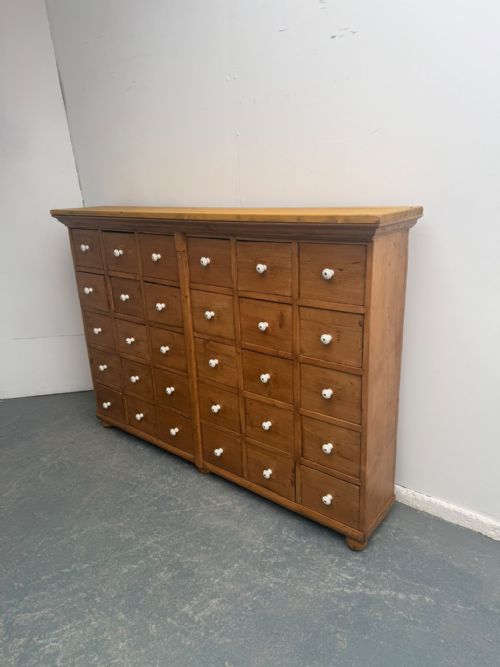
Most pieces take the form of haberdashery counters and cabinets intended originally for commercial premises. These functional items translate readily into domestic interiors as kitchen islands, sideboards, or studio storage units.
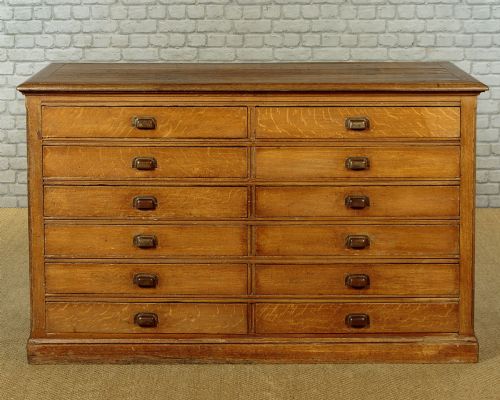
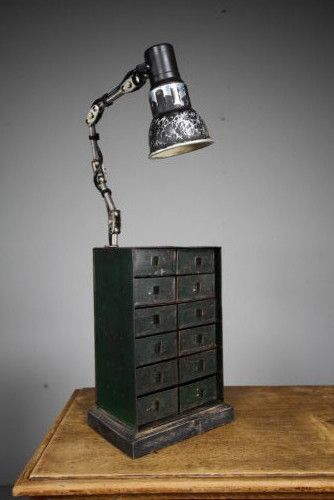
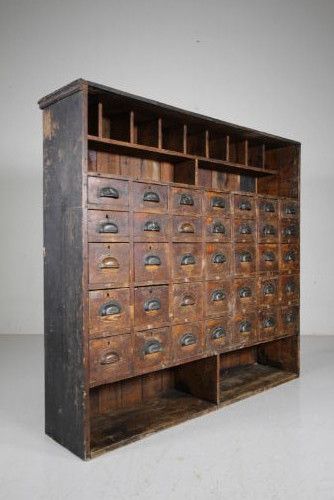
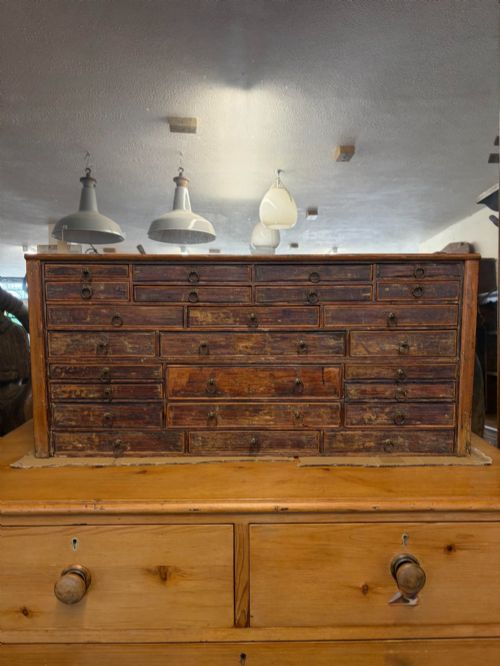
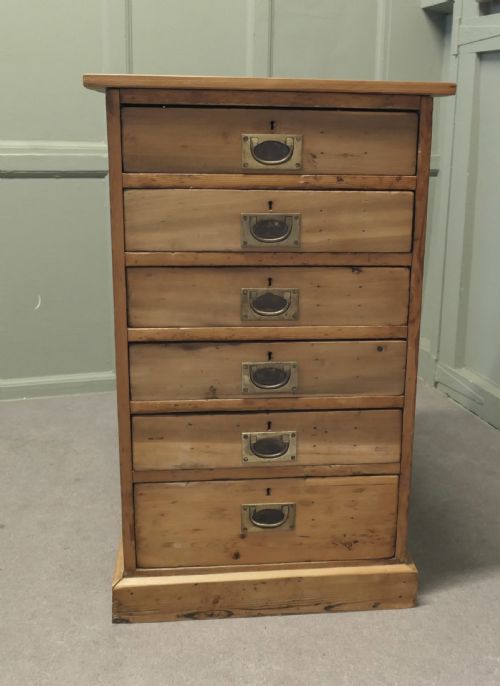
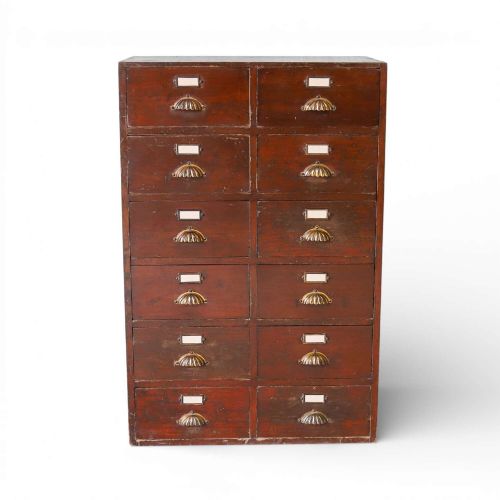
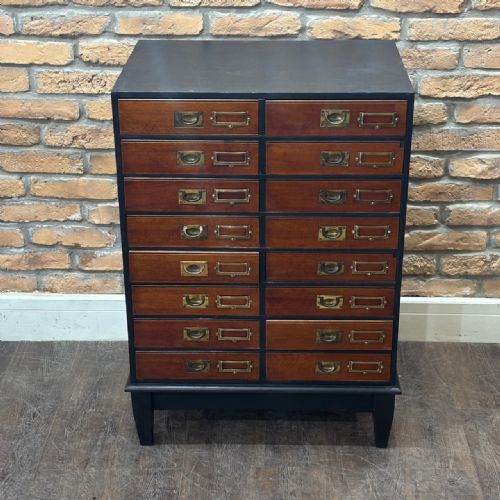
Forms range from small stained deal collectors cabinets to very large oak shop racks and walnut bank chests of drawers. Each variant serves a distinct storage capacity while retaining its utilitarian trade character.
Materials and Construction
Cabinet makers utilised a robust selection of timbers including oak, mahogany, walnut, and stained deal. These heavy woods provided the structural integrity required to support banks of numerous small drawers used for holding ribbons, buttons, and small wares.
Hardware details incorporate brass and chrome fittings alongside glass panels, particularly on shop counters and display cabinets. These metal and glass elements enabled merchants to showcase goods while protecting stock from dust and handling.
Retail Price Guide 2026
Typical UK retail prices for vintage haberdashery drawers, calculated from the Sellingantiques database of over a million retail prices indexed since 2003. This retail price guide relies exclusively on Sellingantiques data; no external sources or auction records are used, so the figures do not describe the wider market.
Listings feature oak, mahogany, walnut, stained deal, brass, chrome, and glass across Victorian, Edwardian, and nineteen-thirties periods.
Assessing Quality and Build
The distinction between standard commercial grade pieces and superior examples rests in the selection of primary timbers and the integration of specialised metalwork. Finer specimens display dense grain walnut or figured mahogany alongside heavy brass or chrome fittings that withstand continuous commercial use.
Scale and configuration determine the utility and presence of a piece within a room. Larger shop counters with banks of numerous matching drawers command greater architectural weight than modest stained deal collectors cabinets.
Dudley & Co
The Vintage Haberdashery Drawers Glossary
- Haberdashery Counter
- A long shop fixture featuring multiple shallow drawers and often a glass display top, designed for selling small sewing goods and accessories.
- Collectors Cabinet
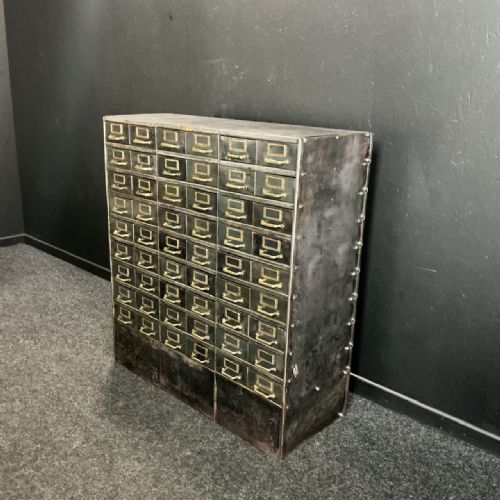
- A small storage unit housing numerous narrow drawers specifically built for organising geological, botanical, or man-made specimens.
- Bank Chest of Drawers
- A substantial piece of furniture containing a grid of many small drawers arranged in rows and columns to maximise compartmentalised storage.
- Stained Deal
- Pine or fir wood treated with a dark colour wash to imitate more expensive hardwoods like mahogany or walnut.
Frequently Asked Questions
What were vintage haberdashery drawers used for?
These units served merchants and shopkeepers as retail counters and storage banks for small drapery items, threads, buttons, and ribbons. The numerous shallow compartments allowed rapid sorting and display of diverse stock.
Today, the same compartmentalised design suits modern homes for organising office supplies, craft materials, or kitchen collections.
How do I date a haberdashery cabinet?
Dating relies on identifying timber choices, hardware materials, and overall architectural style. Pieces span the nineteenth century, the Edwardian era, and the nineteen-thirties.
Nineteenth-century examples frequently feature mahogany and deal, whereas nineteen-thirties counters often incorporate chrome hardware and streamlined Art Deco profiles.
Are these counters suitable for kitchens?
Large shop counters and bank chests provide durable timber surfaces and extensive drawer space well-suited to modern kitchens. They function effectively as freestanding islands or sideboards.
Buyers should measure floor space carefully, as these trade pieces were built for commercial room proportions rather than compact domestic spaces.
What is the difference between deal and oak?
Deal is a softwood timber, typically pine or fir, which was frequently stained to resemble darker woods in utility furniture. Oak is a hard, heavy timber with prominent grain patterns chosen for high-status commercial display pieces.
Cabinets built in oak generally denote heavier construction and greater longevity under daily retail use.