
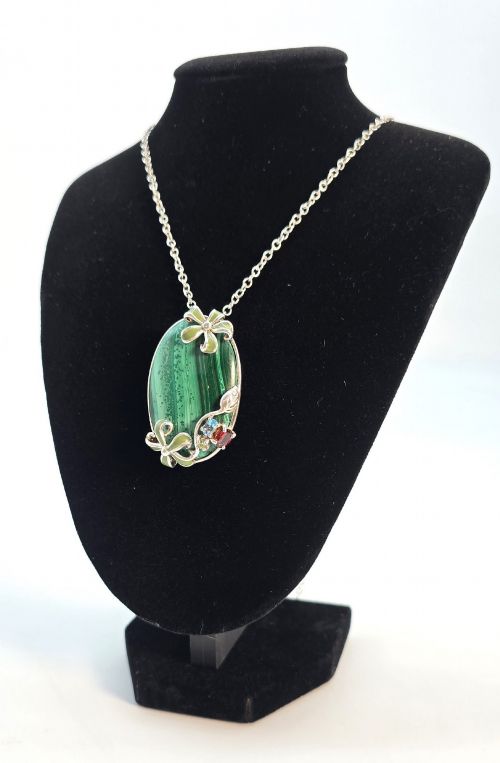
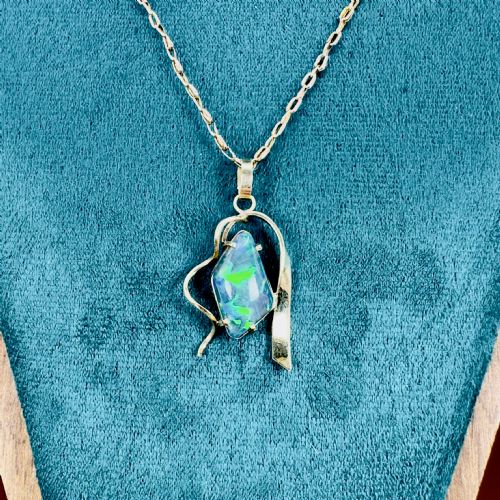


Vintage Green Gemstone Pendant
A vintage green gemstone pendant brings together coloured stones and precious metals across Edwardian, Art Deco, and mid-century designs.
Vintage Green Gemstone Pendant
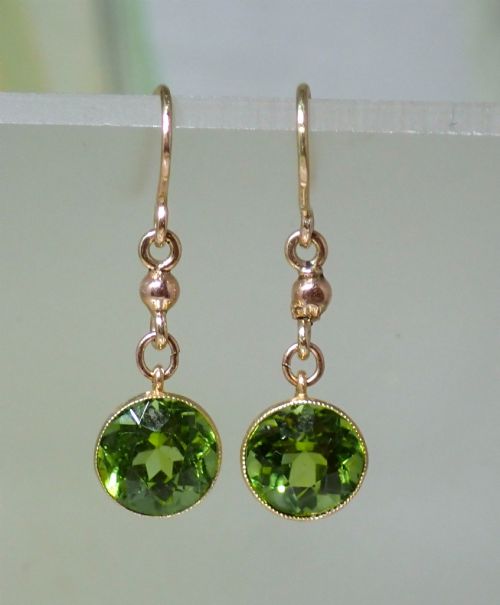
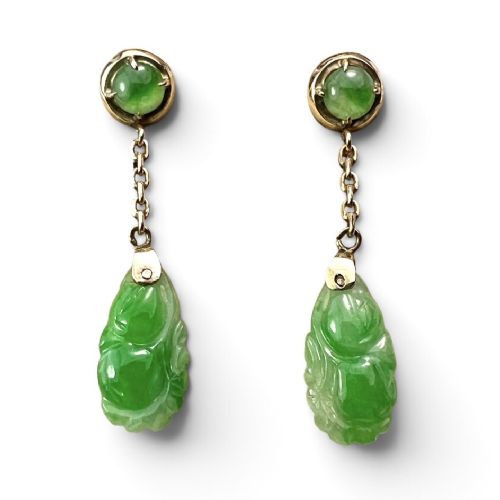
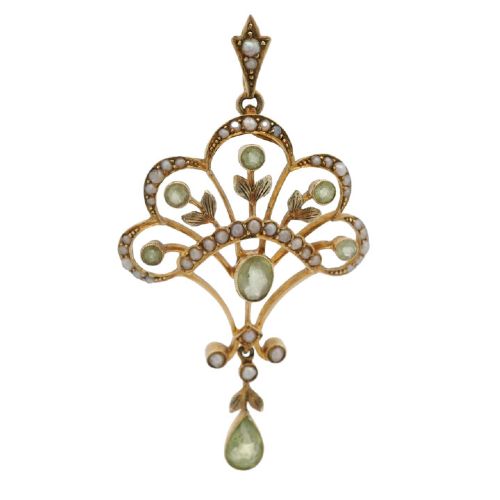
A vintage green gemstone pendant brings together historic jewellery designs featuring green stones set in gold, silver, or platinum. Buyers seeking a vintage green gemstone pendant will frequently encounter Edwardian peridot and seed pearl configurations alongside Art Deco jadeite and mid-century emerald pieces.
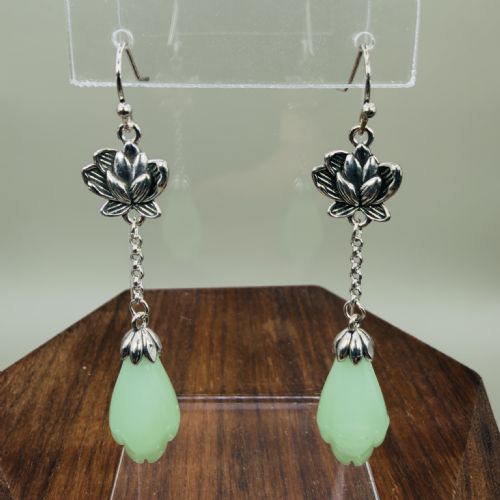
The selections span distinct creative movements including Arts and Crafts, Art Nouveau, and Victorian designs. Pendant necklaces, drop earrings, and convertible brooch-pendants form the primary objects available on this page.
Materials and construction methods
Craftsmen utilised yellow gold in 9ct, 14ct, and 15ct purities, alongside sterling silver, silver gilt, and platinum to mount the stones. Peridot, jadeite, chrysoprase, amazonite, and emerald provide the characteristic green hues.
Techniques range from delicate seed pearl garland arrangements and plique-à-jour enamel work to hand-carved jadeite motifs and bezel or cluster gemstone settings.
Factors influencing quality
Quality rests upon the purity and weight of the precious metal combined with the clarity and depth of colour in the green gemstone. Superior examples display harmonious proportions between the central stone and surrounding seed pearls or diamonds.
The finesse of the metalwork, whether through intricate Edwardian wirework or clean Art Deco geometric lines, distinguishes finer studio output from standard commercial production.
Liberty & Co·Arthur & Georgie Gaskin·Ludwig Knupfer·Theodor Fahrner
The Vintage Green Gemstone Pendant Glossary
- Peridot
- A yellowish-green gemstone frequently set in Edwardian and Arts and Crafts gold pendants. This stone provides the bright green coloration seen in many early twentieth-century pieces.
- Jadeite
- A dense green mineral often carved into plaques or drops for Asian and Art Deco market pieces. It appears in various shades of green, sometimes paired with diamonds or pearls.
- Plique-à-jour
- An enamelling technique where enamel is applied without a backing, creating a stained-glass effect. It is commonly found in Art Nouveau silver pendants.
- Chrysoprase
- A gemstone coloured by nickel oxide, displaying a bright apple-green shade. This material is characteristic of Arts and Crafts and Art Nouveau silver jewellery.
- Seed pearl
- A very small natural or cultured pearl used as delicate accent decoration. These tiny pearls line the edges of Edwardian peridot clusters and garlands.
Vintage Green Gemstone Pendant: Frequently Asked Questions
What periods do these green gemstone pendants come from?
The pieces span the Victorian, Edwardian, Arts and Crafts, Art Nouveau, and Art Deco eras, extending into mid-century designs.
Craftsmanship styles shift from delicate floral garlands in the early twentieth century to geometric lines in the 1930s.
How do I identify an Edwardian peridot pendant?
Edwardian peridots are typically mounted in yellow gold, often 9ct or 15ct, and surrounded by small seed pearls.
They frequently employ garland, sunburst, or drop motifs characteristic of the period around nineteen hundred to nineteen ten.
What metals are commonly used in these designs?
Makers utilised yellow gold in various carat weights alongside sterling silver, silver gilt, and platinum.
Choice of metal usually aligns with the period, with platinum and high-carat gold appearing in earlier pieces and silver or lower-carat gold in later decades.
How were convertible pendant brooches worn?
Convertible pieces feature a fold-down bail and a pin finding on the reverse, allowing the item to function as both a brooch and a necklace pendant.
This versatile design was particularly popular during the Edwardian era.