

Vintage Gold Brass Candlesticks
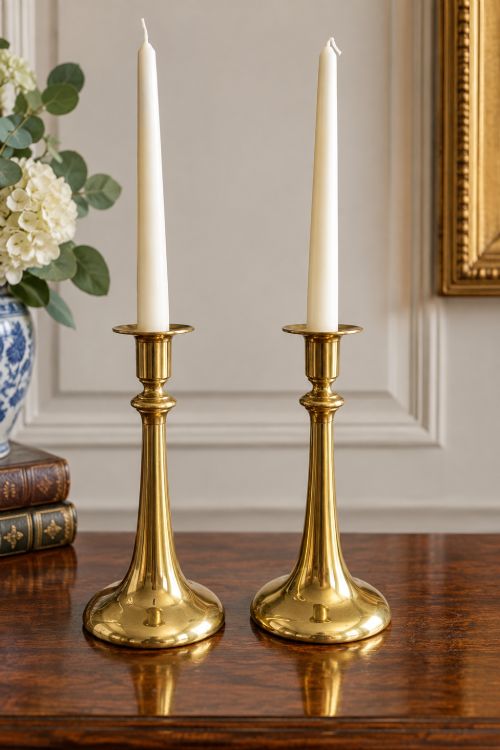
These vintage gold brass candlesticks bring warmth and weight to a room, ranging from simple Georgian petal bases to ornate French revival designs.
Vintage Gold Brass Candlesticks
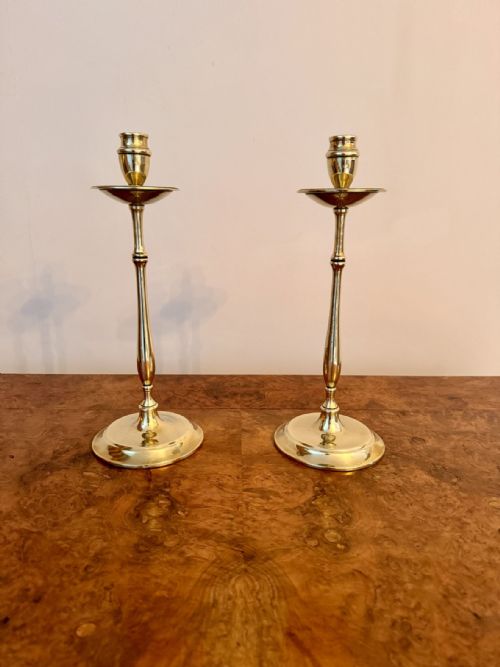
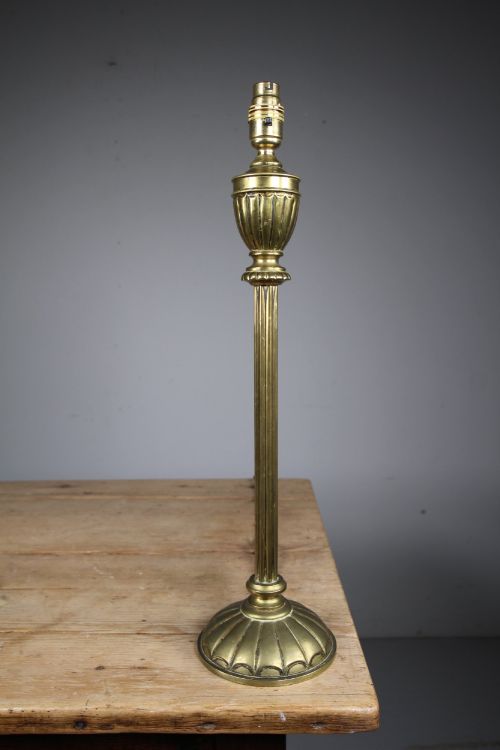
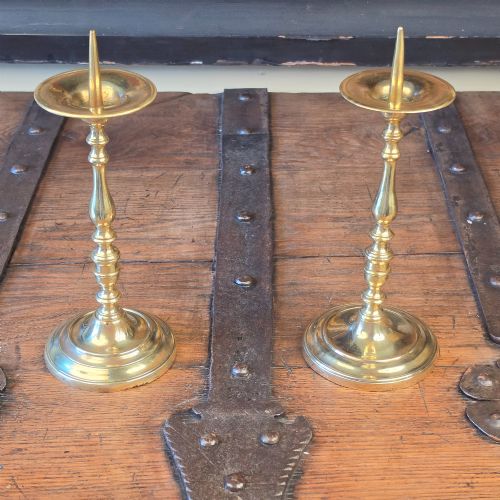
When searching for vintage gold brass candlesticks, a buyer encounters a diverse mix of forms spanning multiple centuries, from austere church prickets to ornate domestic table lamps. The pieces grouped under this heading encompass solid brass, gilt bronze, ormolu, and cast bronze objects designed to hold candles or illuminate interiors.
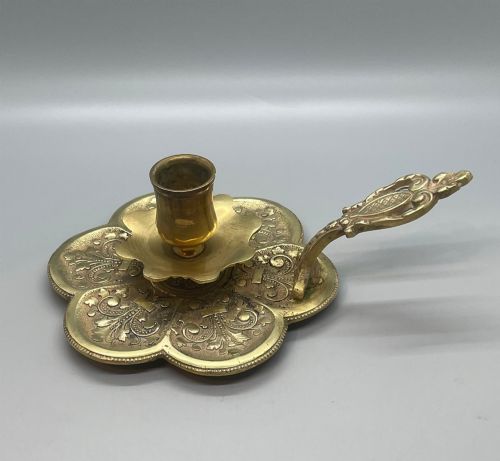
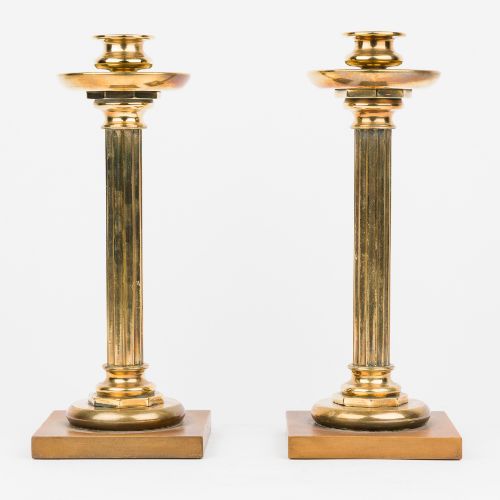
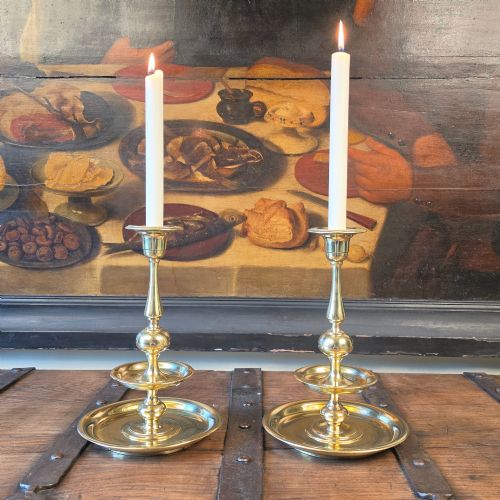
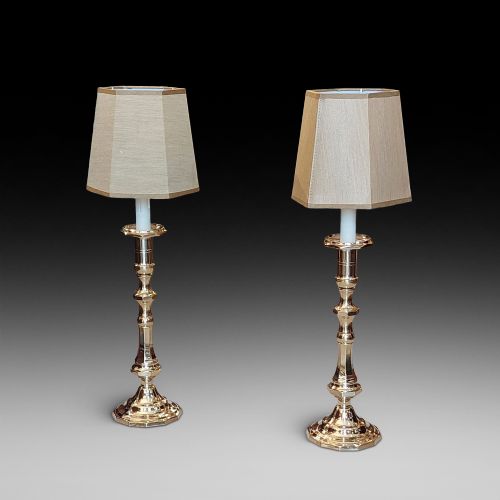
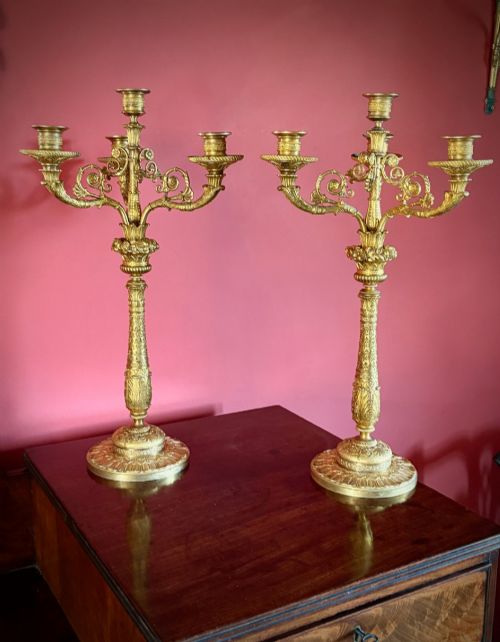
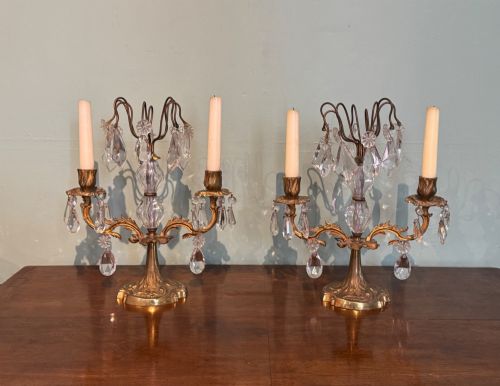
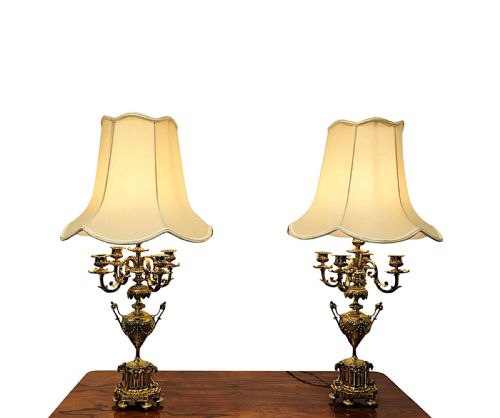
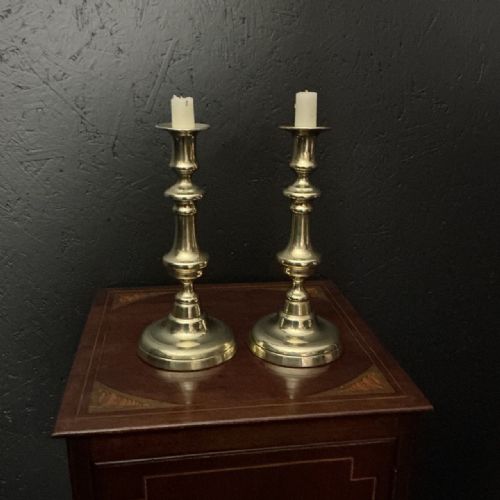
The most common versions met on this page date from the nineteenth century and the Edwardian era, often taking the form of matched pairs with heavy turned columns or stepped bases. Alongside standard candlesticks, the selection includes converted candle holders, multi-armed candelabra, and chambersticks designed for portability.
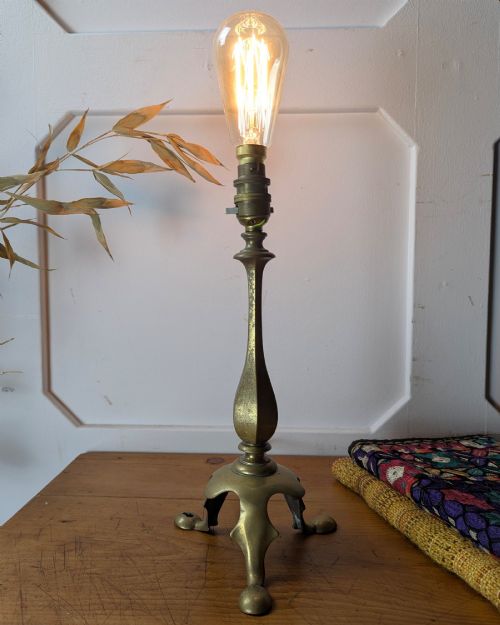
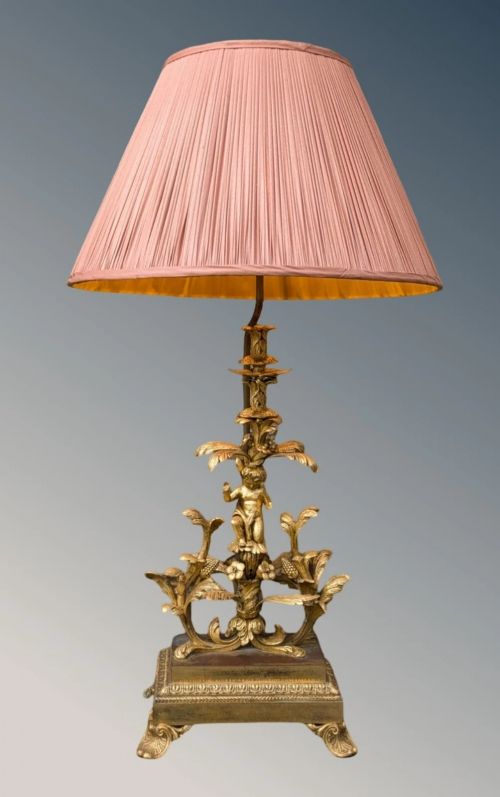
Stylistic influences vary widely, drawing on Georgian restraint, Victorian ornamentation, French Rococo revival curves, and linear Art Nouveau motifs. Many examples show adaptations from later periods, such as twentieth century electrical conversions fitted with fabric shades or glass elements.
How they were made
Makers utilised casting techniques to shape molten brass and bronze into heavy structural components, often employing seaming methods for hollow shafts and multi-part bases. Turned elements were produced on lathes to create precise ridges and baluster profiles on the stems.
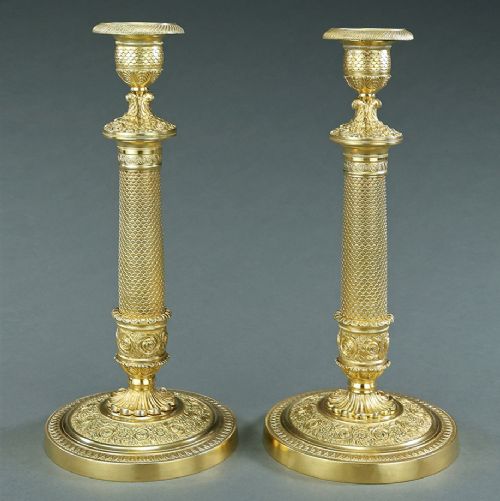
Gilding processes applied gold finishes over base metals, creating the characteristic rich lustre found on ormolu and gilt bronze items. Hand-finishing involved chasing and detail work to sharpen decorative motifs such as rams heads, acanthus leaves, and geometric patterns.
Listings feature items spanning the 18th, 19th, and early 20th centuries, utilising both solid brass and fire-gilt ormolu finishes.
What varies in quality
The weight and gauge of the metal set the foundation for quality, with heavier castings providing stability and a more substantial feel in the hand. Thicker brass or bronze allows for deeper, crisper surface chasing that retains its definition across the decorative details.
Subtlety in the application of gilt or ormolu finishes distinguishes superior examples, where the gold layer adheres smoothly without obscuring the underlying metalwork. The integrity of the construction, from the tightness of threaded joints to the precise alignment of the candle sockets, marks the difference between standard production and exceptional work.
J.T. & Co·AFC·GLC
The Vintage Gold Brass Candlesticks Glossary
- Ormolu
- A gold-coloured alloy of copper and zinc applied to bronze or brass objects, popular in French decorative arts. It provides a bright, durable metallic finish that mimics solid gold.
- Pricket
- A sharp metal spike set in the drip pan of a candlestick to secure a candle. This form derives from ecclesiastical lighting traditions.
- Ejector
- A mechanism built into the stem of a candlestick featuring a small sliding thumbpiece to push out the remaining candle stub. This practical addition became common during the Georgian and Regency periods.
- Chamberstick
- A short candlestick fitted with a wide saucer-like base and a loop handle for carrying from room to room. They often included a small conical snuffer resting in the tray.
- Baluster
- A moulded column shape characterised by a swelling lower portion tapering towards the top. This profile appears frequently on table lamps and candlestick stems across multiple centuries.
Vintage Gold Brass Candlesticks: Frequently Asked Questions
How do I clean antique brass?
Dust gently with a soft cloth to preserve the aged surface and accumulated patina that develops over decades of handling.
Avoid abrasive polishes or harsh chemical cleaners that strip away the original finish and diminish the historic character of the metal.
Were these candlesticks originally wired for electricity?
Most pieces started life as purely candle-lit domestic objects and were adapted for modern lighting much later in their existence.
Some retain their original structural integrity for candles, whilst others feature discreet wiring channels added during the twentieth century.
Can I use standard candles in antique sockets?
Candle dimensions varied widely across historical periods, meaning modern standard tapers might require slight trimming at the base to fit securely.
Using beeswax or fitted candle adapters prevents wobbling and protects the antique drip pans from hot wax overflow.