
Vintage Glazed Ceramic Vase
A vintage glazed ceramic vase brings tactile weight and rich surface colour to a room, drawing the eye with its fired finish.
Vintage Glazed Ceramic Vase
When you search for a vintage glazed ceramic vase, you look at vessels shaped from clay and finished with liquid glass coatings that vitrify in the kiln. These pieces span centuries of domestic and decorative production, serving historically as display vessels, pouring ewers, or storage jars.
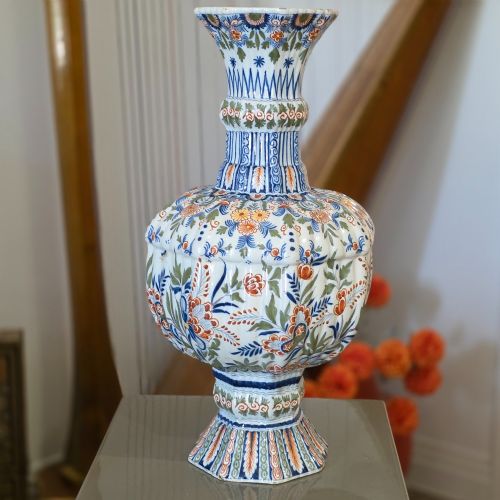
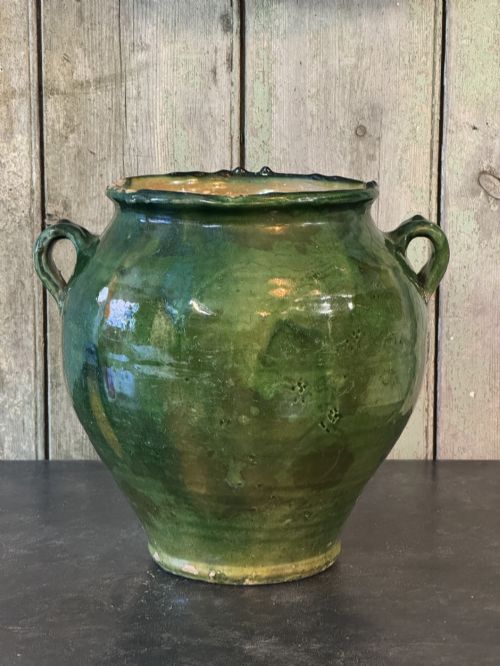
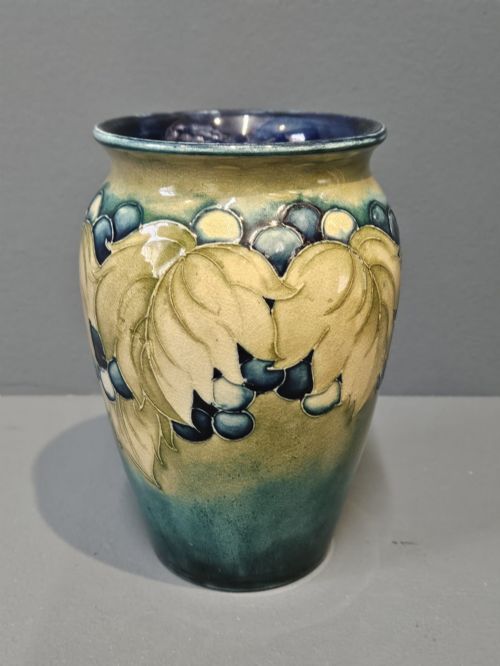
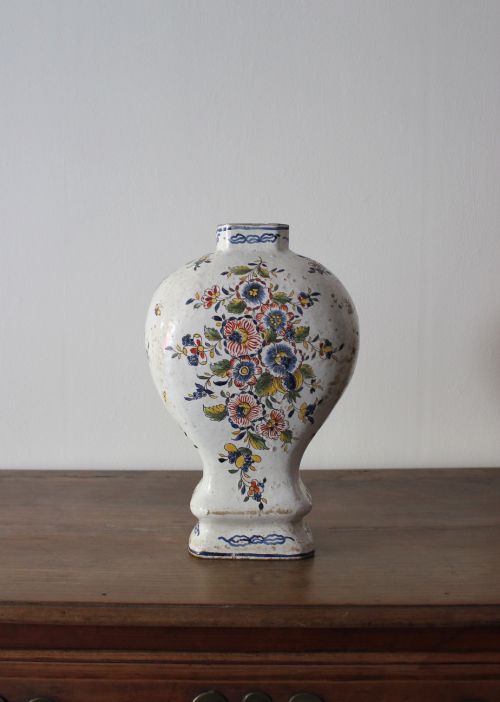
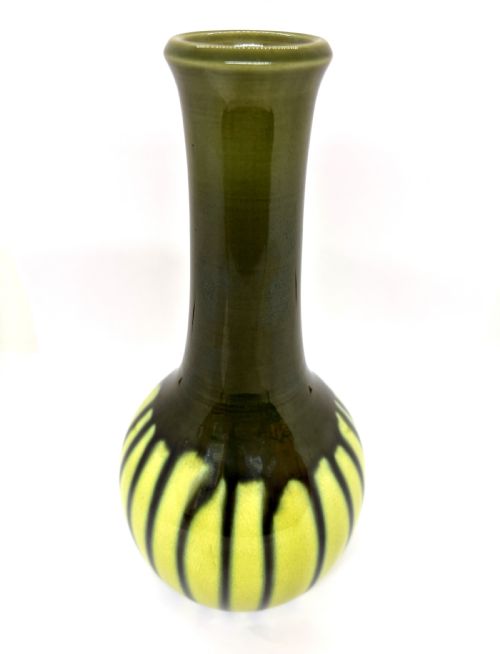
The selections available here range from eighteenth-century blue and white Delftware to nineteenth-century terracotta confit pots, alongside later outputs from studio potteries and large factories. You will frequently encounter forms shaped in earthenware or stoneware, carrying glazes that vary from deep celadon greens to cobalt blues.
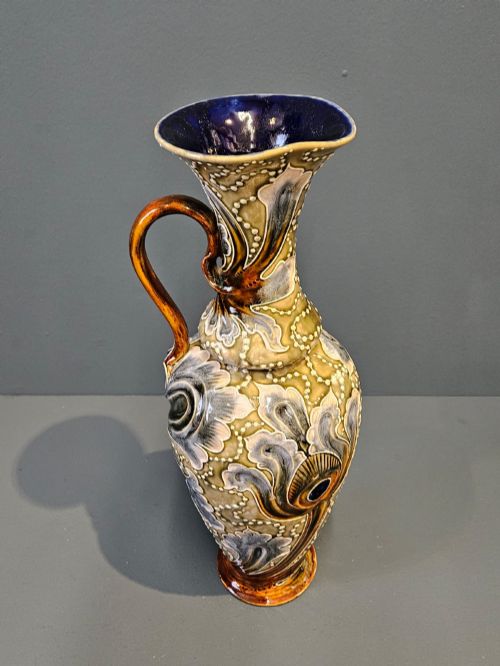
Makers utilised various regional traditions, producing everything from simple hand-thrown confit jars to highly decorated earthenware pieces styled for domestic display. The physical form often dictates the function, shifting from narrow-necked vessels meant for single stems to wide baluster jars and handled ewers.
How they were made
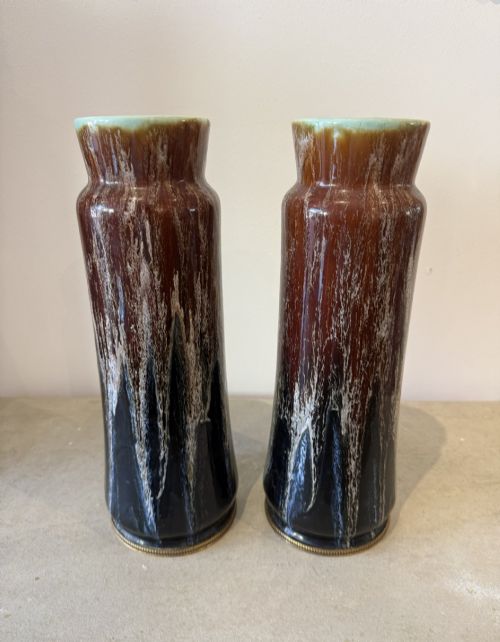
Potters built these vessels using earthenware and stoneware bodies, often shaping the clay on a wheel or pressing it into moulds before applying a liquid mineral glaze. The pieces then underwent high-temperature firing in kilns, a process that fused the silica-based glaze to the clay body to create a durable, non-porous surface.
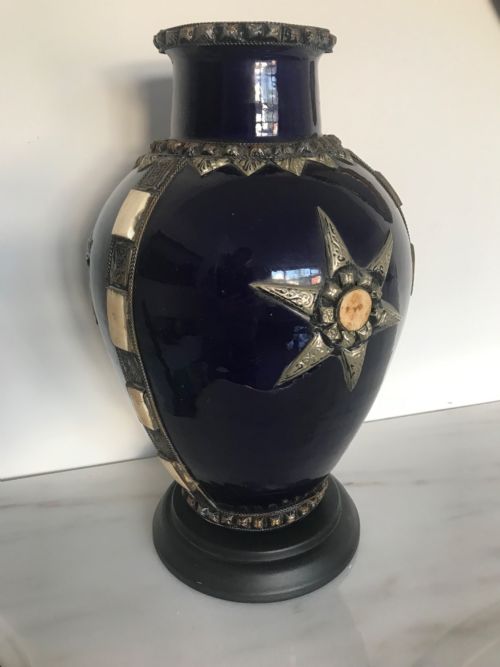
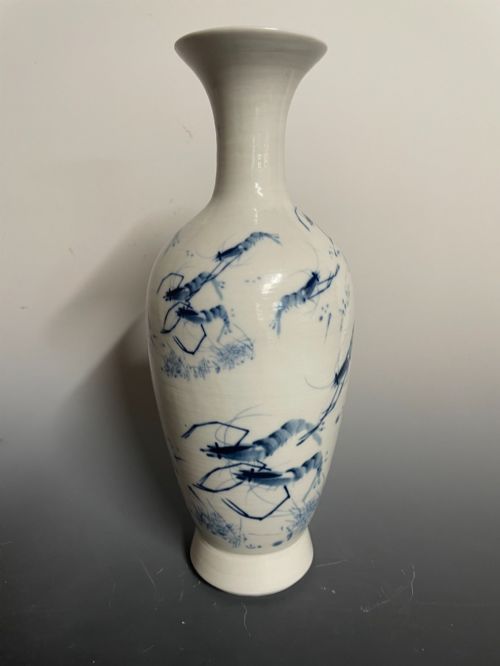
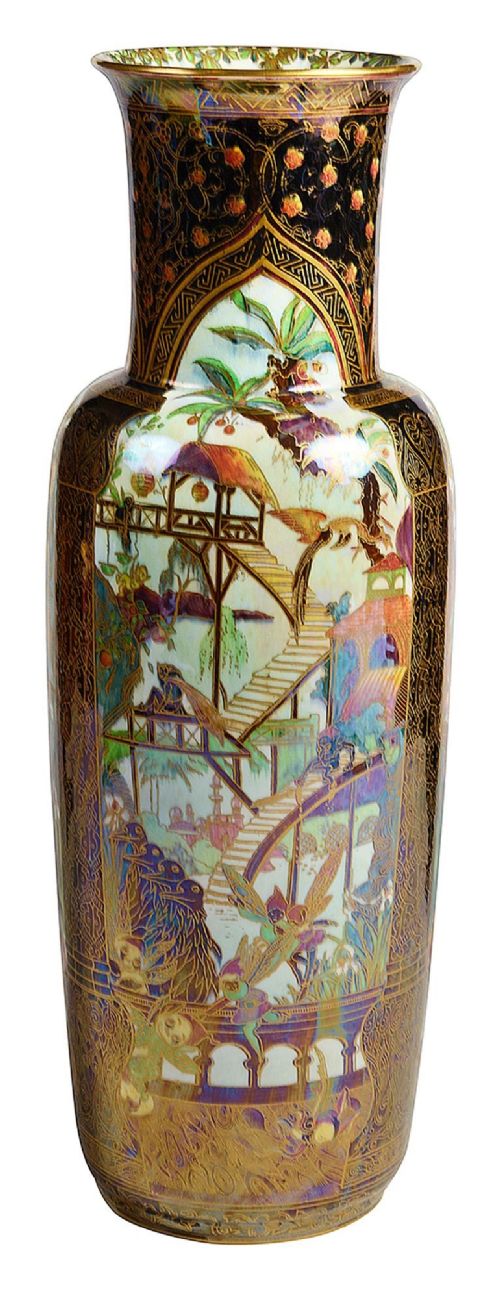
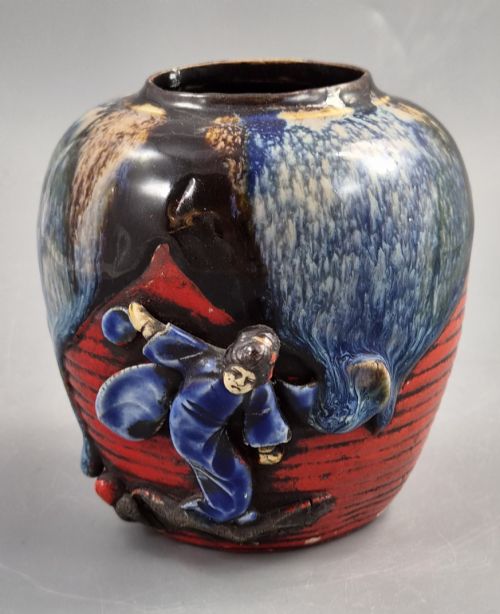
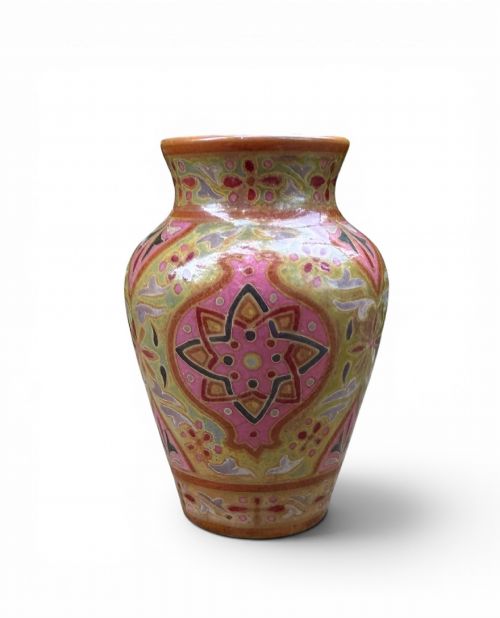
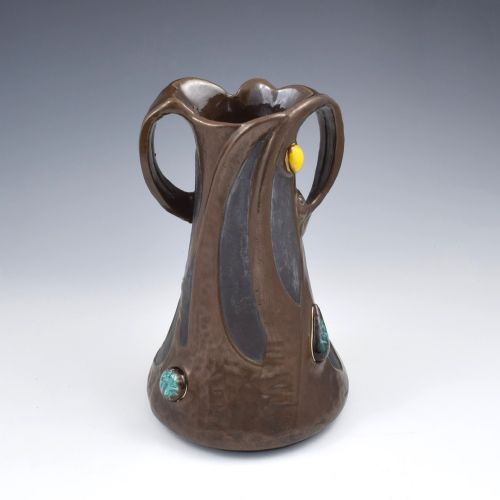
Decoration techniques recorded in the pieces include hand-painted cobalt pigments under the glaze, raised enamel motifs, and tube-lined clay borders that held pooled colour within distinct compartments. Some workshops also incorporated metal mounts, brass fittings, or applied ceramic figures to the finished body after the primary firing.
Some vessels feature climbing figures or applied frogs peering over the rim, ready to startle anyone looking inside.
What varies in quality
Quality in a vintage glazed ceramic vase rests primarily upon the control of the kiln process and the execution of the surface design. Superior examples display even glaze vitrification without unintended crawling or bubbling, alongside crisp hand-painting or precise tube-lining that reveals the hand of a skilled decorator.
The integrity of the underlying ceramic body also determines value, with finer pieces maintaining thin, balanced walls despite large overall dimensions. Where applied elements, mounts, or metal fittings appear, their secure attachment and material quality separate standard production wares from finer studio or factory commissions.
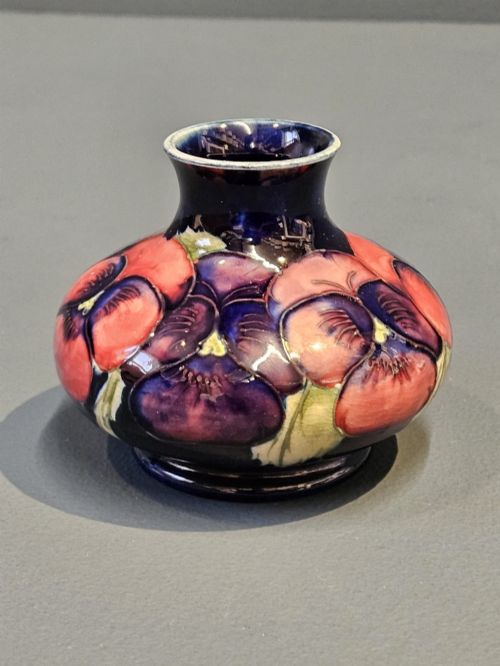
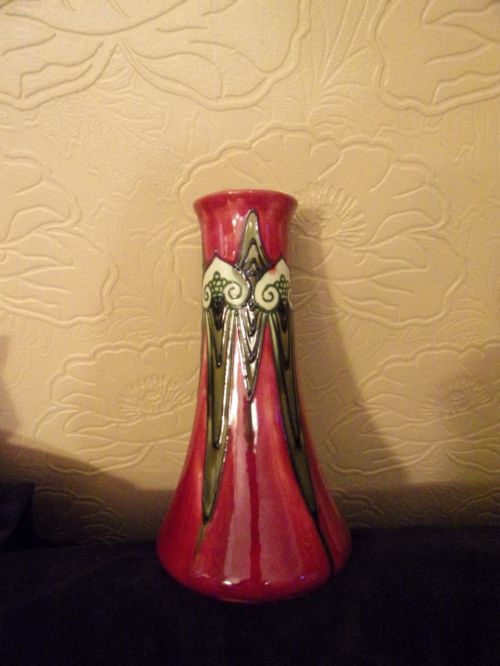
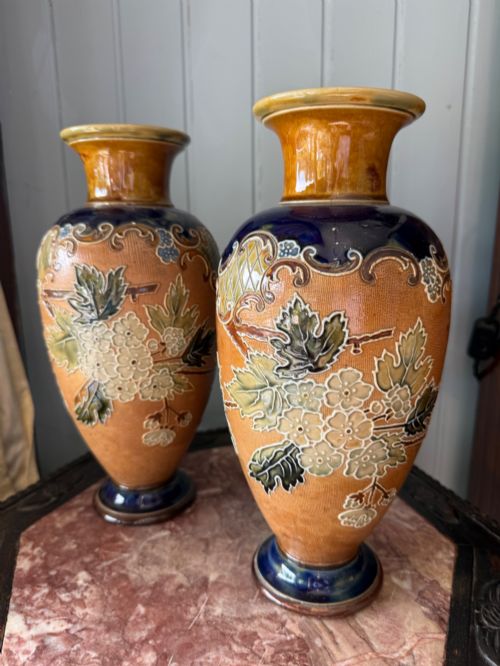
Minton Secessionist·Moorcroft·Royal Doulton·Doulton Lambeth·Boch Freres·Carlton Ware·Zsolnay Pecs·Burmantoft s Pottery
The Vintage Glazed Ceramic Vase Glossary
- Earthenware
- Porous pottery fired at lower temperatures, requiring a glaze to hold liquids. It forms the body of many traditional European and Asian vessels.
- Stoneware
- Dense, vitrified ceramic fired at higher temperatures until non-porous. It provides a sturdy structure for heavy utilitarian and decorative jars.
- Glaze
- A glassy coating fused to ceramic pottery during firing. It provides colour, texture, and a protective seal over the clay body.
- Tube-lining
- A decorative technique where lines of liquid clay are squeezed onto a ceramic surface to form raised outlines for coloured glazes.
- Delftware
- Tin-glazed earthenware originating from the Netherlands, traditionally decorated in blue and white pigments inspired by imported Asian porcelain.
Vintage Glazed Ceramic Vase: Frequently Asked Questions
How do I clean a glazed ceramic vase?
Wash the piece gently in warm water using a mild detergent and a soft cloth, avoiding abrasive pads that might scratch the glaze.
Dry the vessel thoroughly with a lint-free towel, taking extra care around any applied metal mounts or porous earthenware bases.
Can these vases hold water safely?
Most fully glazed stoneware and high-fired earthenware vessels hold water without issue, provided the interior glaze covers the entire inner surface.
Older or porous earthenware pieces, particularly those converted to lamps or bearing hairline fractures, are best kept dry or used with a discreet internal liner.
How do I date a ceramic vase?
Examine the base for factory stamps, painted monograms, or impressed registry marks that correspond to known operating dates of the pottery.
Support this physical inspection by evaluating the potting style, glaze chemistry, and decorative motifs against documented periods like Art Nouveau or the nineteenth century.
What is the difference between earthenware and stoneware?
Earthenware is fired at lower temperatures, resulting in a porous ceramic body that requires a complete glaze to become water-resistant.
Stoneware undergoes firing at significantly higher heats, causing the clay to vitrify into a dense, completely impermeable material even without glaze.