


Vintage Glass Silver Cruet
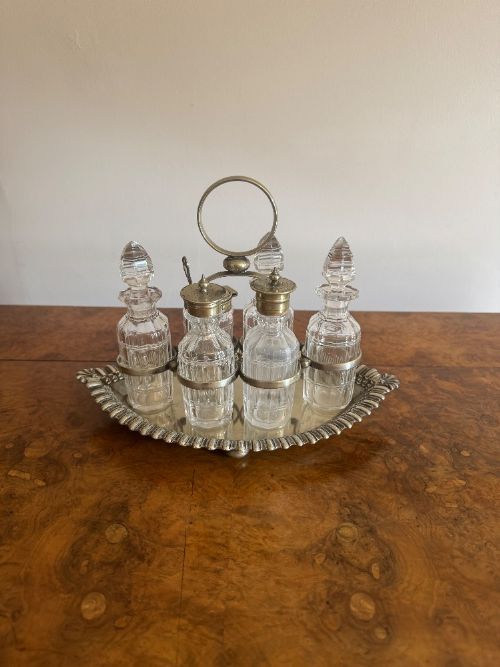
A vintage glass silver cruet brings dining history to the table, combining cut glass containers with fitted metal stands for everyday service.
Vintage Glass Silver Cruet
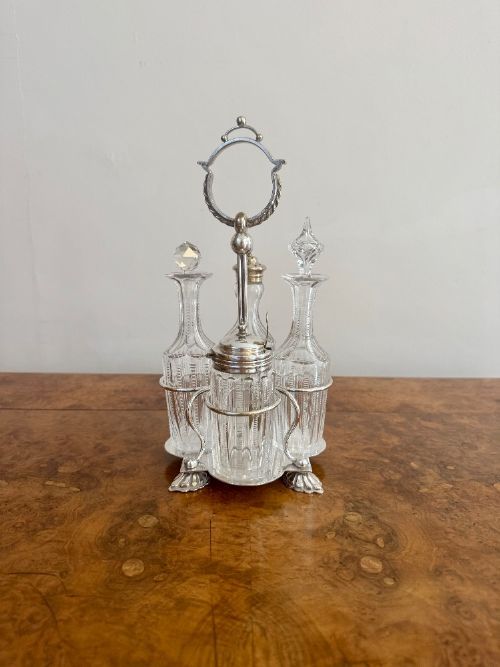
When searching for a vintage glass silver cruet, collectors encounter multi-bottle table settings designed to hold condiments, oils, vinegars, and sauces during meals. These pieces function as decorative tableware as well as practical dining accessories.
The selections span periods from the Georgian era through the Victorian and Edwardian decades up to Art Deco and mid-century modern pieces. Edwardian silver plated six-bottle cruet sets appear most frequently in the current listings.
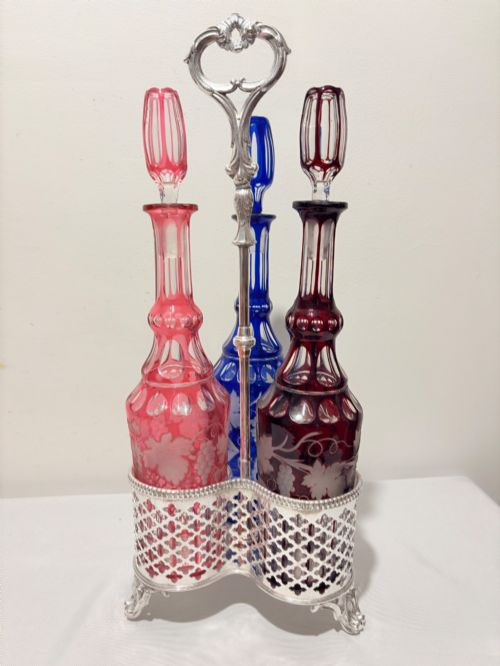
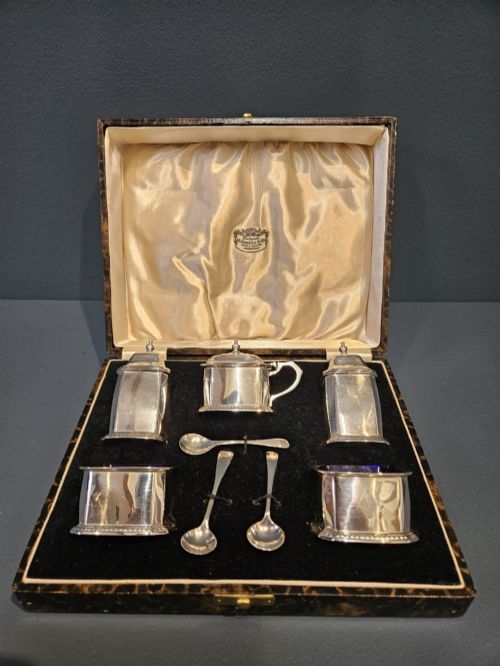
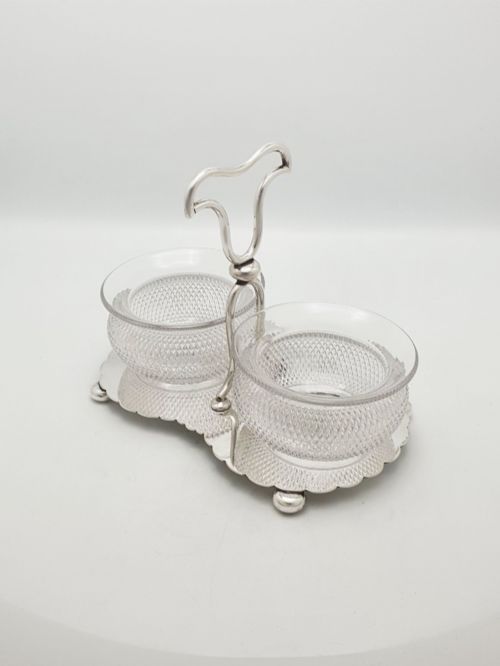
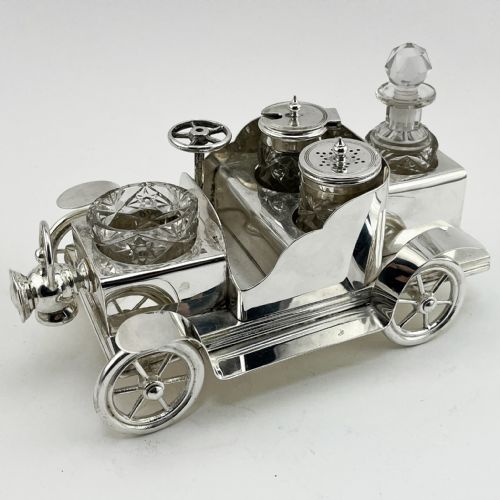
Forms range from compact bachelor sets and twin glass bowls to large eight-piece oval frames and dedicated decanter stands. Makers produced both matched sets with fitted stoppers and individual silver mounted bottles for oil and vinegar.
Materials and construction methods
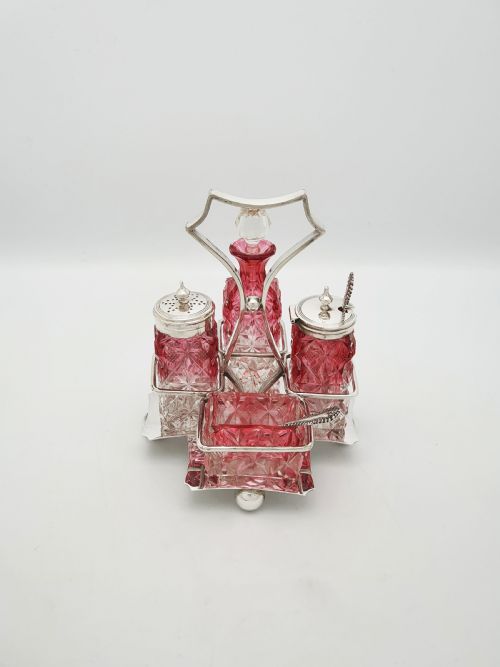
Craftsmen utilised cut glass, coloured glass, cranberry flashed glass, and blue glass for the bottles, pairing them with sterling silver, silver plate, and Old Sheffield plate for the stands and mounts. Some examples incorporated wooden frames such as ebonised stands alongside velvet or fitted bases.
Metalworking techniques involved casting, plating, and mounting silver collars onto shaped glassware, while the glass itself was blown, cut, and polished to catch the light on the dining table.
Listings span the eighteenth, nineteenth, and twentieth centuries, incorporating materials from plain glass to cranberry flashed glass and sterling silver.
Factors that distinguish quality
The distinction between tiers rests upon the weight of the metal framework, the clarity and depth of the glass cutting, and the completeness of the original bottles and stoppers. Sets retaining their matching original glassware demonstrate higher desirability than assembled groups.
Maker marks from prominent silversmiths like Walker & Hall or Goldsmith & Silversmith's provide attribution that elevates a piece, alongside robust plating and refined cast handles on the stands.
Goldsmith & Silversmith's·Walker & Hall·William Neale & Son·Wade Wingfield Wilkins
The Vintage Glass Silver Cruet Glossary
- Cruet set
- A collection of glass bottles or casters held in a metal stand for table condiments. These sets typically held mustard, pepper, salt, oil, and vinegar.
- Cranberry flashed glass
- Glassware with a thin exterior layer of red-pink glass over clear crystal, often seen in Edwardian cruet bottles. This technique created rich colour contrast when cut.
- Old Sheffield plate
- An early form of composite metal made by fusing a thin sheet of silver to a copper base before rolling. This predates standard electroplating methods.
- Castor
- A small jar or bottle with a perforated top used for shaking sugar or dry spices onto food. Casters frequently formed part of larger Georgian and Victorian dining sets.
- Decanter stand
- A specialised frame designed to hold heavy wine or spirit decanters rather than small condiment bottles. They often featured robust carrying handles.
Vintage Glass Silver Cruet: Frequently Asked Questions
What did they hold?
These sets contained condiments for the dining table, including mustard, salt, pepper, oil, and vinegar.
Larger versions held up to eight bottles to accommodate a wide variety of sauces and flavourings during multi-course meals.
How do I date a set?
Dating relies on hallmarks stamped on the silver mounts, stylistic cues in the metalwork, and the cutting style of the glass.
Georgian pieces display heavier cast frames, whereas Edwardian and Art Deco examples feature lighter frames and distinctive geometric or floral motifs.
Are the bottles original?
Many sets retain their original matching cut glass bottles and matching stoppers, which is an important consideration for collectors.
Replacement bottles sometimes appear in older stands because glass easily suffered breakage during daily use and washing.
How do I clean the silver?
Silver plate and sterling silver components require gentle cleaning with a specialist non-abrasive silver cloth or polish.
Harsh chemical dips should be avoided, particularly near fitted glass inserts or delicate vintage plating.