
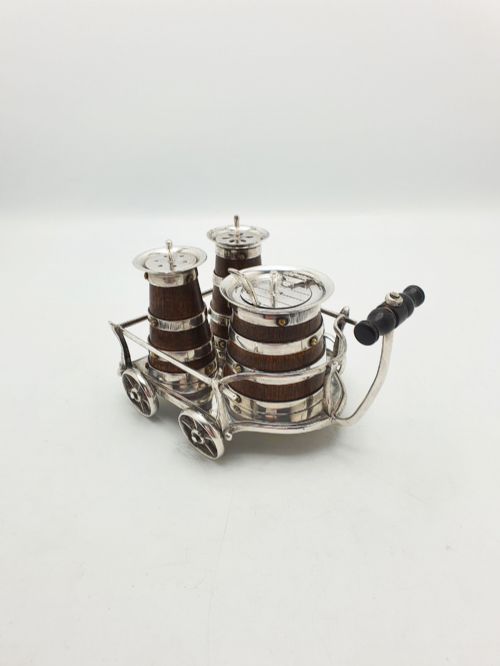
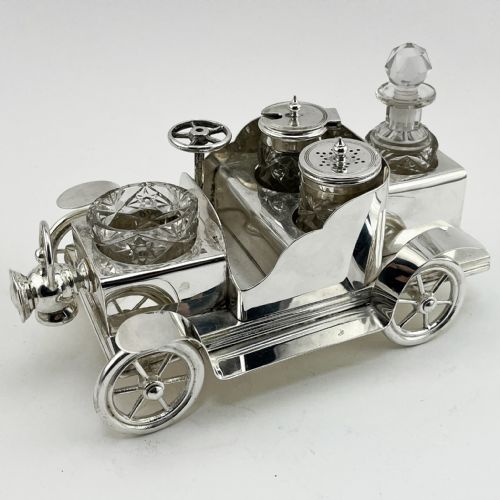


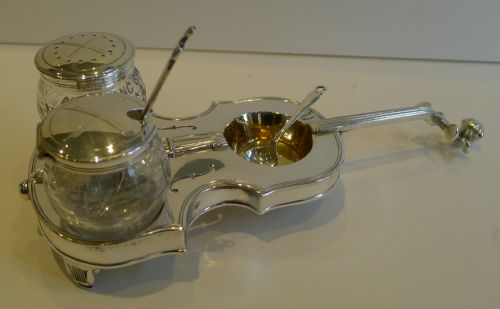

Silver Plated Novelty Cruet
These silver plated novelty cruet pieces bring whimsy to the dining table through sculptural forms like animals, carriages and musical instruments.
Silver Plated Novelty Cruet
A silver plated novelty cruet combines functional dining condiment storage with playful sculptural design, taking shapes such as farmyard animals, carts, barrels and musical instruments. These Victorian and Edwardian tablewares hold bottles and pots for mustard, pepper, and other seasonings within elaborate figurative settings.
Originating predominantly from late nineteenth and early twentieth century British workshops, these condiment sets reflect the Victorians' fondness for playful utility. They range from simple oak trays with fitted vessels to complex cast figures carrying glass bottles upon their backs.
How they were made
Silversmiths utilised electroplated nickel silver as the primary base metal, applying a layer of silver to form a durable and lustrous surface. Cast figures and frames were combined with turned oak, glass, and cobalt blue glass bottles to create the finished condiment vessels.
Listings feature pieces from the Victorian and Edwardian periods, utilising silver plate, cut glass, oak, and cobalt blue glass.
What varies in quality
Quality rests heavily upon the crispness of the casting and the cleverness of the novelty form, distinguishing mass-produced items from sculptural works of art. Finer examples retain intricate detail in engraved feathers, fur, or vehicle mechanisms without softening of the metal.
The integrity of the original glass bottles and the preservation of the silver plate over the underlying nickel silver dictate the standing of a piece. Sets retaining their matching cut glass or cobalt blue inserts command greater appreciation among collectors.
Mappin & Webb
The Silver Plated Novelty Cruet Glossary
- Electroplated nickel silver
- A base metal alloy of copper, nickel, and zinc coated with a layer of pure silver through an electrolytic process. This technique became widespread in the nineteenth century for producing affordable tableware.
- Cruet set
- A matched collection of bottles or jars designed to hold condiments such as oil, vinegar, salt, pepper, and mustard. They sit together within a frame or stand for ease of passing at the table.
- Cobalt blue glass
- A deep blue glass achieved by adding cobalt oxide to the molten batch during production. It frequently appears in nineteenth-century condiment liners to contrast pleasantly with silver plate.
- Cast metal
- Molten metal poured into a mould to achieve complex three-dimensional shapes like animals or vehicles. This method allowed makers to produce intricate figural bases for condiment sets.
Silver Plated Novelty Cruet: Frequently Asked Questions
What is a silver plated novelty cruet used for?
These pieces served as functional table settings designed to hold condiments like mustard, pepper, and vinegar during formal meals.
Guests at the dining table would pass the figural container, combining practical seasoning access with entertaining sculptural art.
How do I date a silver plated novelty cruet?
Dating relies on stylistic clues, registration marks stamped into the metal, and the manufacturing materials typical of the Victorian and Edwardian eras.
Earlier pieces from the eighteen seventies often feature heavy cast figural designs, while later Edwardian examples show shifts in decorative tastes.
Are the glass bottles usually original?
Many pieces survive with their matching cut glass or cobalt blue glass inserts, though replacements are sometimes found due to breakage over time.
Inspect the fit and wear patterns inside the metal rings to understand the relationship between the bottles and the stand.
How should I clean a silver plated novelty cruet?
Gentle cleaning with a specialist silver cloth helps maintain the plated surface without wearing away the underlying electroplated nickel silver.
Harsh abrasive dips should be avoided, particularly around fitted glass, oak elements, and delicate cast figural details.