


Edwardian Silver Plated Caster
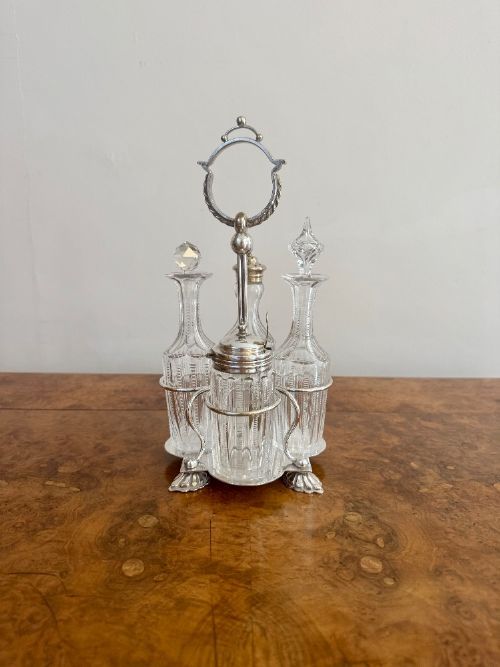
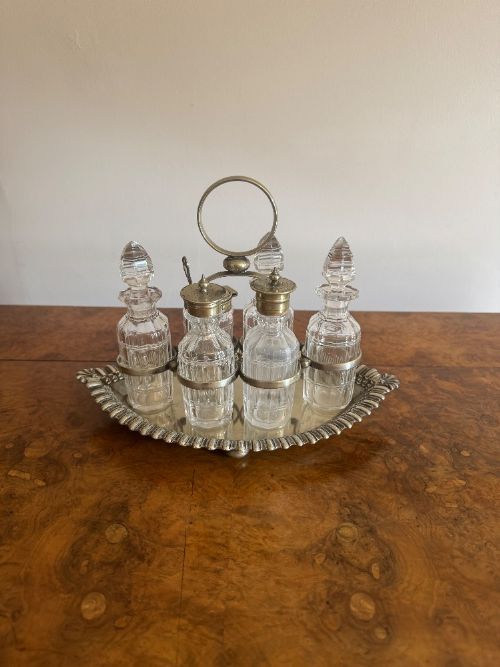
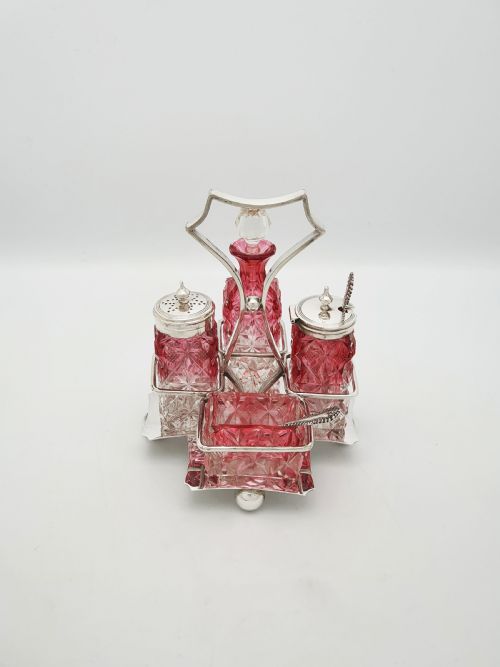
These edwardian silver plated caster pieces bring formal dining elegance to the table with silver plate and glass.
Edwardian Silver Plated Caster
When you search for an edwardian silver plated caster, you enter a world of table service accessories designed to hold condiments and sugar for formal dining. The pieces you meet on this page take the form of cruet sets, condiment sets, and sugar shakers dating primarily from the Edwardian period and the late Victorian era.
How they were made
The makers of these items utilised silver plate over a base metal foundation, combining durability with a bright metallic finish suitable for the dining room. This plating technique allowed households to enjoy the appearance of solid silver at a lower cost while maintaining intricate decorative details on the stands and frames.
Glass components frequently feature cut designs or cranberry flashing, produced by applying a thin layer of red glass to clear glass before cutting through the surface. Metal mounts and shaker tops secure these glass bodies, while occasional pieces incorporate velvet or gilt highlights to elevate the presentation.
Some novelty cruets took the shape of charming figures, turning a humble condiment stand into a silent dinner party guest.
What varies in quality
The standard of an edwardian silver plated caster set rests on the weight of the metal frame and the crispness of any engraved or cast ornamentation. Finer examples display heavier silver plating that resists wear, alongside substantial glass bottles free from chips.
Completeness dictates much of the appeal in multi-bottle cruet sets, where matching bottles and original shaker tops preserve the intended design. Maker attribution also plays a role, with established firms producing pieces with superior balance and refinement in their mounts.
Walker & Hall
The Edwardian Silver Plated Caster Glossary
- Silver Plate
- A base metal coated with a thin layer of silver. This technique provided an affordable alternative to solid silver for household tableware.
- Cruet Set
- A stand holding multiple small bottles or containers for condiments such as oil, vinegar, salt, and mustard. These sets sat at the centre of the dining table.
- Cranberry Glass
- A transparent pinkish-red glass coloured with gold chloride. It was popular in Victorian and Edwardian tableware for decorative jars and cruet bottles.
- Sugar Shaker
- A container with a perforated top used for sprinkling powdered or caster sugar onto food. They often featured glass bodies paired with metal shaker caps.
Edwardian Silver Plated Caster: Frequently Asked Questions
What is an edwardian silver plated caster?
An edwardian silver plated caster is a table container or shaker used for dispensing sugar or fine condiments during meals. These items combine metal plating with glass bodies to serve both a practical and decorative purpose on the dining table.
Most examples date from the early twentieth century and form part of larger condiment or cruet sets designed to organise table seasonings.
How were cruet sets used?
Cruet sets held liquid and dry seasonings like vinegar, oil, mustard, and pepper within reach of diners. Servants or guests used the individual bottles to flavour food at the table.
Sets with multiple bottles accommodated a full range of condiments for formal Victorian and Edwardian meals.
How do I clean silver plate?
Silver plate requires gentle cleaning with a soft cloth and a specialised silver polish to remove tarnish without wearing through the thin metal layer. Avoid harsh abrasives that can scratch the plated surface.
Glass components can be removed and washed separately in warm soapy water before reassembly.
How can I tell the period?
Dating relies on the style of the metalwork, registration numbers stamped on the base, and the type of glass used in the bottles. Edwardian pieces often feature lighter, neoclassical motifs compared to heavier Victorian designs.
Maker marks stamped onto the silver plate also help narrow down the decade of manufacture.