





Vintage Glass Rummer Glasses
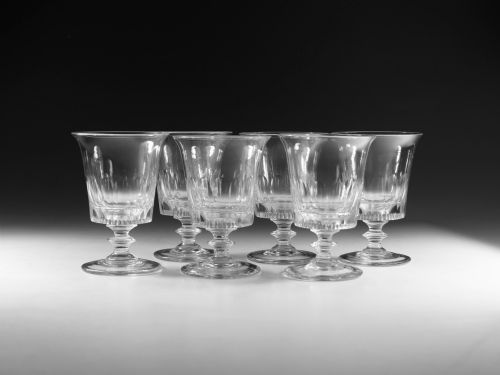
These vintage glass rummer glasses are sturdy drinking vessels offering tactile weight and historic charm that serious collectors prize for daily use.
Vintage Glass Rummer Glasses
When you search for vintage glass rummer glasses, you encounter robust drinking vessels spanning the Georgian, Victorian, and Edwardian periods.
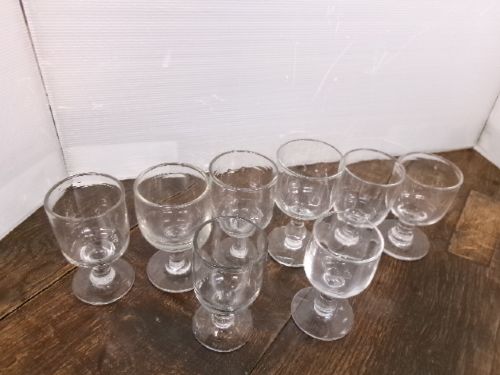
The pieces appearing most frequently on this page take the form of heavy-bowled English and continental goblets designed for wine, ale, spirits, or water.
These drinking glasses trace their lineage from late eighteenth-century tavern and dining table wares through to nineteenth-century ceremonial and commemorative pieces.
How they were made
Artisans produced these drinking vessels using lead crystal, flint glass, and coloured glass melted in high-temperature furnaces before manipulation.
Makers shaped the hot material using hand-blowing techniques, applying pontil marks to the bases and forming sturdy baluster stems and heavy feet.
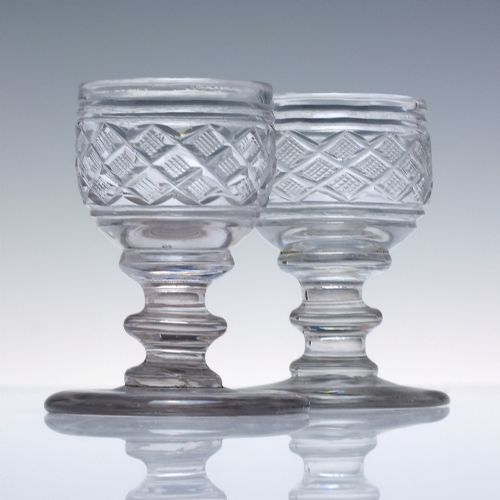
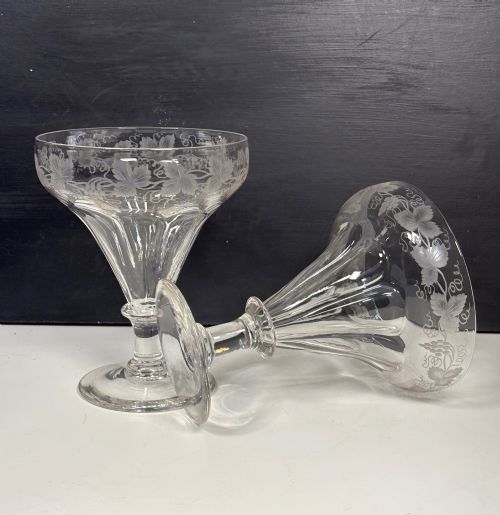
Craftsmen enriched the surfaces through wheel engraving, cutting, etching, and polychrome enamel decoration depicting heraldic motifs, hops, and barley.
Listings feature hand-blown glass, lead crystal, and coloured glass across Georgian, Victorian, and Edwardian periods.
What varies in quality
The excellence of these drinking vessels rests upon the clarity and weight of the lead glass, alongside the crispness of the wheel-cut facets and engravings.
Superior examples display balanced proportions between the broad bowl and the sturdy stem, with smooth pontil scars and even wall thickness.
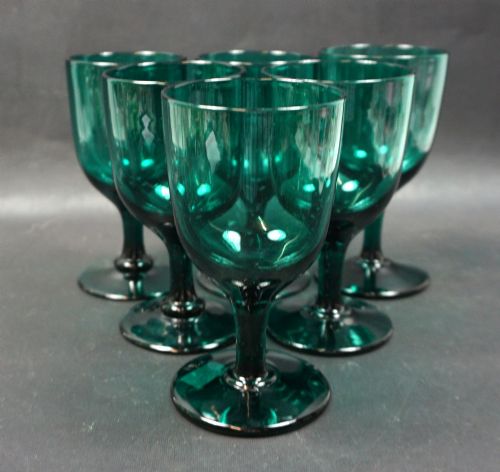
Makers of higher-grade items incorporated complex polychrome enamel work or specific coloured hues like turquoise and amethyst, elevating utilitarian objects into decorative art.
Frits Hechert
The Vintage Glass Rummer Glasses Glossary
- Rummer
- A large, heavy drinking glass popular in Britain during the eighteenth and nineteenth centuries for serving ale, wine, or punch. These vessels typically feature a short, thick stem and a wide bowl.
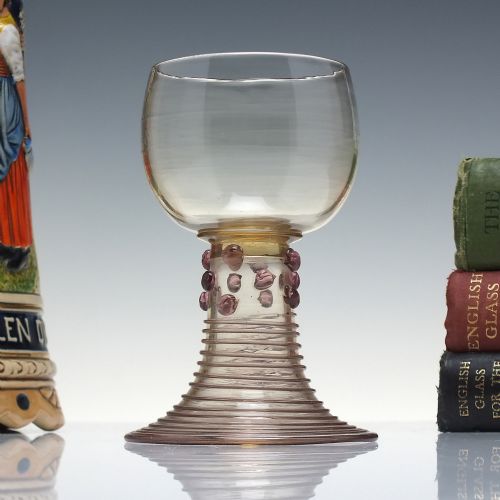
- Roemer
- A continental European drinking glass, often of German or Bohemian origin, characterised by a large spherical bowl resting on a ribbed stem adorned with raspberry prunts.
- Pontil mark
- The rough scar left on the base of a hand-blown glass object where the pontil rod was snapped off after finishing. Skilled workers often ground or polished these marks smooth.
- Baluster stem
- A distinctive support column shaped like an architectural baluster, featuring swelling curves found on many Georgian and Victorian drinking glasses.
- Flint glass
- An early British term for clear, high-refractive-index lead glass developed to imitate rock crystal. It provides exceptional brilliance and ring when struck.
Vintage Glass Rummer Glasses: Frequently Asked Questions
What were rummer glasses used for?
These large vessels served robust drinks such as ale, stout, cider, and punch at the dining table or in taverns during the Georgian and Victorian eras. Their generous capacity made them suitable for everyday hospitality.
Over time, households also used them for serving wine and spirits, relying on their heavy foot and thick walls to withstand frequent use and washing.
Are these glasses safe for drinking?
Most antique drinking glasses remain entirely safe for regular use with cold or ambient beverages, provided the material has no deep cracks or structural damage.
Owners should inspect the rim and interior for historic wear, though standard lead glass stability poses no active hazard during normal dining activities.
How can I tell a Georgian glass from a Victorian one?
Georgian drinking glasses generally display simpler tool marks, thinner rims, and hand-cut facets that reflect eighteenth-century domestic dining customs and restrained ornamentation.
Victorian counterparts frequently exhibit heavier lead crystal weights, more elaborate machine-assisted cutting, and vibrant coloured glass additions reflecting industrial manufacturing advances.