



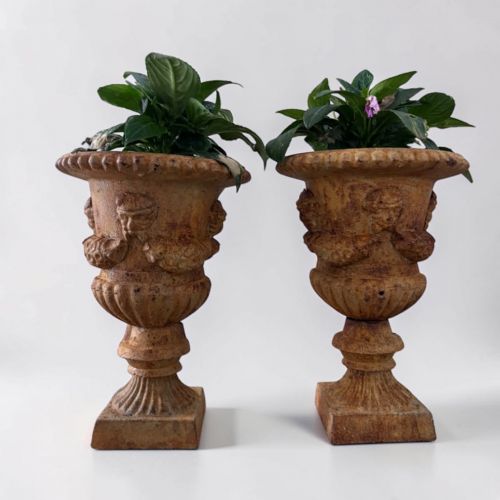
Vintage Garden Planter Pair
These vintage garden planter pair selections bring classical form and practical planting space together in matching outdoor vessels.
Vintage Garden Planter Pair
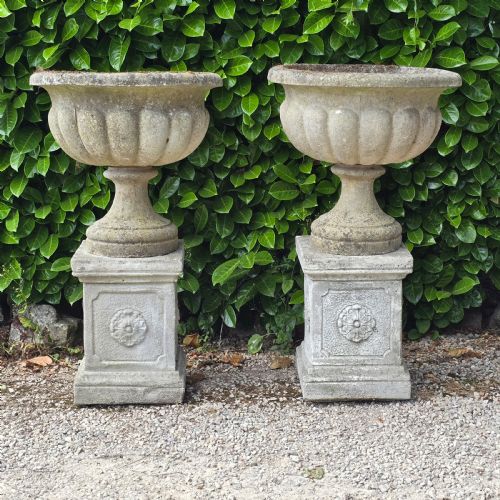
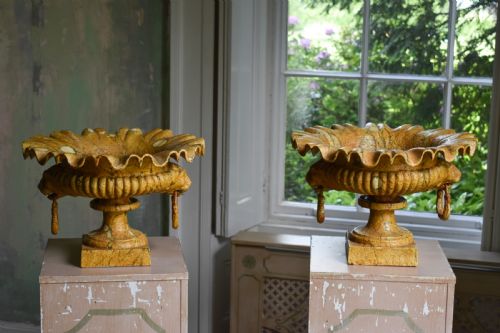
A vintage garden planter pair brings symmetry to pathways, terraces and lawns through matching vessels designed to hold substantial foliage. Buyers searching for a vintage garden planter pair encounter a range of forms, most commonly classic Campana urns, tazzas and heavy pedestals.
The objects span from the nineteenth century into the mid-twentieth century, drawing on Victorian, Edwardian and Classical Revival styles. Makers range from commercial foundries to specialised potteries, producing matching sets intended for formal gardens and country house conservatories.
Materials and construction methods
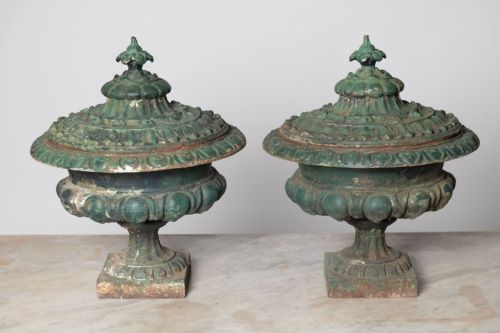
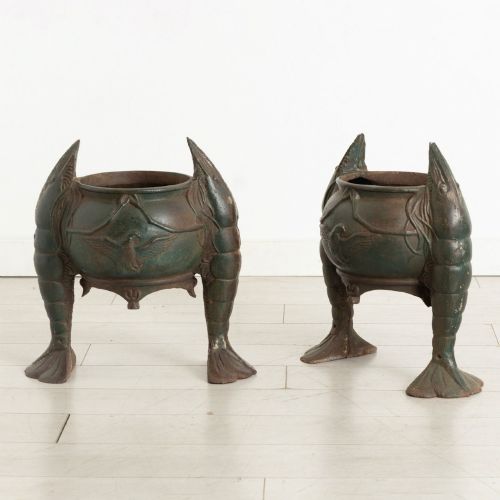
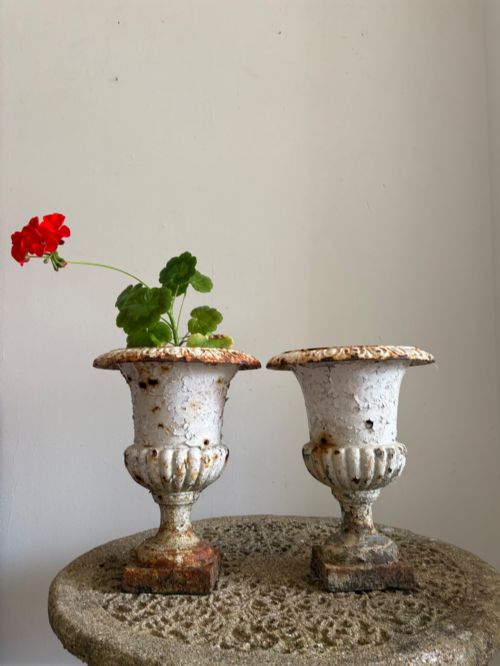
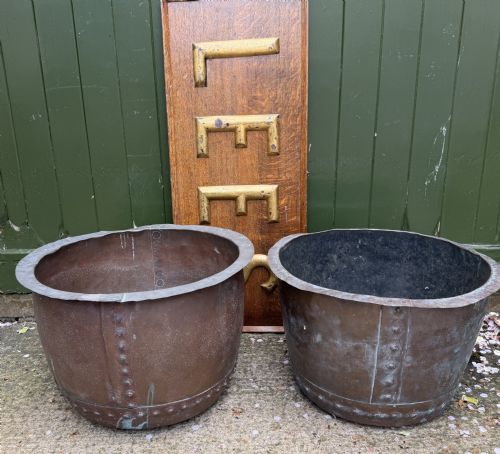
Cast iron forms the backbone of the metal vessels, shaped in foundry moulds to create crisp classical details like fluting and acanthus leaves. Wrought iron and copper also appear, alongside painted surfaces and original distressed finishes that record decades of exposure to the elements.
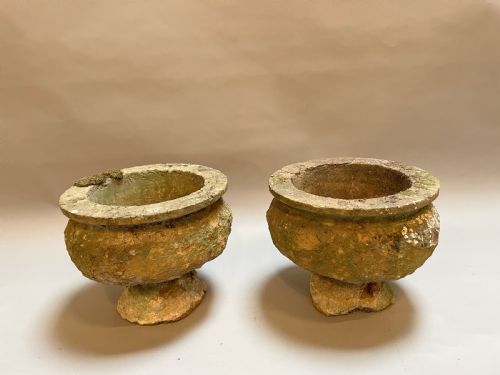
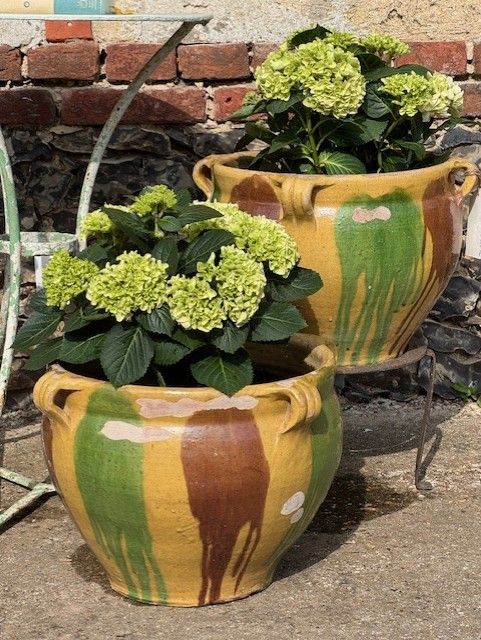
Terracotta and soft stone vessels utilise moulded clay or carved natural stone, finished with characteristic glazes such as dribble glazes or left porous to weather naturally. Reconstituted stone and cast stone provide robust alternatives for heavy garden ornaments designed to withstand winter frosts.
The selection includes garden ornaments originating from British foundries, French country workshops, and Italian potteries.
Distinguishing quality in matching vessels
Quality rests in the crispness of the casting detail and the integrity of the material, where finely rendered classical motifs separate standard commercial output from superior foundry work. Heavy metal castings and well-fired terracotta retain their structural definition and decorative relief despite prolonged weathering.
The relationship between the two pieces dictates the success of a set, as genuine matched pairs share identical proportions, casting marks and surface wear. Original surfaces, retained lids and authentic patination add depth to the objects, distinguishing pieces that retain their historical integrity from later replacements.
Dunfermline Clay Company·Coalbrookdale·Compton Pottery
The Vintage Garden Planter Pair Glossary
- Campana urn
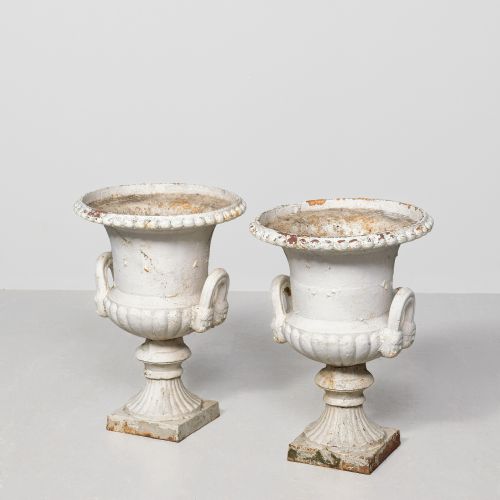
- A bell-shaped garden vessel with an everted rim, tapering lower body and footed base. This classical silhouette originates from ancient Roman pottery forms.
- Tazza
- A shallow, wide-rimmed cup or bowl raised on a high foot and stem. In garden ornaments, these take the form of ornamental pedestalled bowls.
- Rhubarb forcer
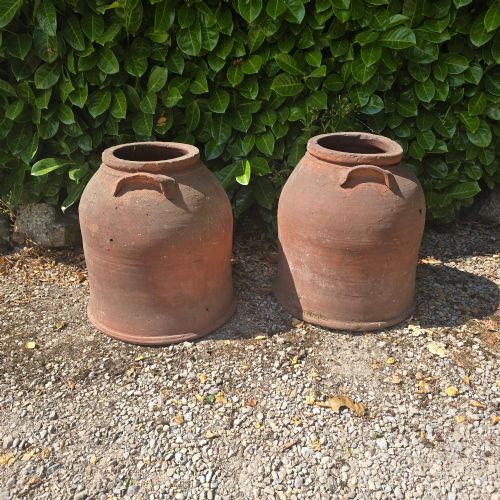
- A heavy earthenware vessel with a removable lid, designed to exclude light and force early growth in vegetable crops. Gardeners later repurpose these practical agricultural items as decorative planters.
- Verdigris
- A green patina or crust of copper carbonate formed on copper, brass or bronze surfaces through atmospheric oxidation. This chemical weathering provides a protective layer and a distinctive green coloration.
- Plinth
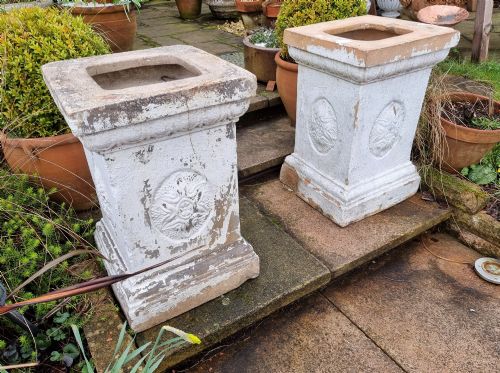
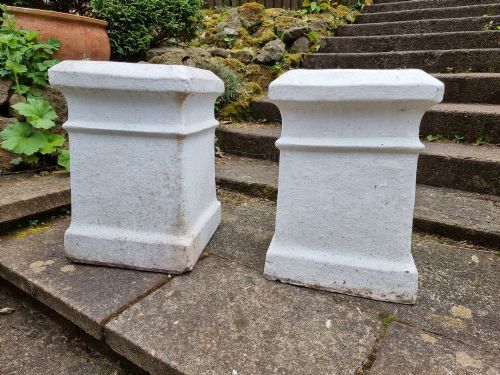
- A heavy rectangular or square base supporting an urn, statue or planter. These architectural supports elevate garden vessels to improve sightlines within a landscape.
Vintage Garden Planter Pair: Frequently Asked Questions
How do I care for cast iron urns?
Cast iron garden vessels require regular inspection for surface rust, which can be treated with wire brushing and protective exterior paints. Ensuring drainage holes remain clear prevents water accumulation during freezing winter months.
Positioning heavy iron planters on stone footings prevents direct contact with damp soil, reducing moisture absorption and preserving the metal structure over decades of outdoor exposure.
Are terracotta planters frost proof?
Most historic terracotta pots and urns are porous and absorb moisture, making them vulnerable to cracking when temperatures drop below freezing. Lining vessels with protective material and elevating them off the ground helps mitigate frost damage.
Bringing unglazed earthenware indoors during the coldest winter months remains the safest method for preserving fragile nineteenth-century clay garden ornaments.
What is a near pair?
A near pair consists of two garden vessels that are extremely similar in size, period, material and design, but were not originally cast or thrown together as a matched set. Subtle differences in proportion or decorative detail reveal their separate origins.
These pieces are grouped together because their visual weight and aesthetic character balance each other effectively when displayed symmetrically in a garden scheme.
How do I identify Victorian cast iron?
Victorian cast iron vessels typically display heavy construction, sharp mould lines and classical motifs influenced by the revival styles of the nineteenth century. Examining the underside often reveals foundry marks, registration numbers or structural runner scars from the sand casting process.
The weight of the metal combined with accumulated layers of historical paint provides strong physical evidence of nineteenth-century foundry production.