

19th Century Iron Planters
These 19th century iron planters bring structural weight and planted greenery together for terrace and garden display.
19th Century Iron Planters
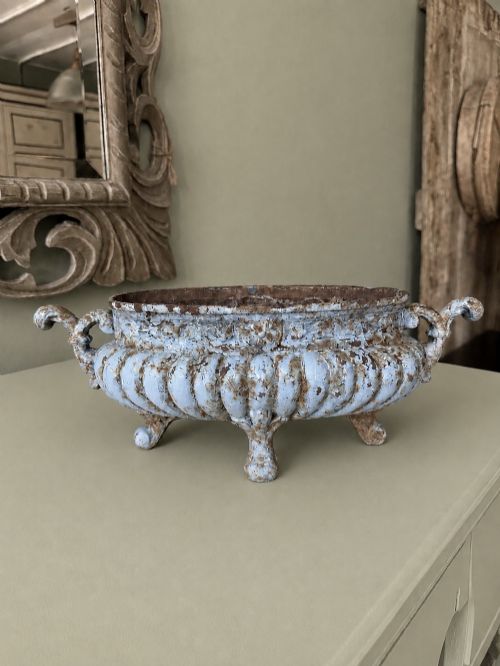
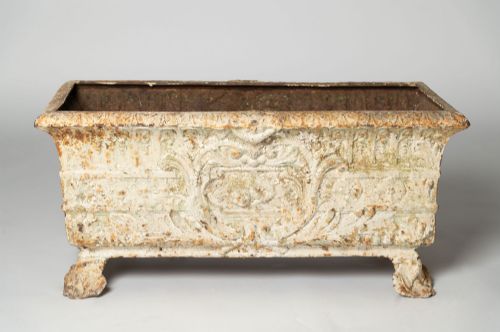
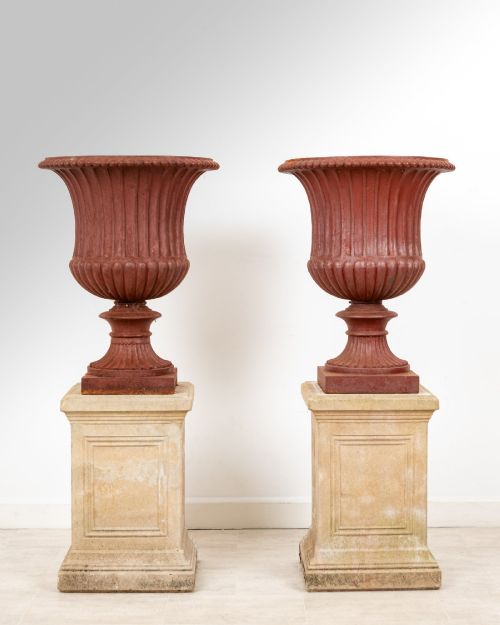
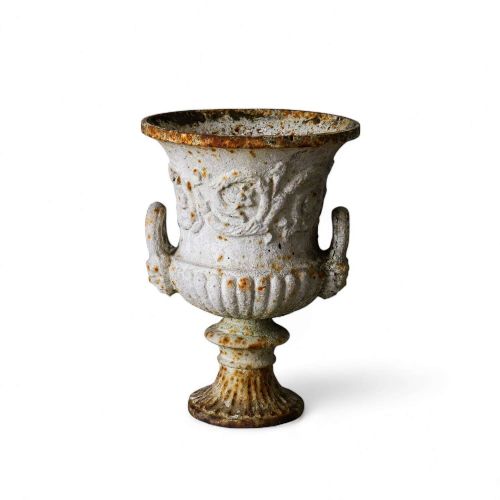
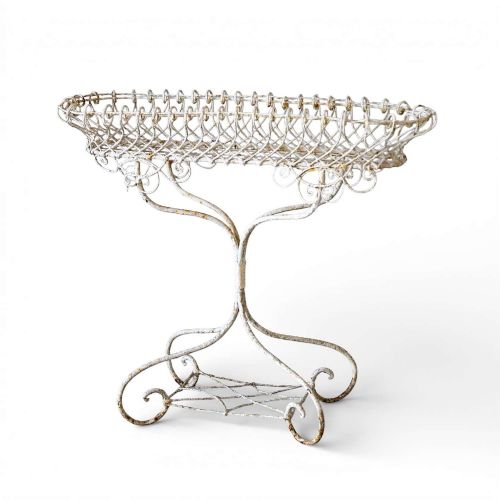
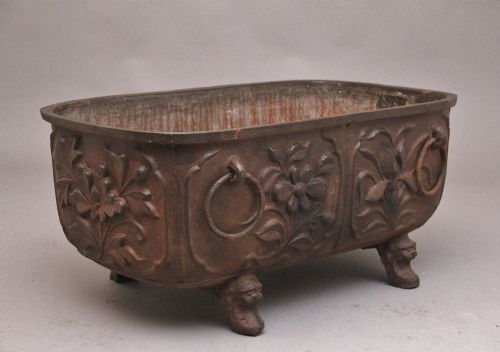
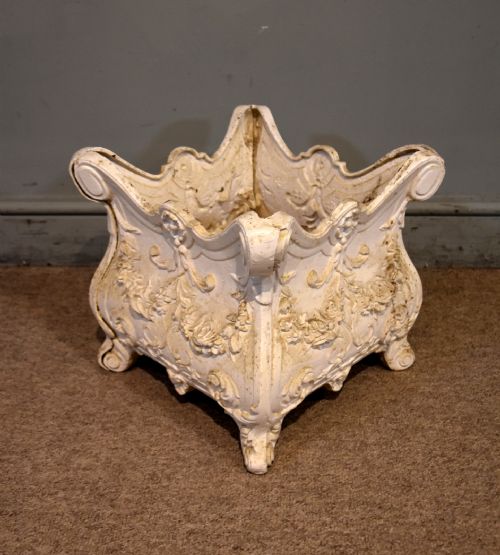
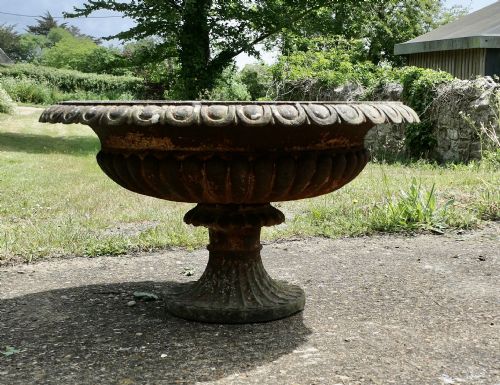
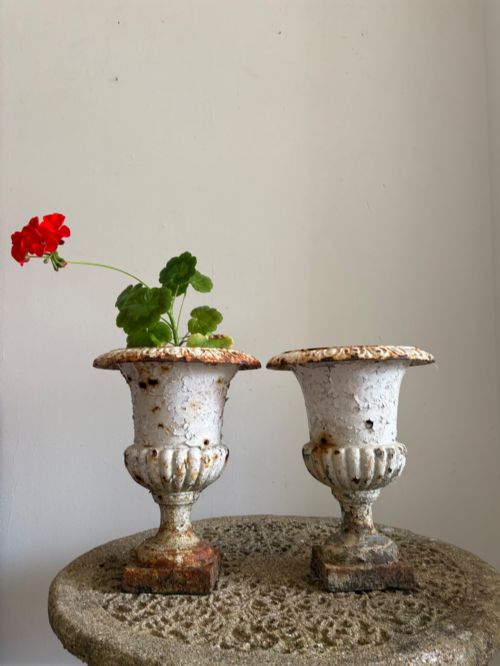
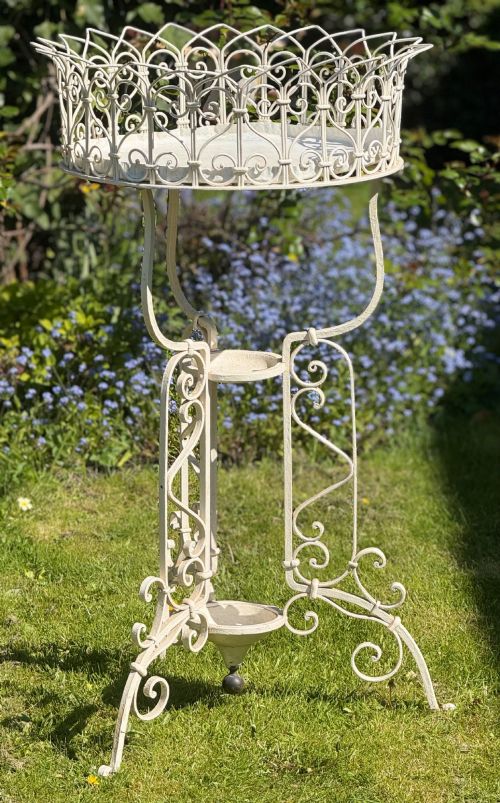
When you search for 19th century iron planters, you encounter heavy garden vessels shaped primarily as campana urns, column planters, and strapwork baskets designed to hold earth and plants. The majority of pieces on this page are cast iron, often appearing in pairs alongside single large garden urns and jardinieres.
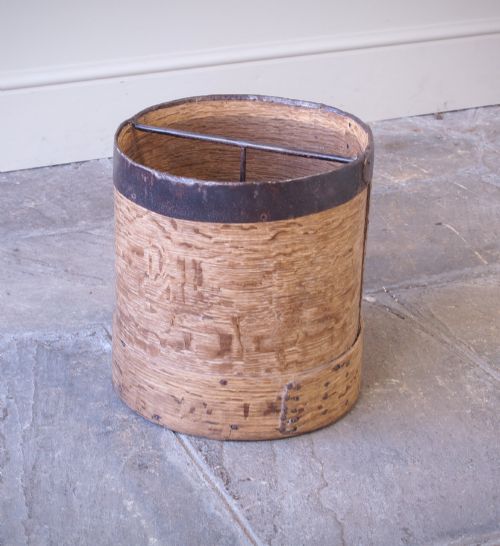
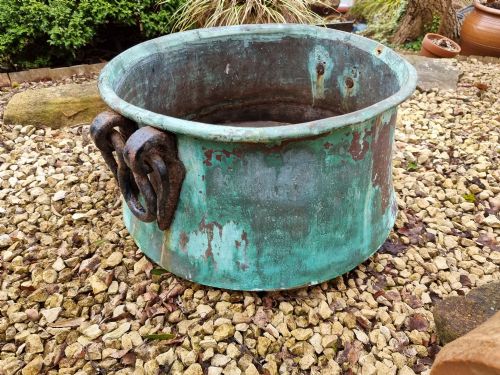
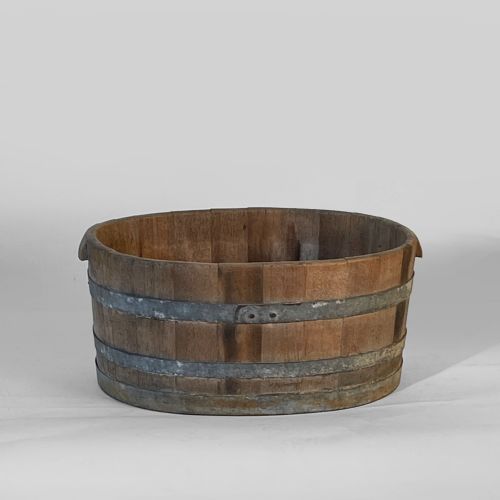
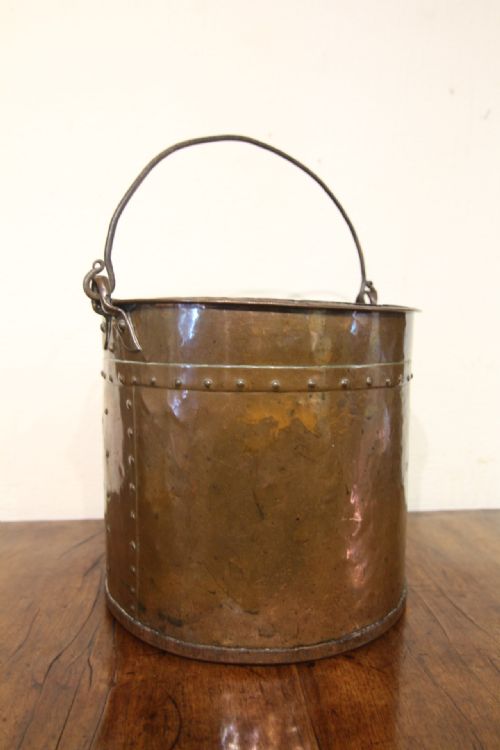
The selection encompasses English and French pieces from the 19th century, featuring Victorian styles, Neoclassical motifs, and rustic country designs. Alongside cast iron, the inventory includes related vessels formed from wrought iron and sheet iron, as well as copper pots and wooden grain measures adapted for planting.
Makers such as Andrew Handyside and Coalbrookdale produced durable iron garden ware that weathered decades outdoors. These planters range from modest domestic garden pots to monumental column planters intended for formal estate grounds.
What varies in quality
Quality rests in the crispness of the cast iron ornamentation and the thickness of the metal walls. Pieces carrying foundry attributions or distinct sculptural detail command greater interest than plain utilitarian vessels.
Proportion and symmetry dictate desirability, particularly in matched pairs where balance defines the formal garden setting. The integrity of the metal, free from deep structural rust-scaling, distinguishes superior examples.
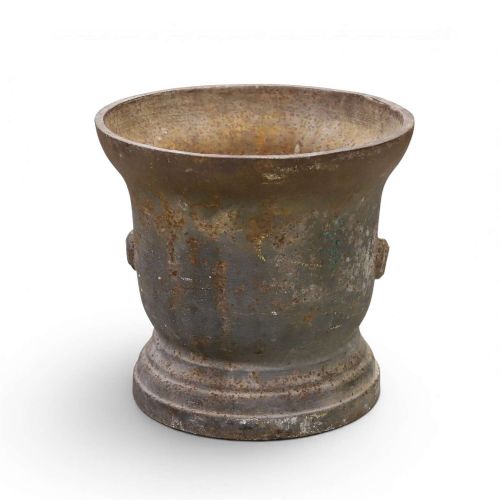
Several pieces started life as apothecary mortars, temple baths, or grain measures before becoming garden planters.
Andrew Handyside·Coalbrookdale
The 19th Century Iron Planters Glossary
- Campana urn
- A bell-shaped garden vessel with an everted rim, rising from a pedestal base. This classic form dominated 19th-century lawn and terrace ornamentation.
- Jardiniere
- An ornamental pot or stand designed to hold growing plants or flowers. These vessels often sat on interior or exterior garden floors.
- Strapwork
- Flat bands of metal arranged in interlaced patterns across the body of a planter. This technique provided structural rigidity and decorative surface texture.
- Verdigris
- A green patina formed naturally on copper, brass, or bronze surfaces through atmospheric oxidation. It indicates age and exposure to the elements.
- Coalbrookdale
- A prominent English ironworks known for producing high-quality ornamental cast iron garden furniture and urns during the 19th century.
19th Century Iron Planters: Frequently Asked Questions
How do I protect iron planters outdoors?
Cast and wrought iron vessels withstand outdoor conditions well when treated with suitable protective metal paint. Ensuring adequate drainage holes prevents water accumulation and subsequent frost cracking during winter.
Elevating planters slightly off the ground on stone pedestals or pot feet also stops moisture from drawing up through the base.
Are these planters too heavy for patios?
Nineteenth-century cast iron urns possess substantial weight, which provides excellent stability against high winds in open gardens. This mass means positioning requires planning before filling the vessel with earth and plants.
For paved terraces or wooden decking, verify weight limits before placing large examples into position.
Can I use them indoors?
These iron and copper vessels adapt readily to interior spaces as log bins, umbrella stands, or large decorative cachepots. Placing a protective tray underneath catches any water runoff from potted greenery.
Their industrial weight suits entrance halls and garden rooms alongside other period furnishings.
How do I identify French pieces?
French 19th-century examples often exhibit distinct Neoclassical proportions, crisper handles, and specific regional foundry forms like mortar-shaped vessels or chateau jardinieres. Surviving layers of original scrubbled or distressed paint frequently point to French provincial workshops.
Comparing the rim profiles and pedestal bases helps differentiate English factory production from continental work.