


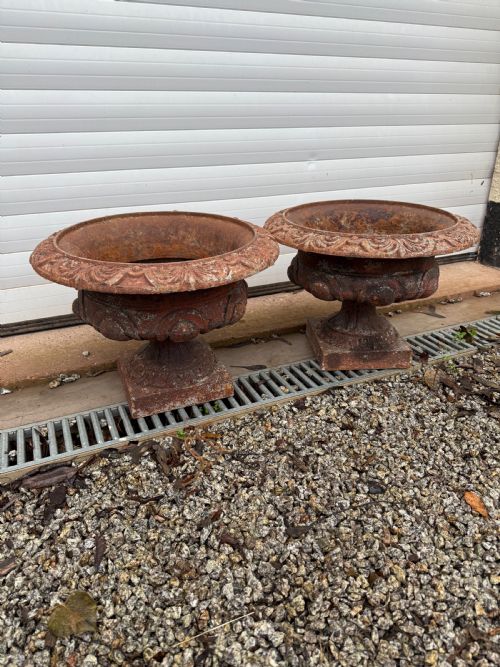


Vintage Garden Trough Pair
These vintage garden trough pair pieces are enduring architectural vessels and planters chosen to anchor a terrace or lawn.
Vintage Garden Trough Pair
When you search for a vintage garden trough pair, you encounter robust dual containers designed to balance formal and informal outdoor spaces. The listings here encompass substantial forms ranging from 18th century stone mortars and Regency lead jardinieres to mid-century wrought iron window boxes and cast iron planters.
You are most likely to meet cast iron and wrought iron examples originating from the nineteenth century, often displaying strapwork or classical urn proportions. Terracotta, zinc, and buff terracotta variations also appear, reflecting diverse domestic and horticultural requirements across different eras.
These items serve practical planting functions while carrying distinct historical character shaped by their materials. Their dual nature makes them suited for flanking doorways, garden paths, or conservatory entrances.
Materials and construction methods
Cast iron and wrought iron components were shaped through foundry casting and manual forging, yielding sturdy structures capable of withstanding heavy soil loads and outdoor weather. Metal items often utilise strapwork or riveted joints to reinforce the vessel walls.
Stone and terracotta pieces were hand-carved or moulded from natural materials, resulting in dense, thick-walled vessels that retain moisture for plants. Zinc and galvanised metal alternatives offer lighter alternatives utilising folded and soldered sheet construction.
Lead and stone finishes acquire patination over decades of exposure, binding the material to its historical context. The manufacturing techniques prioritise durability and utilitarian strength above decorative excess.
Listings feature items spanning from the 18th century through the Edwardian period, constructed from natural stone, cast iron, wrought iron, and zinc.
Factors influencing quality
The integrity of the material and the crispness of any cast ornament dictate the distinction between ordinary and superior specimens. Heavy gauge metalwork and deeply carved stone retain their structural definition and aesthetic weight much better than thin or heavily weathered equivalents.
Proportion and scale heavily influence desirability, particularly in matched pairs where symmetry matters to the overall composition. Pieces exhibiting balanced dimensions and harmonious pairing demonstrate superior original design.
The Vintage Garden Trough Pair Glossary
- Strapwork
- Flat bands of metal arranged in geometric patterns across the body of a planter. This technique provides both structural reinforcement and decorative surface articulation.
- Jardiniere
- An ornamental pot or stand for plants, often executed in lead or ceramic during the Regency period. These vessels were designed for prominent placement within domestic or conservatory interiors and formal gardens.
- Terracotta
- Fired unglazed clay exhibiting warm buff or red tones. It offers porous qualities that benefit root aeration while weathering distinctively outdoors.
- Hay Rack
- A trough-like metal frame originally constructed for feeding livestock but repurposed as a utilitarian wall-mounted planter. Their slatted metal design creates distinctive linear shadows when planted.
Vintage Garden Trough Pair: Frequently Asked Questions
What plants suit a vintage garden trough pair?
Deep stone and cast iron vessels accommodate structural box hedging, trailing ivies, or seasonal flowering bulbs with ease. Their generous soil capacity supports root systems that smaller pots cannot sustain.
Larger pairs flanking an entryway benefit from evergreen planting that maintains visual weight throughout the winter months. Smaller window box formats suit herbs or compact floral displays.
How do I protect metal troughs from frost?
Cast iron and wrought iron require proper drainage to prevent trapped water from expanding and cracking the metal or masonry during freezing conditions. Raising the containers slightly on feet ensures excess moisture escapes freely.
Llining metal vessels with protective membranes can also reduce direct contact between damp soil and vulnerable interior surfaces. Regular inspection helps maintain the protective outer patina.
Where should I position a heavy stone trough?
Natural stone and lead vessels possess substantial weight, especially when filled with damp earth and plants. They require a stable, level foundation such as stone paving or compacted gravel to prevent sinking.
Placing them near architectural focal points like terrace steps or garden walls enhances their scale and visual presence. Consider the final weight before positioning, as repositioning requires mechanical assistance.