






Painted Cast Iron Planters
Painted cast iron planters are robust garden vessels combining heavy metal durability with classical ornament, built to anchor terraces and lawns.
Painted Cast Iron Planters
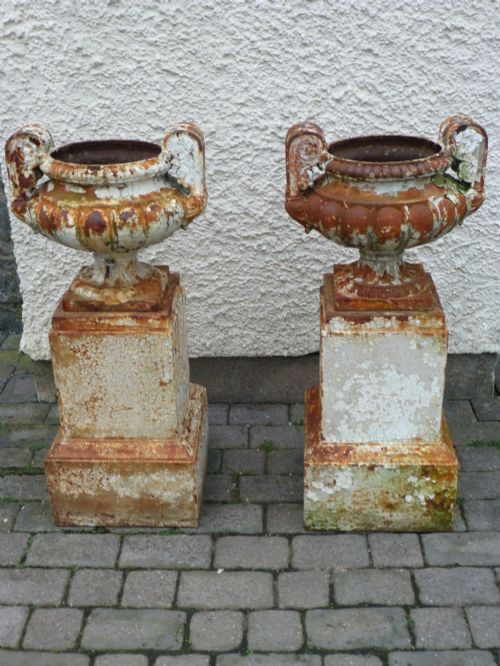
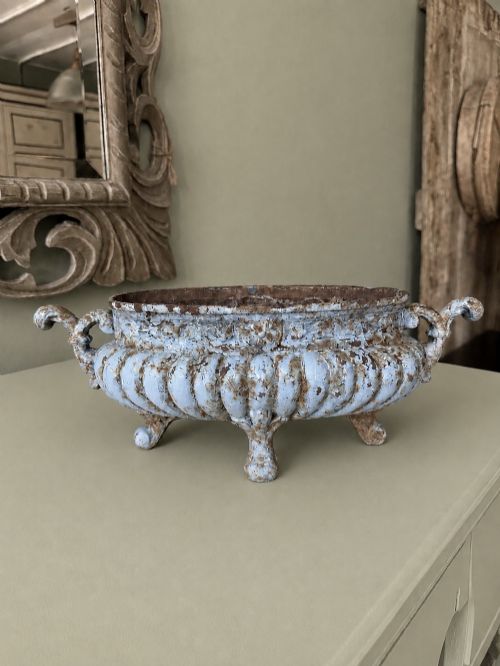
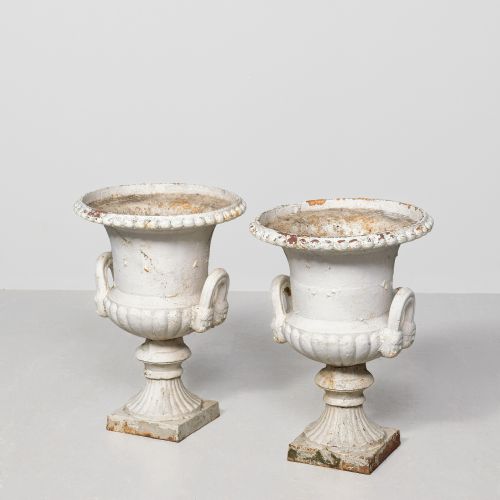
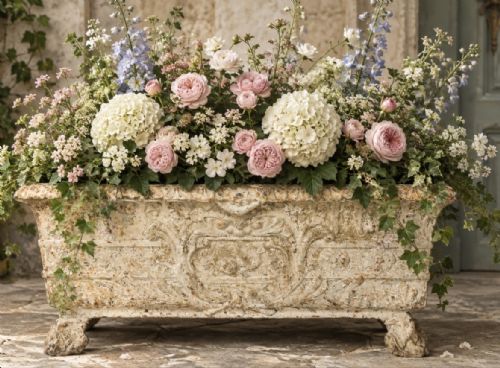
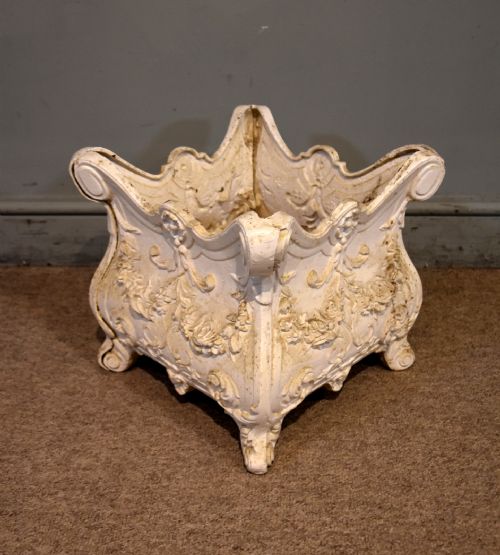
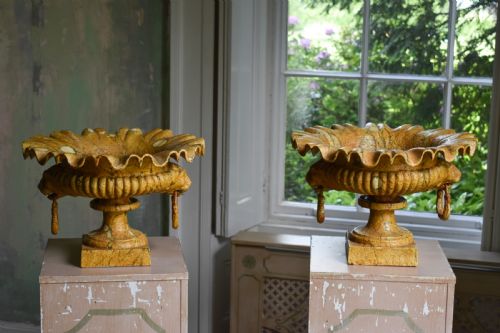
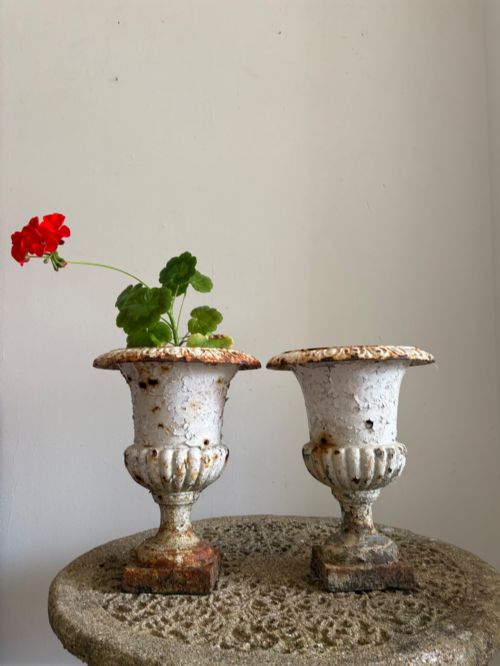
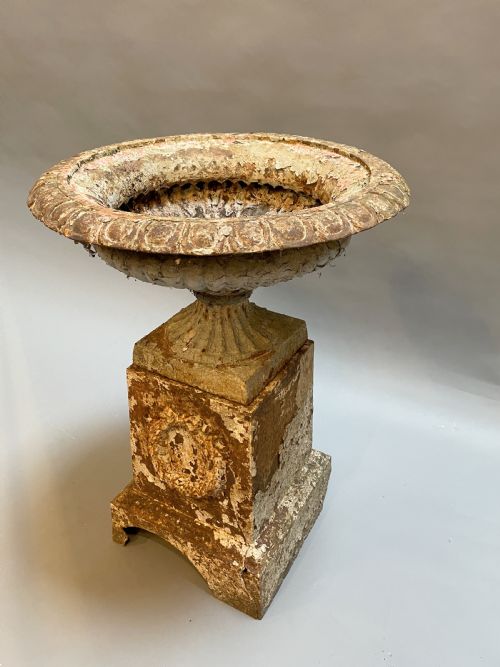
Painted cast iron planters encompass garden urns, plant stands, and jardinieres designed for exterior display across the nineteenth and twentieth centuries. These vessels draw on Victorian, Regency, and Neoclassical styles, frequently appearing as campagna urns, column planters, and gadrooned vessels on matching plinths.
The specimens seen here range from compact table urns to large monumental garden pieces attributed to foundries like Coalbrookdale and Falkirk Carron. French examples also feature prominently alongside British iterations, reflecting a shared nineteenth century European appetite for classical garden ornament.
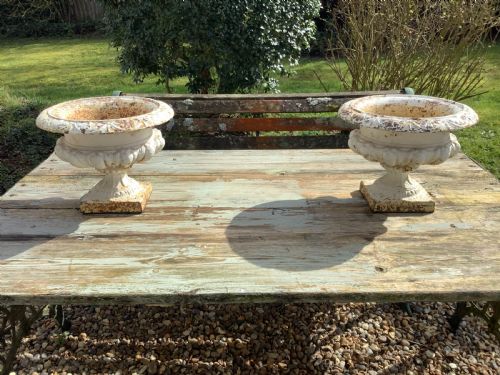
Most pieces survive with layers of historic paint, often showing distressed finishes acquired through decades of weathering on terraces and in gardens. Buyers encounter both single vessels and symmetrical pairs intended to flank entrances or path terminals.
Materials and Foundry Techniques
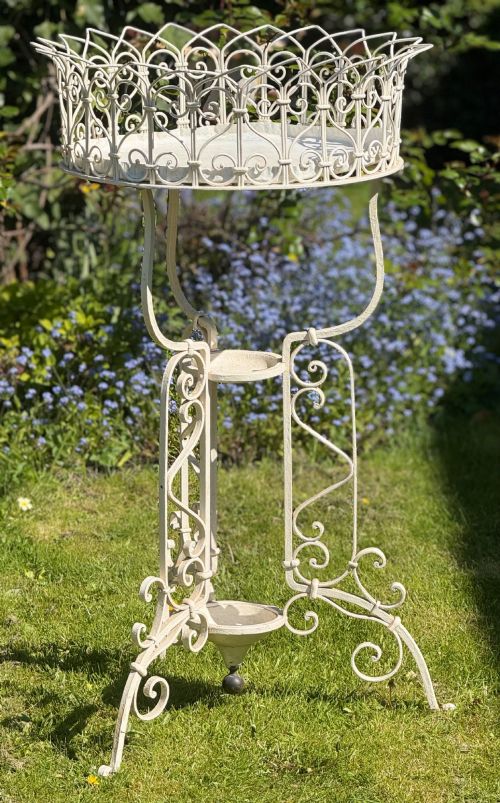
Foundries poured molten iron into sand moulds to create thick, rigid walls capable of holding damp earth and enduring freeze-thaw cycles. Wrought iron elements and wirework occasionally supplement the cast components in related plant stands and jardinieres.
Makers applied protective paint coats over the raw iron to prevent oxidation, utilising lead-based and oil paints that aged into the patinated surfaces found today. Decorative details such as acanthus leaves, gadrooning, and classical figures were cast directly into the metal during the foundry process.
Some nineteenth century founders cast cheerful boy and girl statues alongside traditional urns to watch over the cabbage patch.
Distinctions in Quality
Quality rests upon the crispness of the cast ornamentation, where sharply defined acanthus leaves and clean gadrooning indicate superior foundry work from makers such as Coalbrookdale. Softer details suggest secondary casting runs or worn moulds.
Proportion and scale dictate the visual weight of the piece, with well-balanced urns sitting harmoniously upon their original pedestals or plinths. The survival of original painted surfaces, even when heavily weathered and distressed, adds historical integrity compared to later uniform respray jobs.
Falkirk Carron foundry·Coalbrookdale
The Painted Cast Iron Planters Glossary
- Campagna urn
- A bell-shaped garden vessel with a flared rim, popular in classical and nineteenth century garden design. These forms sit on a short stem above a square foot or larger plinth.
- Gadrooned
- Decorated with a series of convex curves or flutes moulded into the body of the urn. This ornamental banding often encircles the lower bowl of Victorian planters.
- Jardiniere
- A large ornamental pot or stand designed to hold growing plants or flowers. In nineteenth century contexts, these take heavy cast iron or wirework forms for garden use.
- Plinth
- A heavy rectangular block or pedestal that elevates an urn or garden statue. Original matching plinths complete the intended architectural height of the piece.
- Acanthus
- A classical leaf motif carved into moulds and cast onto the body of urns. This ornamental pattern derives from ancient Greek architecture.
Painted Cast Iron Planters: Frequently Asked Questions
How do I care for painted cast iron planters?
Keep the metal sound by brushing away debris and applying protective exterior paint when existing coats flake away. Ensure drainage holes remain unblocked to prevent water pooling inside the bowl during winter frosts.
Position the heavy vessels on stable stone or gravel surfaces to distribute their considerable weight evenly. Avoid placing them directly on damp soil where moisture can accelerate rust from the base upward.
Are these planters heavy to move?
Cast iron is extremely dense and heavy, meaning even small urns require two people to lift safely. Larger garden pieces and those paired with plinths often need mechanical assistance or trolley equipment for repositioning.
This substantial weight serves a practical purpose, anchoring the planter securely against high winds when filled with damp compost and mature plantings. Once positioned on a terrace, they remain firmly in place.
Can I leave them outside in winter?
Cast iron withstands cold weather effectively, provided trapped water does not freeze and expand inside uninsulated sections. Lining the interior with protective material helps insulate plant roots and shields the metal from constant dampness.
Check that the drainage hole functions properly so melting snow and heavy winter rain drain away freely. Historic painted surfaces will continue to weather naturally through seasonal exposure.
How do I date a cast iron urn?
Examine the style of ornamentation, such as Regency neoclassical lines or Victorian acanthus leaf moulding, which match documented foundry production periods. Construction clues like threaded bolts, parting lines from sand moulds, and the character of old paint layers offer further chronological context.
Markings or registry numbers stamped into the iron occasionally identify specific nineteenth century foundry outputs. Comparing the casting crispness with dated catalogue references helps narrow the era of manufacture.