




White Iron Garden Urn
These white iron garden urn pieces bring neoclassical form and weight to grounds, terrace edges and gravel walks.
White Iron Garden Urn
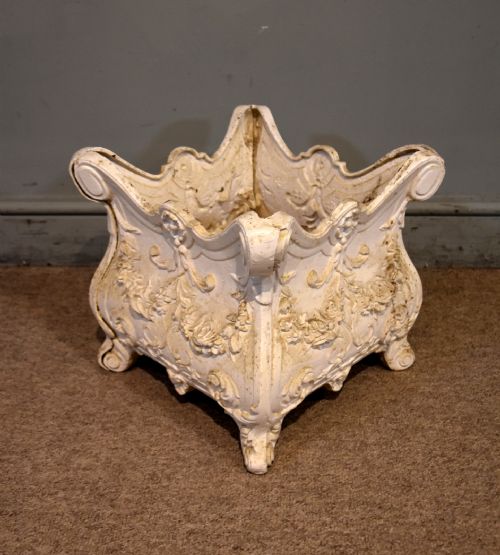
A white iron garden urn serves as a substantial focal point for outdoor spaces, drawing on classical and Victorian garden traditions. When you search for a white iron garden urn, you encounter heavy cast and wrought iron forms finished in layers of historic or distressed paint.
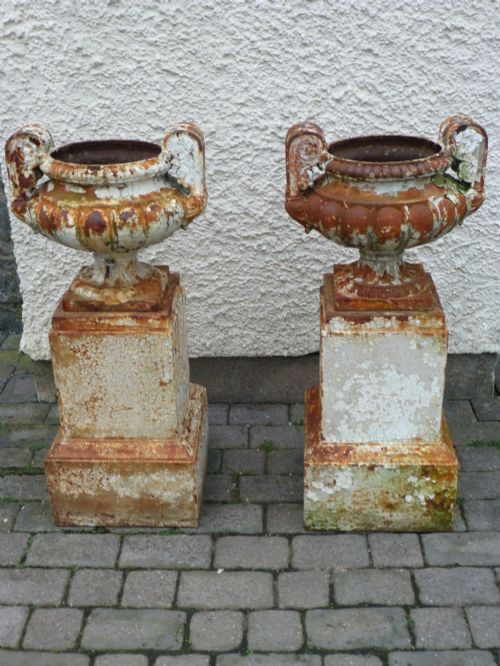
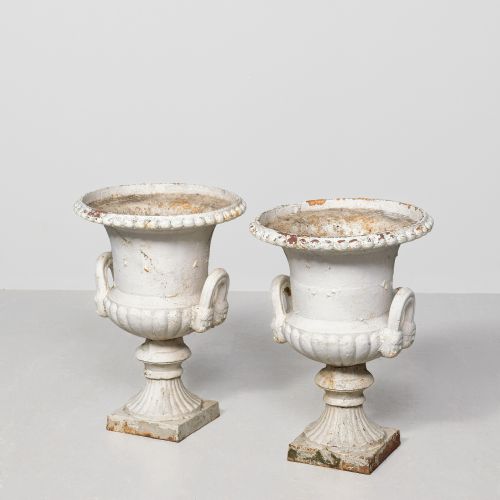
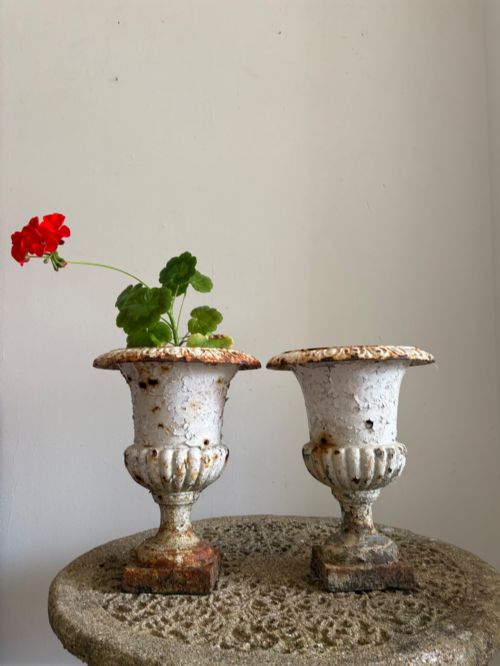
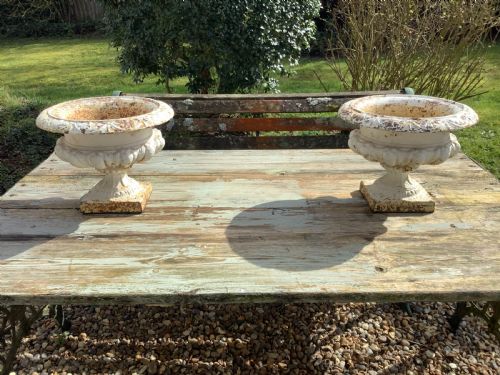
The pieces available on this page lean heavily towards the nineteenth century, including Victorian, Regency and 1870 examples. You will find campana shapes, tazza urns and pedestals that range from compact table urns to large pairs set upon matching plinths.
Materials and construction
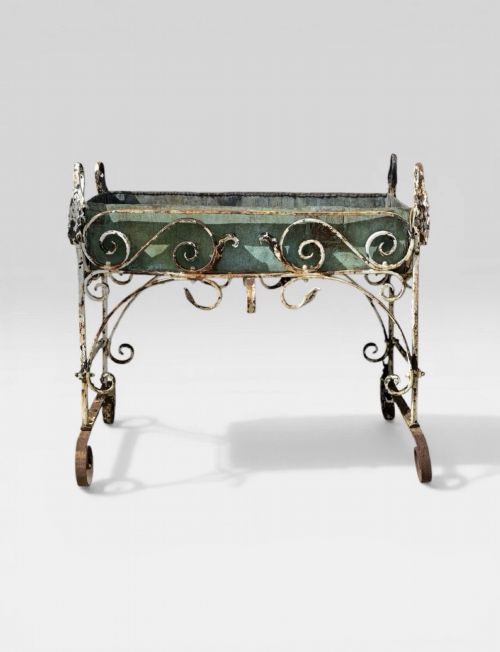
Foundries shaped these items primarily through the traditional method of sand-casting iron, producing thick walls and crisp classical details such as acanthus leaves and gadrooning. Wrought iron also appears in certain French planters, offering a different textural rhythm through hand-forged bars and straps.
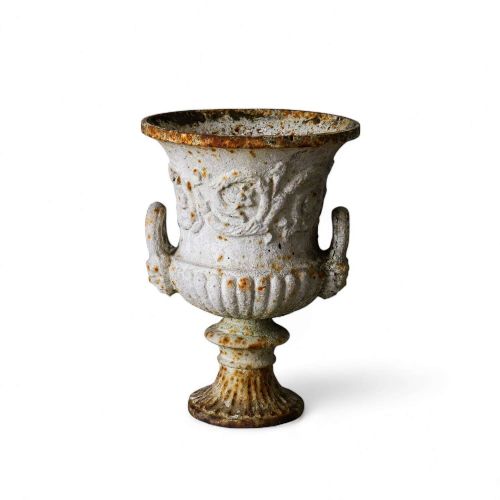
Protective layers of white paint were applied over the decades, which weathered outdoors to create the characteristic flaking surfaces and patinas seen today. Zinc elements occasionally supplement the iron structures in specific nineteenth-century planters.
Listings feature nineteenth-century cast iron and wrought iron, with Victorian and Regency styles dominating the selection.
Distinguishing quality among examples
Quality rests in the crispness of the original foundry casting and the depth of the classical ornament. Sharp relief in motifs like acanthus leaves indicates superior pattern-making and skilled work at the foundry bench.
The presence of matching original plinths and the structural integrity of heavy cast components elevate an example above standard gardenware. Surviving historic paint layers that show genuine weathering add distinct character compared to recent repainting.
Falkirk Carron foundry·Coalbrookdale·Andrew Handyside
The White Iron Garden Urn Glossary
- Campana
- A bell-shaped garden urn with an everted rim and a footed base, often mounted on a square plinth. This classical silhouette originates from ancient Roman marble vessels.
- Tazza
- A shallow bowl-shaped vessel raised on a high stem and foot, functioning as an ornamental garden urn. These pieces provide a wide aperture for planting.
- Gadrooned
- Decorated with a series of parallel, convex curves or flutes moulded into the body of the urn. This ornamental detail is frequently found on nineteenth-century classical vessels.
- Plinth
- A heavy rectangular or square base block that elevates a garden urn above the ground level. Original matching plinths complete the architectural composition of the piece.
- Neoclassical
- A style drawing inspiration from the classical art and architecture of ancient Greece and Rome. This aesthetic defined much of the Victorian and Regency foundry production.
White Iron Garden Urn: Frequently Asked Questions
How do I place a heavy iron urn?
Position these substantial pieces on level stone flags, terrace paving or dedicated garden plinths to ensure stability. Their considerable weight requires firm ground support rather than soft soil.
Keep them slightly raised off damp earth using slate or stone shims to prevent moisture absorption and subsequent iron corrosion at the base.
Are these urns frost resistant?
Cast iron handles freezing temperatures well, provided the internal soil volume does not freeze solid and expand against the metal walls. Line the interior with insulating material if planting hardy shrubs for winter.
Ensure the drainage hole at the bottom remains clear so that trapped rainwater cannot freeze and crack the casting.
How do I clean a weathered white surface?
Wash the exterior gently with a soft bristle brush and clean water to remove accumulated dirt, moss and organic debris. Avoid harsh chemical detergents that might strip the historic paint layers.
Preserve the existing distressed white patination rather than attempting to achieve a uniform modern finish.
What is the difference between campana and tazza urns?
Campana urns feature deep, bell-shaped bowls designed to hold substantial root systems and trailing plants. Their proportions follow classic Roman garden vase designs.
Tazza urns present a much shallower, wide-rimmed profile elevated on a slender stem, suiting formal placement where silhouette matters more than planting depth.