



Cast Iron Urn Plinth
A cast iron urn plinth pairs a heavy metal vessel with a sturdy base to anchor garden schemes.
Cast Iron Urn Plinth
A cast iron urn plinth combines a heavy metal garden vessel with a matching pedestal base, creating a formal focal point for grounds or terraces. When searching for a cast iron urn plinth, buyers encounter garden ornaments designed to elevate planting schemes.
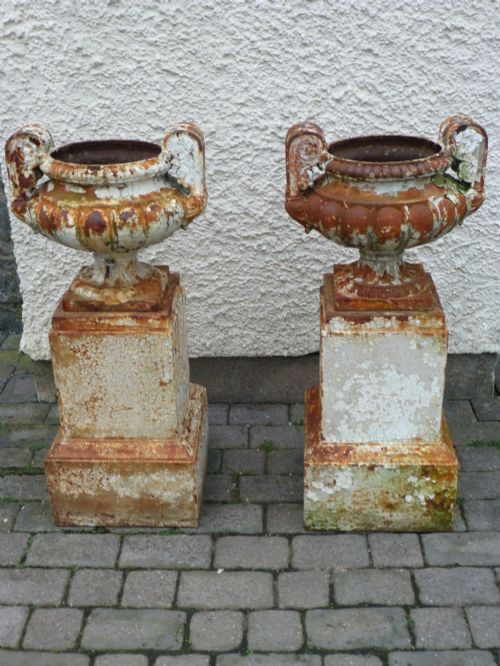
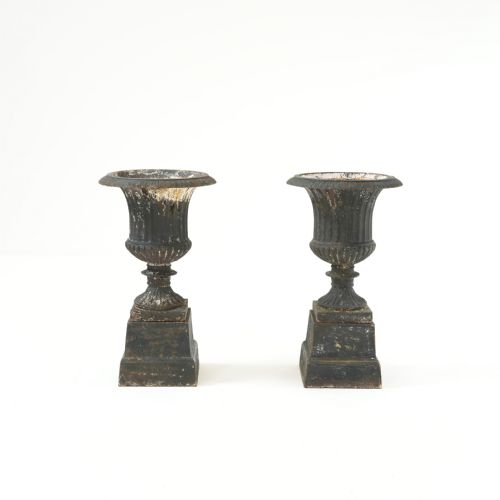
The selections span the nineteenth century, Regency, Victorian, Edwardian, and Georgian periods, alongside pieces dated around nineteen-twenty. These items appear as single pieces or matched pairs, frequently described as campana garden urns, planters, or gadrooned vessels on stands or pedestals.
How they were made
Foundries utilised durable cast iron, pouring molten metal into sand moulds to achieve crisp classical details like acanthus leaves and gadrooning. Many examples retain surviving layers of paint applied to protect the metal from weathering outdoors.
Makers produced separate urns and plinths designed to interlock or sit securely together, though some survivors remain on their original bases. Foundries such as Falkirk and Carron, alongside makers like Andrew Handyside, shaped these heavy iron components for estate gardens.
Listings feature cast iron, paint, and stone materials applied across nineteenth-century, Regency, Victorian, Edwardian, and Georgian periods.
What varies in quality
The distinction between standard production and superior work lies in the sharpness of the cast and the sculptural depth of the ornamentation. Finer examples display crisp botanical modelling, such as deeply undercut acanthus leaves and clean fluting, rather than softened surface details.
Completeness also dictates standing, as pieces retaining their original matching plinths command greater architectural presence than assembled or mismatched pairings. The thickness of the iron casting and the presence of early or original painted surfaces further separate standard garden ornaments from master foundry work.
Falkirk Carron foundry·Andrew Handyside
The Cast Iron Urn Plinth Glossary
- Campana
- A bell-shaped garden urn with a flared rim and a tapering body. This form derives from classical antiquity and remains common in nineteenth-century metalwork.
- Gadrooning
- A decorative carved or cast band of convex curves or flutes. This ornamental detail frequently encircles the rim or body of classical urns.
- Plinth
- A heavy rectangular or square base that elevates an urn above ground level. These architectural supports provide stability and visual weight to garden compositions.
- Neoclassical
- A revival style drawing on classical Greek and Roman art. This aesthetic governs the proportion and ornament of many nineteenth-century garden vessels.
Cast Iron Urn Plinth: Frequently Asked Questions
Are these urns heavy?
These pieces possess substantial weight due to their solid metal construction, requiring adequate assistance for placement and installation.
The heavy nature of the iron provides natural stability against strong winds when positioned outdoors in gardens or on terraces.
Did the urns and plinths stay together?
Many examples survive as original matched sets where the urn and pedestal were cast and sold as a single ensemble. Other instances bring together period components that fit proportionally.
Buyers should examine whether the base and vessel share matching wear patterns and paint histories to determine their association.
How do I care for cast iron?
Cast iron ornaments withstand outdoor exposure well, particularly when protected with appropriate exterior paint layers to inhibit rust formation.
Routine maintenance involves inspecting the surface for weathering and recoating the metal periodically to preserve the material.
How do I date these pieces?
Dating relies on stylistic clues such as Regency neoclassical restraint, Victorian botanical elaboration, or Edwardian proportions. Foundry marks, where present, offer direct evidence of origin and production eras.
The casting quality and assembly methods also provide guidance when distinguishing between Georgian, nineteenth-century, and later twentieth-century examples.