


Large Cast Iron Planter
A large cast iron planter stands ready for heavy planting, bringing sculptural weight and enduring structure to garden terraces.
Large Cast Iron Planter
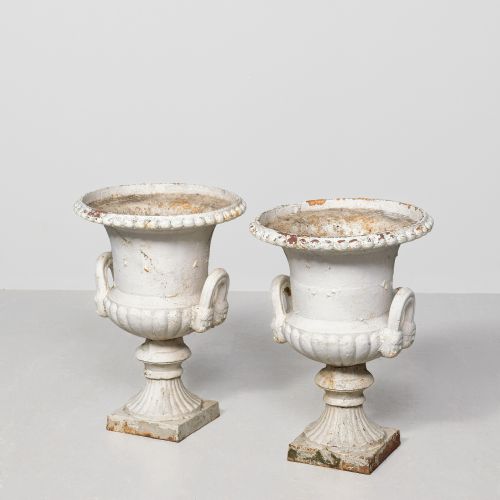
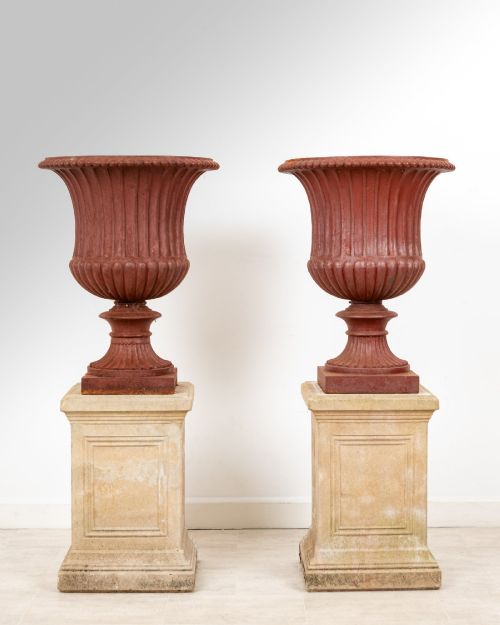
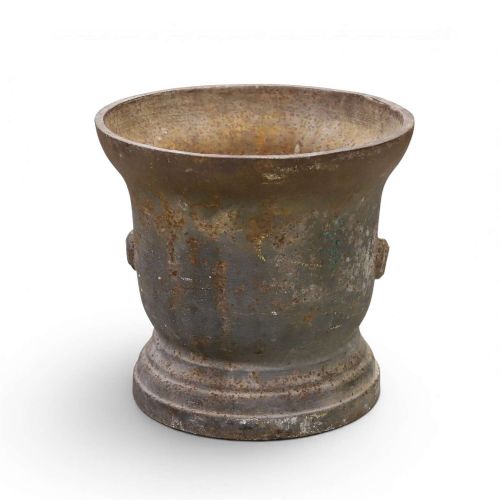
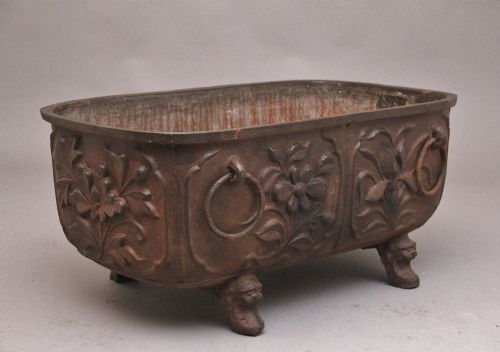
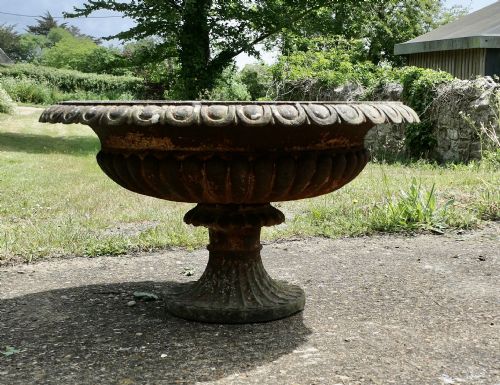
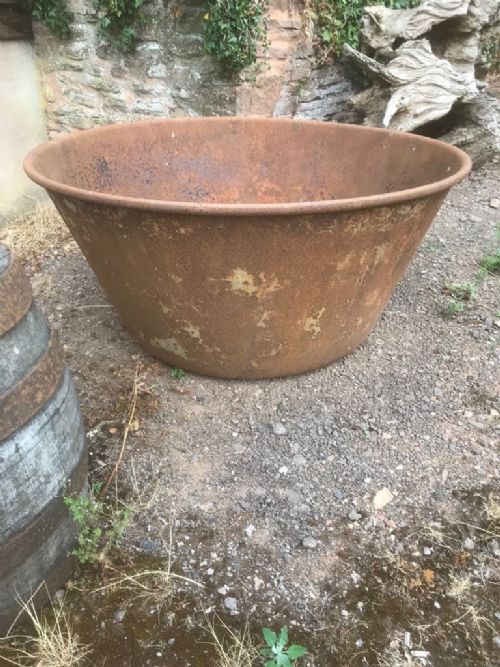
A large cast iron planter is a substantial garden vessel designed to hold earth, shrubs, and flowering plants for terraces and formal grounds. You will frequently encounter classical campana urns, twin-handled tazza urns, and deep agricultural troughs alongside occasional kitchen mortars and temple baths.
The pieces on this page span the nineteenth century, including Victorian creations from English and French foundries, alongside neoclassical revival designs and distinct industrial forms. These vessels served functional roles in large country houses and urban gardens, built to withstand heavy soil and changing weather.
Makers produced these heavy pieces in matched pairs or individually, often mounting them on stone pedestals or plinths to elevate the planting. Their surfaces reflect decades of outdoor exposure, weathering through layers of old paint, rust, and natural oxidation.
What varies in quality
The refinement of the casting dictates the quality of a large cast iron planter, separating sharp, deeply detailed classical ornament from heavy, featureless industrial utility. Crisp definition in acanthus leaves, egg-and-dart rims, and handles indicates careful pattern-making in the foundry.
Proportion and balance also define the better examples, where the weight of the bowl matches the stance of the foot or pedestal. The survival of matching pairs increases the visual impact, while unusual forms like troughs and mortars show greater regional variation.
An early nineteenth-century Chinese temple bath with script crosses paths with Victorian garden urns in the inventory.
Andrew Handyside
The Large Cast Iron Planter Glossary
- Campana urn
- A bell-shaped garden vessel with an everted rim and a flared body, widely used for classical planting throughout the nineteenth century. These urns typically sit on a short stem and square foot.
- Tazza
- A shallow bowl-shaped vessel elevated on a high stem and foot, functioning as an ornamental garden planter or tazza urn. This form derives from classical dining plate adapted for architectural garden use.
- Jardiniere
- An ornamental receptacle designed to hold growing plants or flowers, often cast with decorative exterior relief panels. In nineteenth-century contexts, the term frequently describes large iron pots placed on terraces.
- Mortar
- A heavy vessel traditionally used for pounding materials with a pestle, repurposed from kitchen or apothecary settings into deep garden planters. These pieces feature thick walls and sturdy lug handles.
- Plinth
- A heavy rectangular block or pedestal placed beneath an urn to raise its height and presence within a garden scheme. Stone and iron plinths provide stable foundations for heavy cast vessels.
Large Cast Iron Planter: Frequently Asked Questions
How heavy is a large cast iron planter?
These vessels possess substantial physical weight due to their thick iron walls and large capacities for soil. Moving them requires mechanical assistance or multiple pairs of hands to avoid structural damage.
Once positioned on a terrace or lawn, their mass keeps them stable against strong winds without needing permanent ground fixings.
Can I leave cast iron planters outside in winter?
Nineteenth-century iron vessels were engineered specifically for permanent outdoor installation in gardens and parks. Their durable metal construction handles rain, frost, and seasonal temperature shifts reliably.
Ensuring drainage holes remain clear prevents expanding ice from exerting pressure on the interior walls during freezing weather.
How do I date a nineteenth-century iron urn?
Dating relies on stylistic clues such as neoclassical revival motifs, Victorian industrial casting marks, and the sharpness of the surface detail. Examination of the paint layers and oxidation patterns also offers insight into the age of the metal.
Foundry attribution, when present through raised lettering or historical records, narrows the production window to specific decades.
Do these planters require special care?
Maintenance involves periodic inspection of the surface coating to manage rust and preserve the underlying iron. Applying suitable exterior paint or protective oils helps stabilise the metal against further corrosion.
When planting, adding a layer of gravel at the base improves drainage and protects the inner floor from prolonged moisture retention.