


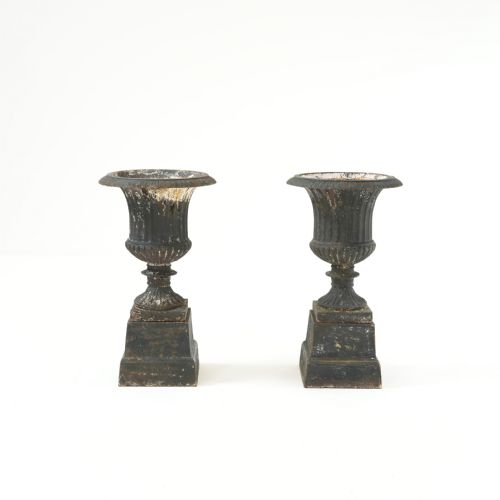
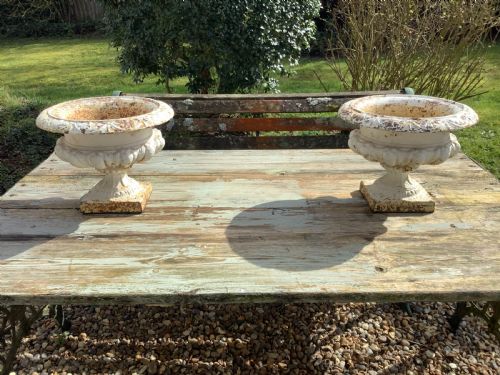
Vintage Iron Garden Urn
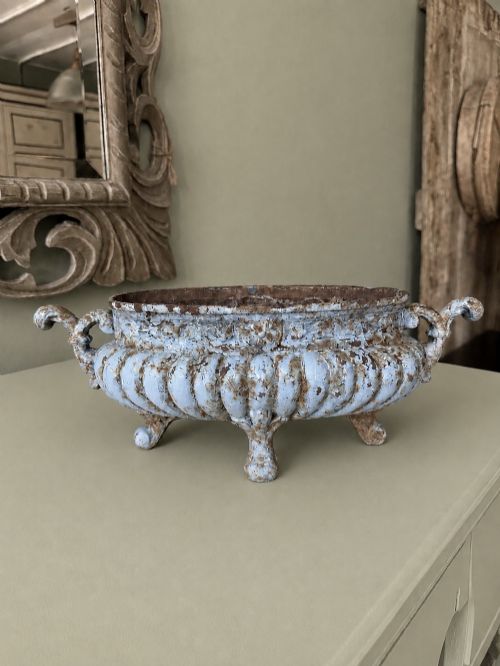
A vintage iron garden urn anchors a terrace or path with classic weight, offering a sturdy vessel for seasonal planting.
Vintage Iron Garden Urn
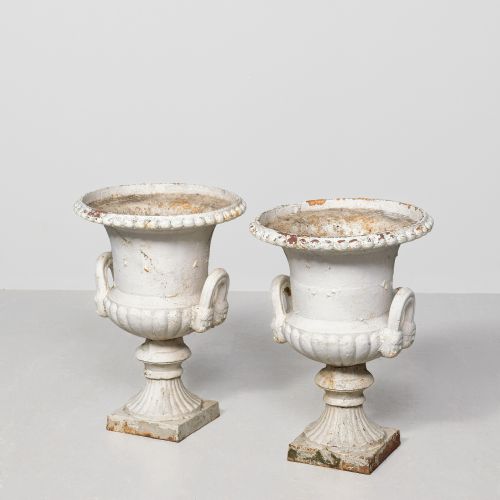
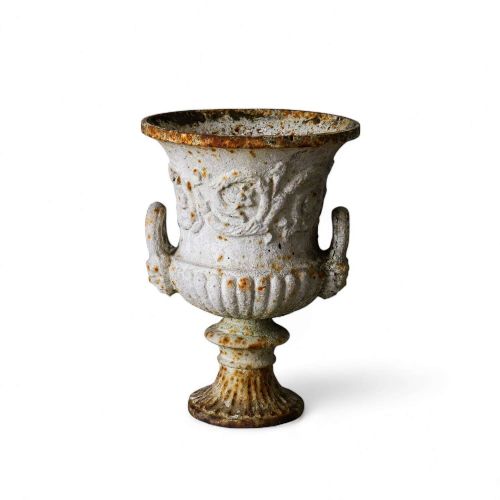
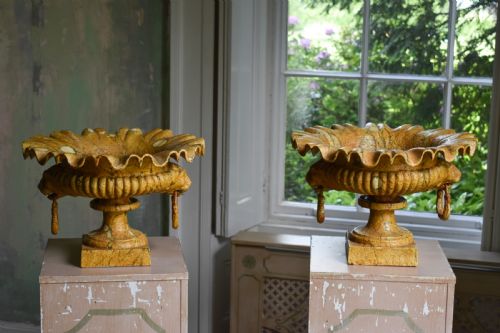
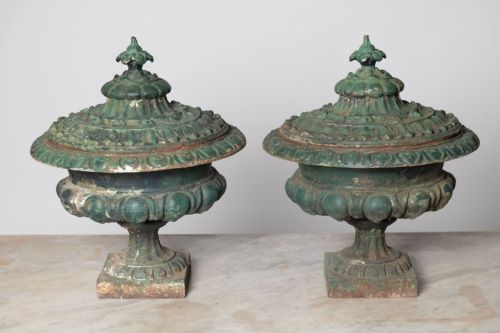
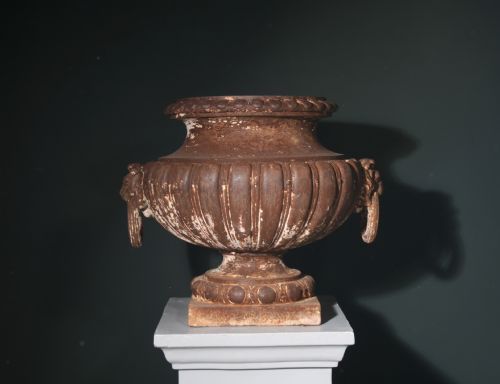
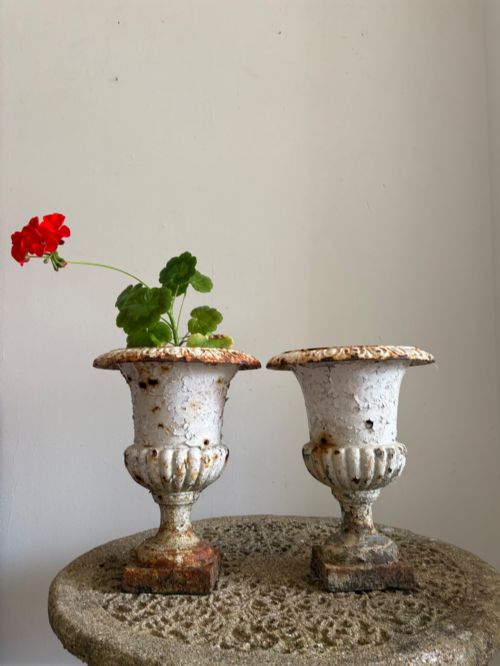
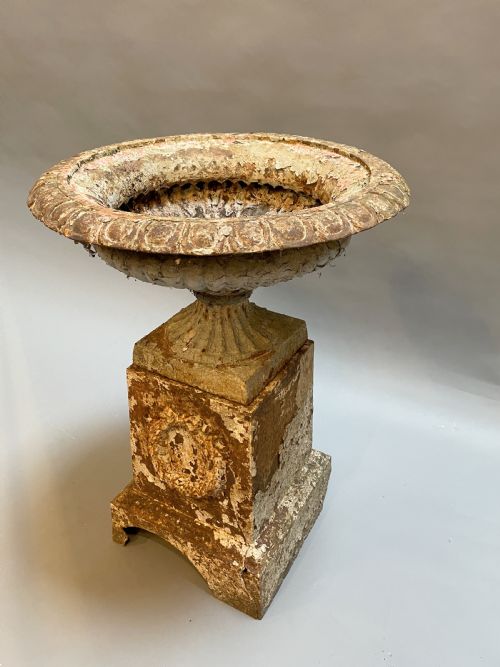
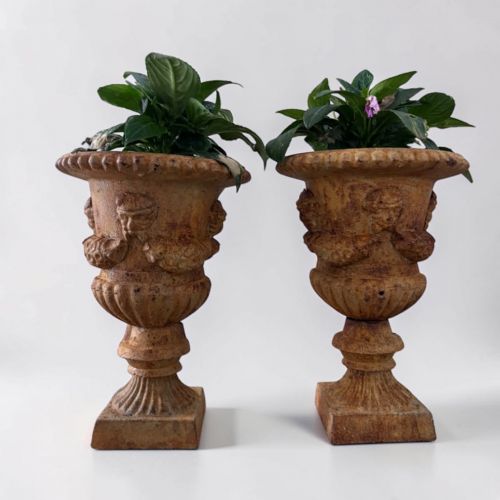
A vintage iron garden urn brings architectural presence to outdoor spaces, drawing on classical forms like the Campana and the tazza. These vessels appear frequently in nineteenth-century interpretations, often taking the shape of fluted or gadrooned bowls mounted on integral pedestals or separate plinths.
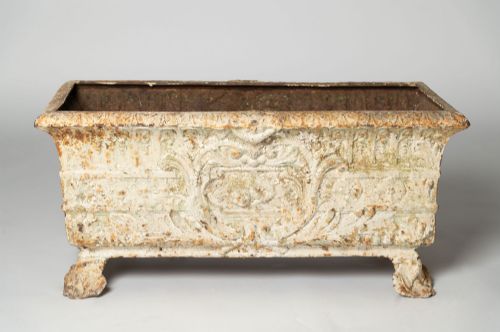
The materials span sturdy cast iron alongside occasional examples in wrought iron, sheet iron, or painted finishes that show decades of weathering. Pieces range from modest table urns to large monumental pairs intended for formal lawns.
French and English workshops dominate the selection, bringing neoclassical motifs and ornamental handles to gardens ranging from formal terraces to country courtyards.
Materials and casting methods
Foundries produced these vessels using molten metal poured into sand moulds, creating the thick walls and crisp relief details seen on classical campana models. Cast iron provided the necessary strength for substantial garden ornaments that could withstand prolonged exposure to the elements.
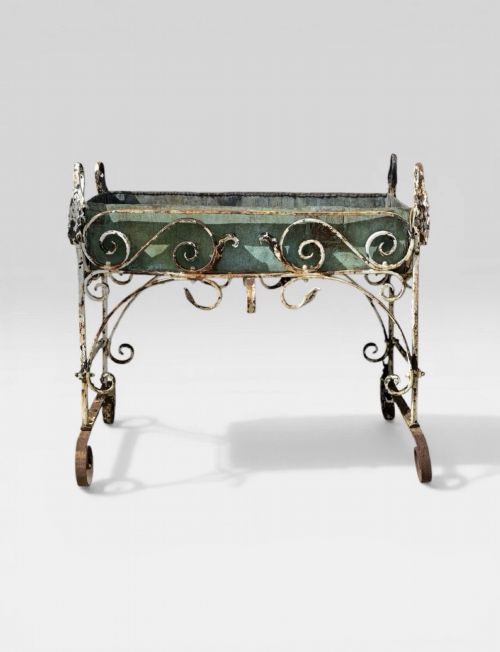
Makers often applied layers of protective paint or left the metal to oxidise naturally into a stable, weathered surface. Wrought iron variants utilised shaped strapwork welded or riveted together to form lighter, openwork planters.
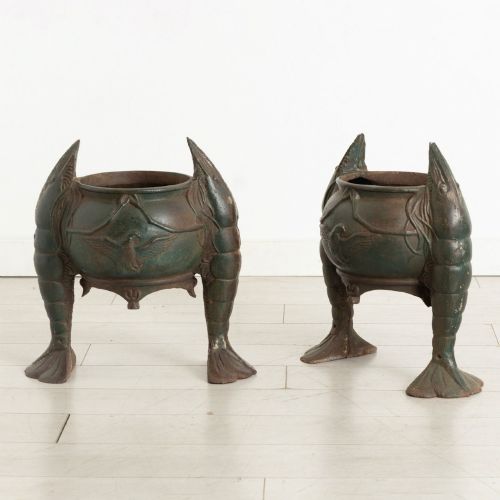
Some Victorian designers abandoned traditional foliage in favour of unexpected zoological forms, casting heavy iron planters shaped like giant shrimp.
Assessing quality and craftsmanship
Quality rests in the crispness of the casting and the depth of the decorative relief, where superior examples retain sharp mould lines on foliage and gadrooning. The weight and thickness of the metal distinguish substantial foundry pieces from lighter domestic castings.
Coalbrookdale·Andrew Handyside·Val D Osne Foundry
The Vintage Iron Garden Urn Glossary
- Campana
- A bell-shaped garden urn with an everted rim, popular in classical and neoclassical garden design. These vessels typically sit on short stems above square bases.
- Gadrooned
- Decorated with a series of convex, parallel curves or flutes. This ornamental carving often encircles the lower bowl of a classical urn.
- Tazza
- A shallow bowl or cup mounted on a stem and foot, used in garden settings for planting trailing flora. The form derives from classical antiquity.
- Jardiniere
- An ornamental pot or stand for holding plants or flowers. These vessels often appear in cast iron for outdoor patio use.
- Plinth
- A heavy rectangular block or base that elevates an urn. Matching plinths provide stability and increase the overall height of the garden ornament.
Vintage Iron Garden Urn: Frequently Asked Questions
How do I secure an iron urn outdoors?
Heavy cast iron urns generally remain stable under their own weight on flat stone or gravel surfaces. For taller models on plinths, professional anchoring ensures safety in exposed gardens.
Positioning the base on treated timber or paving slabs prevents moisture retention from damaging the bottom rim during winter months.
Can these urns stay outside all winter?
Cast iron handles frost well, provided drainage holes remain clear to stop expanding water from cracking the bowl. Elevating the base slightly off the ground helps prevent moisture buildup.
lining terracotta inserts inside iron planters can offer additional protection against extreme freeze-thaw cycles.
How do I plant a heavy garden urn?
Fill the lower third with broken crocks or lightweight aggregate to improve drainage and reduce the total weight. Adding a geotextile membrane prevents soil from washing out through the bottom drainage hole.
Top the container with a rich compost mix suited to your chosen flora, leaving space at the rim for watering.
How do I date a cast iron urn?
Nineteenth-century pieces often display foundry stamps, registration marks, or distinct neoclassical proportions associated with Victorian revival design. Examination of the casting texture and bolt construction provides further clues to age.
Surface layers of accumulated paint and deep rust patination also help differentiate Victorian originals from twentieth-century reproductions.