




Neoclassical Garden Planter
These neoclassical garden planter selections bring classical proportion and enduring stone or iron to a terrace.
Neoclassical Garden Planter
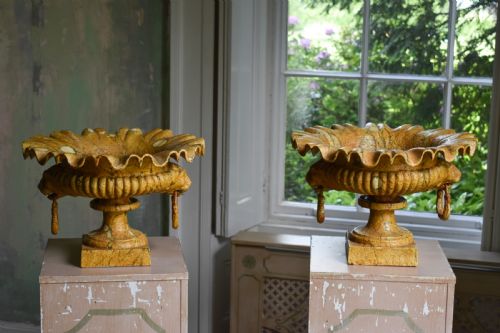
A neoclassical garden planter brings architectural formality to outdoor spaces through classical campana forms, tazza vessels, and pedestals. Buyers searching for a neoclassical garden planter encounter urns, birdbaths, and cisterns derived from antiquity.
The pieces on this page span from the eighteenth century through the Edwardian era and the nineteen-thirties, reflecting persistent revival movements. Cast iron and cast stone examples from the nineteenth century appear most frequently alongside marble and terracotta vessels.
Materials and construction methods
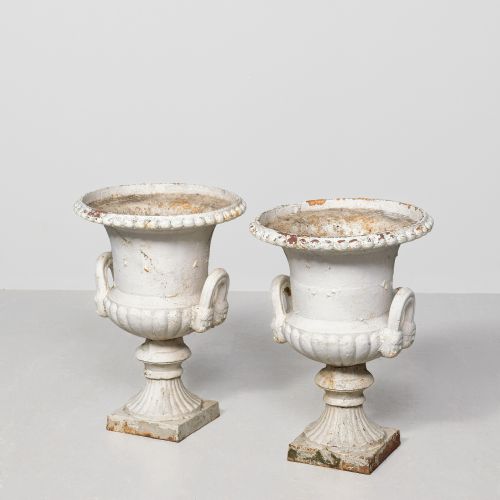
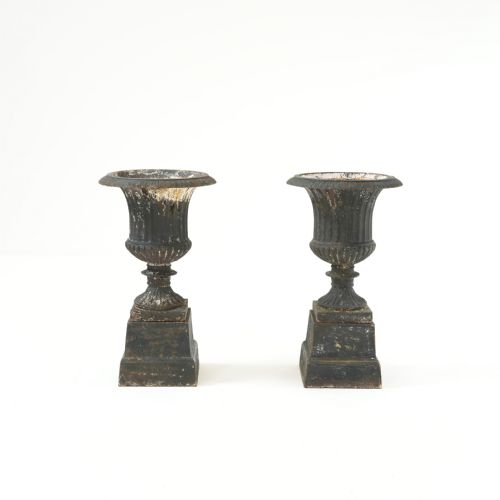
Foundries produced durable iron vessels using sand casting techniques, often pairing campana urns with dedicated plinths or columns. These metal pieces frequently retain traces of early paint or develop stable outdoor oxidation over decades.
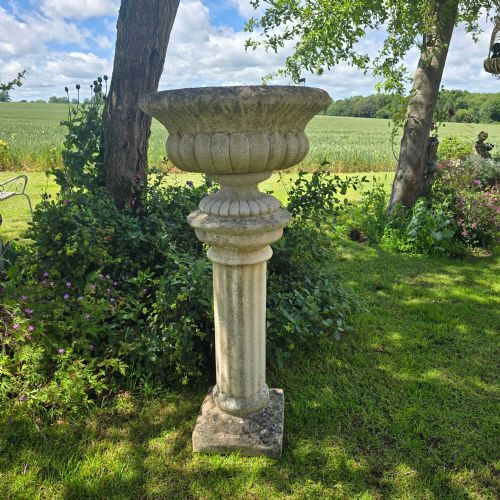
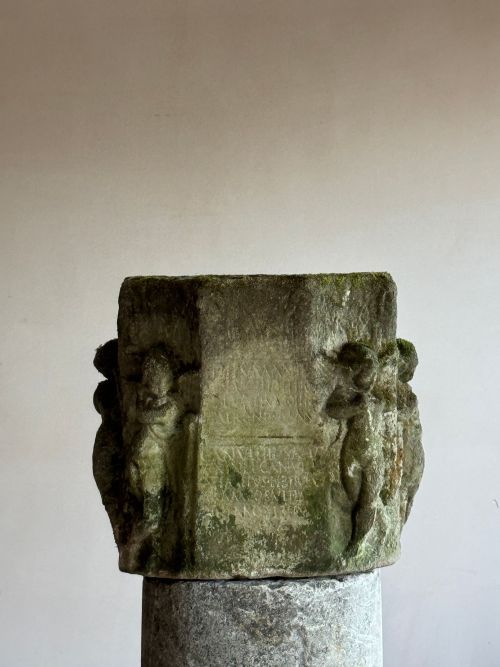
Masons and stone-workers carved marble, limestone, and stoneware by hand, while later makers utilised cast stone and reconstituted stone in moulds. Terracotta examples demonstrate traditional ceramic firing methods yielding porous garden pots suitable for planting.
Grand Tour travellers once shipped heavy Italian marble tazza urns across Europe by sea and horse-drawn wagon just to brighten an English lawn.
Assessing quality in garden vessels
Quality rests in the crispness of classical ornament, such as acanthus leaf carving or relief moulding on campana bodies. Finer pieces demonstrate superior balance between the vessel bowl and its supporting pedestal or plinth.
The choice of material dictates longevity and aesthetic weight, with carved Carrara marble and heavy cast iron representing the upper tier of production. Surface weathering and patination add character provided the structural integrity of the stone or metal remains intact.
The Neoclassical Garden Planter Glossary
- Campana urn
- A bell-shaped garden vessel with an everted rim, sweeping body, and a circular foot often mounted on a square plinth. This form derives directly from ancient Roman metal and stone vases.
- Tazza
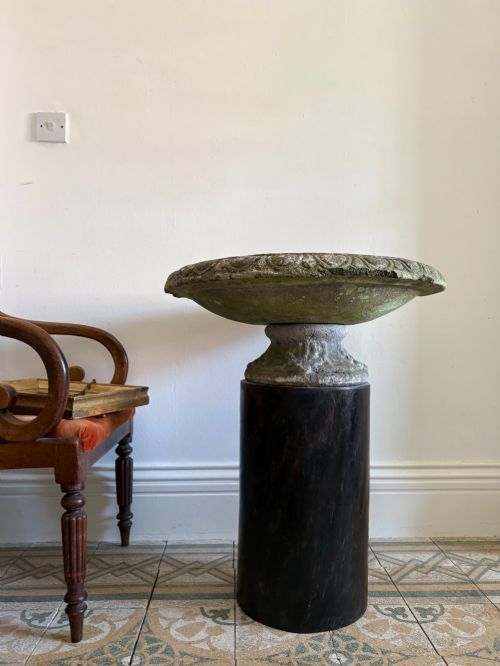
- A shallow cup or bowl set upon a stem and foot, used historically for display or planting. These open vessels often feature carved marble or terracotta construction.
- Reconstituted stone
- A composite material made from crushed stone or aggregate mixed with a binder to create durable garden ornaments. It allows for the faithful reproduction of classical architectural details.
- Grand Tour
- The traditional journey through Europe undertaken by upper-class scholars and collectors during the eighteenth and nineteenth centuries. It resulted in the acquisition of classical antiquities and Italian marble copies.
- Plinth
- A heavy rectangular or square block supporting an urn, column, or statuary piece. It elevates the garden planter to improve its visual presence in a landscape.
Neoclassical Garden Planter: Frequently Asked Questions
How do I place a heavy stone urn?
Position these heavy stone and iron pieces on firm, level ground or stone paving to prevent uneven settling. Use timber blocks or specialised lifting equipment when shifting heavy marble and cast iron vessels.
Ensure that drainage holes remain clear of debris so that trapped water does not expand during freezing weather and crack the stone or cast iron body.
Can I leave cast iron planters outside?
Cast iron garden vessels withstand outdoor conditions well, though periodic inspection helps monitor surface paint and oxidation. Applying protective coatings can slow down weathering if you prefer to maintain a uniform finish.
Positioning metal pieces on gravel or stone rather than directly on damp soil reduces moisture absorption and preserves the base of the stand.
What is a campana shape?
The campana form resembles an inverted bell, featuring a wide flared rim that tapers gracefully toward a narrow base. This classic silhouette originates from ancient Roman pottery and metalwork.
Victorian and Edwardian foundries widely adopted this profile for cast iron and stone garden ornaments because it accommodates planting while presenting balanced proportions.
How do marble and stone age outdoors?
Weathered marble and limestone develop a softer surface texture and organic staining from lichens and moss over decades of exposure. This natural patination is often valued by collectors for adding visual depth.
Protecting porous terracotta and softer stones from severe winter frost prevents spalling and structural fracturing during freezing temperatures.